
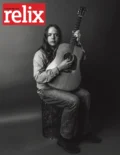


With so many bluegrass and jamgrass acts breaking out lately, it’s essential that a band distinguishes themselves. While Greensky Bluegrass rely on traditions as well as a modern jamming take on the genre, members Anders Beck, Michael Arlen Bont, Dave Bruzza, Michael Devol and Paul Hoffman add a dose of rock ‘n’ roll to the mix. It’s not just a matter of their choice of cover tunes, which run the gamut from Pink Floyd to Prince, that sets them apart from the pack but it’s the quintet’s overall approach to what makes them a bluegrass act for the 21st century. The group naturally ignores the lines that separate one style from another yet in the process transform songs into a bluegrass world with a rock attitude.
Over the past decade the Kalamazoo, Michigan-based act built a national reputation with impressive live performances. Besides hundreds of club dates, they won the 2006 Telluride Bluegrass Festival Band Competition and became regulars at summer festivals including last summer’s Bonnaroo, All Good and Hoxeyville. During these appearances Greensky’s arranging skills transformed rock, pop and R&B tunes into the bluegrass realm and caused otherwise disinterested listeners to embrace some form of that high lonesome sound.
The creative thrill of adapting such material remains a constant for mandolin player and vocalist Hoffman but it’s more important that his band progresses on the merits of their original numbers. Following two albums that were produced by Railroad Earth’s Tim Carbone, Greensky Bluegrass go it alone on their fourth studio effort, Handguns. Solid from beginning to end, it encapsulates the Greensky musical aesthetic with songs that are alternately traditional, jamming, lyrically introspective, expansive and celebratory.
*JPG: How is it a bunch of nice young men from Michigan didn’t follow in the state’s traditions of Iggy Pop, Bob Seger, Ted Nugent, Kid Rock and go into rock ‘n’ roll? *
PH: (laughs) We have played some pretty interesting Michigan rock tunes. There’s a lot of famous musicians from Michigan but not a lot of famous bluegrass musicians. I guess it just sort of happened that way.
JPG: There’s the Avett Brothers who were into punk and then moved from that into what they do now…
PH: We’re not all avid bluegrass listeners now. In the learning process of our instruments we went through phases where we listened to a lot of it. At that time it was new to most of us. But we listen to all sorts of different stuff. Myself, I don’t listen to very much bluegrass these days just ‘cause I play it all the time. When I bought a mandolin and decided to try to learn how to play it I wasn’t familiar with bluegrass at all.
JPG: What made you buy a mandolin?
PH: I saw David Grisman play, and I was like, ‘That looks like fun. Maybe I’ll buy one of those.’
JPG: Were you playing in bands before or was that the first instrument you picked up?
PH: I had played guitar and did some songwriting but Greensky was essentially the first band I had ever been in. It’s that way for a couple of us.
JPG: Is there less baggage because this is a first band for you or just a matter of catching that lightning and things have just been progressing steadily over the years?
PH: I think that things have worked out. At first when the three of us and we were playing open mics and gigs around the state as Greensky Bluegrass it wasn’t very serious. We were serious in that we weren’t just jamming in the basement, we were playing gigs and making money and getting fans but I never would have imagined that it would get this far. When we did make the decision to do this more seriously and fulltime I guess everything was just right for it to work. I met Dave [Bruzza] and Mike [Arlen Bont] was I was 18, just about to turn 19. So, that’s why I hadn’t really been in a band. There were some guys in high school that I jammed with but we weren’t really a band, per se.
JPG: Where did you meet them?
PH: It was an open mic. The two of them were playing. It was two or three after I had bought my mandolin and I was like, ‘I got a mandolin. Can I play with you guys sometime?’
JPG: And the rest is history…Speaking of Dave, there’s a quote by him in the Charleston paper where he viewed Greensky Bluegrass as “rock ‘n’ roll in disguise.”
PH: We coined “rock ‘n’ roll in disguise” as a workshop that we do at festivals — bluegrass festivals where we play all rock tunes or we play all covers — but I think in a lot of ways we are. There’s a lot of time spent discussing what is and is not bluegrass. Certainly, we all have bluegrass instruments and we don’t have drums and we play a couple pretty bluegrassy tunes. And even the stuff of ours that’s not bluegrassy is probably more bluegrass than anything but I think our approach to the music and our volume, our attitudes, our lyrics, our song choice is more rock ‘n’ roll. I’m with Dave on that.
And we all agree that we don’t want to quit playing bluegrass and start playing electric guitars and drums and stuff but it’s going to limit ourselves just being a bluegrass band. A festival like All Good is a good example where there’s all sorts of music there. We often do pretty well in those instances, the token bluegrass band. We want to be able to accomplish the feeling that a lot of those bands can accomplish even though we sonically are different. That means I don’t expect us to play the two to four a.m. late night set like Pretty Lights played there but we don’t want to be totally pigeonholed into something that we’re not.
JPG: If it gives you some idea that anything is possible in the future, Yonder Mountain String Band played an early morning set there.
PH: And we certainly have done late night things but we want our show to rock, and we put a lot of value into the importance of our show being fun and energetic and understand that people who don’t play music festivals for a living or go to shows every night ‘cause it’s their job, those people are putting aside their lives and investing their expendable income into having a good time and seeing their friends. We’re serious musicians and we value our craft and we want people to appreciate our songs, our solos… We also recognize that a big part of the show is just having a good time.
JPG: In the case of All Good there was a bluegrass or jamgrass act every day, which brings this up. Did you consider a need to distinguish yourselves from other acts?
PH: It’s not necessarily unintentional but we just play music that we like. At bluegrass festivals where everyone is playing the same instruments as us and playing bluegrass it’s there that we will be easily categorized as the most rock ‘n’ roll, the loudest, and the only one to play a Prince tune or something like that. But then at All Good we fall on the complete opposite side of the spectrum. We’re the acoustic band. It’s interesting that in both environments we shine in different ways. When we started playing in Michigan years ago [Prince’s] “When Doves Cry” was the first off-the-wall cover that we added. We might have played “Cassidy” before it by the Grateful Dead but I don’t think Grateful Dead seems as off the wall since we all discovered bluegrass through the Grateful Dead. So, “When Doves Cry” was the first, and it wasn’t like we were trying to be silly as much as it seemed like a good idea. It ended up working well with the crowd because we were playing for so many people who didn’t already love bluegrass or weren’t familiar with it. It’s not a far cry from obvious to say that you expose a crowd to music they know and then they’ll like you.
For people in Michigan who saw us early on the bluegrass version of “When Doves Cry” that we play could have been their converter. ‘Wow, this is really neat.’ Since then, some of the stuff that we’ve tackled has been pretty complicated on bluegrass instruments, trying to figure out how to convey the same feel that a drum, keyboards and electric bass can convey. It’s been really challenging to figure out how it fits on our instruments. It’s taught us a lot about arranging our own tunes and what our instruments are actually capable of.

No Comments comments associated with this post