



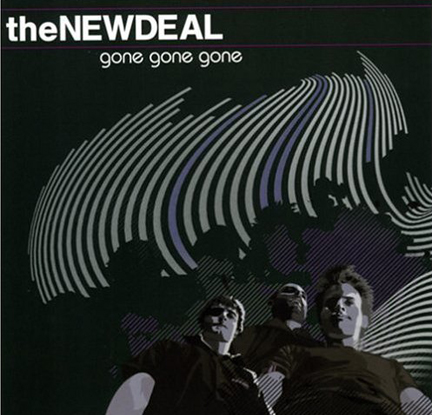
A few breaks aside, The New Deal has been a consistent presence on the jamband club and festival circuit since the late ‘90s. One of the first bands to fuse electronic music with jamband-style improvisation, The New Deal helped shape the scene during its late ‘90s renaissance with its trademark live progressive breakbeat house sound. Though the band’s tour schedule has slowed a bit in recent years, drummer Darren Shearer, bass guitarist Dan Kurtz and keyboardist Jamie Shields have strived to keep The New Deal fresh each time the trio hits the road as a group. Then in early April The New Deal formally announced its breakup. The difficult decision came at a time when Shields’ production company was picking up steam and Kurtz’ other band Dragonette was climbing the European charts. A few weeks later, Shields sat down with Jambands.com to discuss the band’s breakup, the musicians’ collective future and what fans can expect on the group’s final tour.
Let’s start with the most pressing question. What led to the decision to break up The New Deal at the end of the year?
The decision has been coming for a while whether we knew it or not—we’ve made the decision based on where we are in our lives and what we want to choose to do. And the short answer could be that you can make that decision because Jamie wants to spend more time with his family and Dan wants to spend more time with Dragonette or Darren wants to spend more time doing other things. But it’s not that—it’s just that the things that we want to do with our life make it so that we can’t devote enough time and energy to what The New Deal requires to keep it at the level that we like to keep it out. So instead of haphazardly playing 40 shows a year, we figured it was best to not do that to The New Deal and to not make it a part time thing. Everything that we’ve done when we play onstage—and everything that we do offstage—has always been at 100% and we just didn’t want to start making it a 50% kind of thing. So it was at that point that was like, “This is where we’re at.” It was like writing a mystery novel—you start with the ending and you work backwards. Ok, well if that’s where we’re at then how should we approach it? And the way we should approach it is by giving The New Deal the dignity it deserves and not making it some sort of second rate operation.
We didn’t want to make it a second rate operation by just deciding to play shows here and there. If we can’t give it what it needs then let’s not do it. Nobody needed convincing on that front.
So you would say that all three of you guys were on the same page when the decision was made?
Well, it wasn’t a surprise to anybody. Let me put it to you that way: It’s not like we all called each other up and said, “Hey, let’s stop The New Deal” because, I mean, we love The New Deal, but we don’t want to run it into the ground. And the music has been great and we enjoy playing the music, but there’s so much more to it than that. I think as we put it in one of the press releases, our “increasingly busy lives” make it difficult to do The New Deal. It’s not like there was less room for The New Deal, but there was less room to give The New Deal what it needs and what it deserves—to make it—to keep it as it should be. We didn’t want to turn it into a 50% project. That was our number one concern—we didn’t want that to happen. But then you lose all—I don’t wanna say credibility—but you lose all this stature that you have, not with anybody else, but just with yourself with what you’ve accomplished and what you’ve done over the years. Then it ends as something you don’t want it to end in and as I’m talking about this now I think about a guy like Richard Manuel from The Band. I love The Band and I’m not comparing us to The Band at all, but if you talk about the arc of a musical group and how Richard Manuel hung himself in his bathtub after a gig at the Holiday Inn somewhere in like 1986. When you think about The Band, they were it: they played with Dylan, they released great records, they played stadiums—they played one of the largest stadium shows ever with The Dead and The Allman Brothers at Watkins Glen—and here he is playing to 200 people at a Holiday Inn. That’s not an arc we wanted to pursue. I’m not saying that we were gonna end up at a Holiday Inn anytime soon, but there’s different arcs for different bands and you have to just decide when it’s time to make sure that it ends on a positive note.
Keeping with The Band theme, now that you have decided this is going to be the last year of the band do you plan to end with a ¬_Last Waltz_-style finale?
We will. Nothing’s been announced yet and there are more shows. I also wanna stress that whatever’s out there right now, we will be adding more shows. There are some things in the works right now for wrapping-up The New Deal at the end of the year. I’m not sure specifically what it is going to be yet, but it’s not gonna end with a festival show in August or whatever. There’ll be some stuff that we will do that will make it more special near the end of the year. It won’t be like The Last Waltz with guests but we are not going to just end it with a festival slot because The New Deal means a lot to us.
It’s tough for some people to understand that when a band means so much to us we have to end it. For some people that calculus doesn’t work but for some people it does. For us it does. Some people are like, “Well if you love The New Deal so much why are you stopping it?” Well, because we can’t afford to devote the time that it needs. Because other things happen—life happens. There’s a lot of shows, there’s a lot of time that was devoted to The New Deal and none of it—and I don’t regret a single minute of it—but as life moves on and as other things happen in other people’s lives, other things happen.
Dan’s other band Dragonette has the #1 single in Europe. It is like, “go be huge with Dragonette.” And it’s not like The New Deal’s holding him back because Dan actually loves The New Deal—he loves playing in it—we never have to convince him to do shows, he’s been great that way. But it’s like, you should devote a lot of your time to Dragonette. These opportunities don’t come around often. You should be able to focus on something like that, now.
In terms of your own plans, you’ve mentioned spending time with your family. Do you have plans to pursue any other musical projects?
Well, it is my family, but I’m also really, really, really busy writing music for TV. I just scored a movie, and I have a company here in Toronto that does a lot of TV and movie work. That takes up a lot of time and that’s also the kind of thing that I can’t leave for a week and go play shows. I’ve got two other partners that I do stuff with and I can’t—I sign on for some movie or a 13 episode TV series, I can’t walk away from it for 8 days. So it’s those kinds of things as well. I mean, that’s a six-day a week gig for me. I’m in the studio 12 hours a day with that sort of stuff. I’m still doing Omega Moos in July. I’ll continue to do the Omega Moos and I’ll probably do some Join stuff too because I love to play music and I like to play it with Darren and everybody else that I play it with – and Dan of course. Darren is the constant in those 2 bands that I mentioned. I love to play music with him and I love to do all those kinds of things. When it’s at that level, where it’s not infringing on the rest of our lives, then it’s something that we can handle. In that way, I get to still communicate with people that like to hear me play music. I can communicate with them musically and I can communicate with them personally. People are still able to enjoy the musical relationship that they might have with me. I’m, at the same time, able to do the stuff I need to do outside of that like the TV and the movie stuff and stuff like my family. Real bands play lots of shows, real bands – they’re supposed to play 125 shows a year at the least. That’s what real bands do. And we can’t do that anymore.

No Comments comments associated with this post