


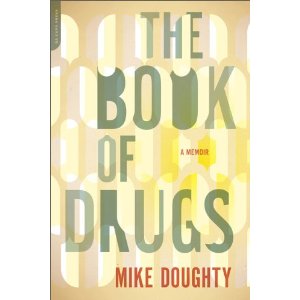
BR: As I read the book, I would read passages to my wife and we’d talk about it. The word I kept coming up with was “honest.”
MD: Oh, wow. Thank you.
BR: Did you fetch up at any point? You were so open about things – from your feelings about those around you to how to deal with a piss-soaked bed in a hotel … not everybody could do that. Did you ever pause and say, “I don’t know if I can write about this?”
MD: You know, the only thing that really made me pause was the stuff about other people. Things about friends that they wouldn’t necessarily want other people to know about. So there were things that were excluded. But as far as things about me? I guess … I guess I just don’t care. (laughs) I’m not going to run for the Senate, you know? (laughter) There’s no practical reason for people not to know that I got shitfaced and pissed the bed all the time.
BR: I’d still vote for you. (laughter) Go ahead, Mike – run.
MD: Errrrr … I don’t think it’s gonna happen. (laughter)
BR: Beyond talking about addiction, there were plenty other moments of openness: describing your feelings towards your bandmates years ago – or your envy of Jeff Buckley, even after the guy died. It’s the honesty that keeps you from being detestable. (laughter)
MD: Thanks. It’s one of the things about having a lot of crazy stories about other people – you have to be totally honest about what you were like. It’s a much harder thing to have perspective on, you know? Not that I can’t look back at certain behaviors and think, “God, what a horrible thing to say; what a horrible thing to do or to think.” But to know your own motivations – that’s the tricky part.
BR: Another part of the book I enjoyed were your descriptions of the awakening process – the awareness that came with being clean. Again, it’s more than just a slogan – a “High On Life” bumper sticker or whatever – you put it down on the page really well.
MD: When you look at somebody who’s drinking themselves to death or drugging themselves and they’re trapped in this very grey space of having a half-life, it’s hard to understand. You need to realize that they think they’re different than everybody else: “This is the only good thing in the world – this is the only pleasurable thing in the entire world; it’s all that I have; and it’s worth the risk of death.”
It just seems like when people are telling you to get clean so that you won’t die, they’re telling you to get clean to be miserable and just experience this kind of constantly-throbbing pain. Discovering that having a life is actually quite amazing – and discovering that there are amazing things in the world is … astonishing, really. I didn’t suspect it, myself; I really didn’t suspect there was any kind of enjoyment in being alive.
BR: So that was a surprise to you, rather than a goal? I mean, you were trying to stay alive, I understand, but … you were trying to escape from something rather than get to something?
MD: Right. I looked at the pros and cons and I said, “I’m gonna try not dying. I’m gonna give that a shot.” What I was thinking was, “Well, I’ll go to meetings; I’ll do all these things for a little while and then I can use again and figure out how to manage it better …”
But when I walked in there and met all these amazing, fascinating people – real artists and real thinkers and people with incredibly creative approaches to living … super observant, incredibly aware people, that’s when I was like, “There’s really something to this.”
BR: There’s a place for this book. It should be handed out to people who need to hear somebody who’s been there talk about this stuff.
MD: It’s funny you should say that, because at the same time, I know somebody’s going to read this book and go, “I hate this guy – fuck being clean.” In the same way that I looked at that stretch of people getting sober in the 80s and I looked at them in People magazine and said “Fuck all these people – these are horrible, awful people who are not like me.”
BR: I don’t know … you never come off holier-than-thou in the book; you’re not denying anything or saying, “No – that wasn’t me.” Honest and true? I think you’re probably going to catch more shit from people who are going to say, “well, jeez, Mike – you should be more repentant. You shouldn’t say that you still like drugs after all that … how could you?” (laughter) I would’ve thought you’d be more concerned about people being pissed about that.
MD: Well, listen: in terms of the recovering addicts that I know, everybody was pretty devastated by the loss of Amy Winehouse. If you’re in recovery and you see something like that, it’s so bad. But I swear to God, everybody that I know that’s an addict loved her song “Rehab” when they heard it – loved it. Thought it was just hilarious. Because we’re not Dr. Drew – we’re Amy Winehouse. That’s who we are: that sort of dark humor; that sort of “rapture of the damned” kind of a vibe. That’s our personality … or at least the people that I hang out with.
BR: I have people that I’m close to who have gone through it and come out the other side with their sense of humor intact. I love and admire that.
MD: That’s what saves your life. Getting honest is what’s necessary; a sense of humor is a form of acute honesty – or can be, anyway.
BR: You mentioned something that made me feel better about one of my quirks: according to you, I shouldn’t worry about being somewhere by myself and suddenly saying “Godammit” out loud because I’ve just thought of something stupid I’ve said or done in the past, eh?
MD: That’s right. (laughter) Sometimes I feel like there’s a guy in my head presenting evidence. I’ll sit back and say to myself, “This is something you did in the second grade – you should be able to forgive yourself” or “This is something you did when you were shitfaced” or “This is something you did and you immediately regretted it … it was a human mistake.” But there’s still a voice in my head, constantly punishing me for it.
The good part is, I now realize it’s a voice in my head … it’s just me realizing the truth.
BR: Well, thank you for sharing it with the rest of us. And I guess we should call it good for now and I’ll let you go. You’re an hour closer to Salt Lake City than you were. I wish you luck tonight.
MD: Thank you, man. We’re going to be plugging stuff in five minutes before we play, so it should be fun. (laughs)
BR: Hey, you know what? It may be the best show of the tour.
MD: Indeed. (laughs)
Postscript: The next morning, I couldn’t help but wonder how the day ended for Mike Doughty and the band. I sent him a quick note, thanking him again for the chat and inquiring about the show. I received an e-mail back within minutes:
“The pleasure was mine! Really fun interview. Thanks.
The bus driver pulled a magic trick, as far as I’m concerned – we pulled up to the venue in Salt Lake at 6:30 pm! Incredible. We had enough time to set up the drums, change the strings, and turn on the amps, and we did it. Great audience – they were dancing, and it looked like every single face up front knew every single lyric.
Mike”
There’s nothing like a happy ending.

No Comments comments associated with this post