



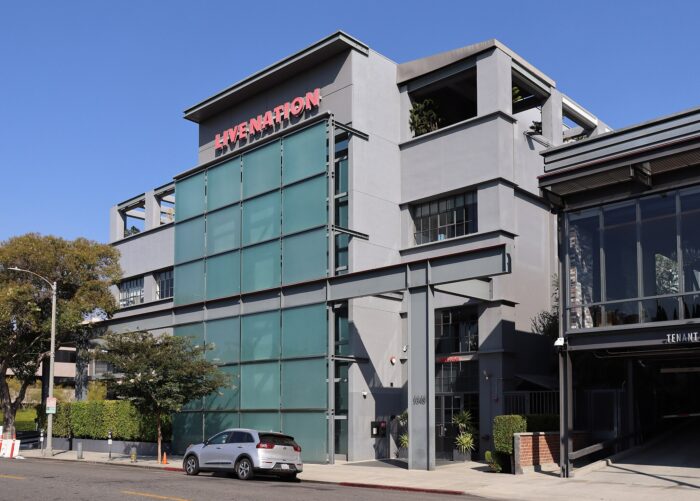
Coolcaesar, CC BY 4.0, via Wikimedia Commons
Less than one week after its trial began, Live Nation has reached a settlement with the Department of Justice in the high-profile antitrust case that had threatened to break up the company and its Ticketmaster subsidiary.
Justice Department lawyers confirmed on Monday that the live entertainment behemoth had agreed to pay approximately $280 million in damages to the suit’s 39 participating states after term negotiations between Omeed Assefi, the acting assistant attorney general for the Antitrust Division, and Live Nation CEO Michael Rapino on Thursday. The settlement will also require structural changes within Live Nation’s business model, including a cap on service fees at 15% of a ticket’s face value at its amphitheaters, a four-year limit and competition carveouts for Ticketmaster’s long-term venue exclusivity contracts and divestment from more than 13 of its major amphitheaters, a market of which the DOJ alleged Live Nation controls roughly 78%.
The agreement’s most consequential fan-facing change is within its Ticketmaster platform, which will be required to host listings from competing third-party sellers like SeatGeek and Eventbrite within its interface. “This will revolutionize the ticketing marketplace,” an anonymous insider told Politico. “These are innovative technological solutions to a very difficult problem with prying open the marketplace.”
The Biden administration’s Merrick Garland-led Justice Department and 39 states sued Live Nation and Ticketmaster in 2024 for alleged anticompetitive practices affecting artists, venues, fans, and start-ups seeking to enter the industry with its flywheel of mutually reinforcing business interests in promotion, management, venue operations and ticketing. U.S. District Judge Arun Subramanian advanced the case to trial three weeks ago, upholding some of the Justice Department’s central allegations – including claims related to the large amphitheatre market and connected “artist-facing” pressure through “tying” claims, as well as those alleging monopolistic control of the venue-facing ticketing market held by Ticketmaster – while excising others. Under Suramian’s framing, states will be able to continue trials reflecting the suit’s initial scope regardless of settlement.
Subramanian responded to the settlement’s announcement with outrage, expressing that no party had alerted him to the term sheet signed on Thursday until late Sunday. “It’s entirely unacceptable,” he said. 10 of the suit’s sponsoring states have agreed to the terms of the settlement so far, while others, like Texas, have expressed “serious concerns” about the deal. Before trial began, New York Attorney General Letitia James vowed to advance the case “regardless of the path that the Department of Justice takes,” and today said she would not agree to the deal that she argued “fails to address the monopoly at the center of this case.”
“My attorney general colleagues and I have a strong case against Live Nation,’ James said, “and we will continue our lawsuit to protect consumers and restore fair competition to the live entertainment industry.”
Stephen Parker, Executive Director of the National Independent Venue Association, has long been a vocal critic of Live Nation’s monopolistic expansion and a leading commentator on legislative moves in the live entertainment. “Live Nation’s reported settlement amount – $280 million – is the equivalent of four days of their 2025 revenue, which means they could potentially make it back by this Friday,” Parker expressed in a statement to Variety.
“The reported settlement does not appear to include any specific and explicit protections for fans, artists, or independent venues and festivals. Reported details also indicate that ticket resale platforms could be further empowered through new requirements for Ticketmaster to host their listings, which would likely exacerbate the price gouging potential for predatory resellers and the platforms that serve them. If these facts are true, NIVA views this as a failure of the justice system.”
Live Nation’s antitrust trial is expected to resume next week, and the company’s legal battles endure elsewhere, including the Federal Trade Commission’s suit for illegal ticket resale practices. Read more here.


No Comments comments associated with this post