The rightful point of emphasis when discussing the career ofthe Rolling Stones is the music. Theirsongs span over five decades, often times as a spot-on representatives of the erain which they were created, and still able to age gracefully into the canon ofrock-and-roll classics. It’s why thegroup can refer to itself without immodesty as “The Greatest Rock-and-Roll Bandin the World.”
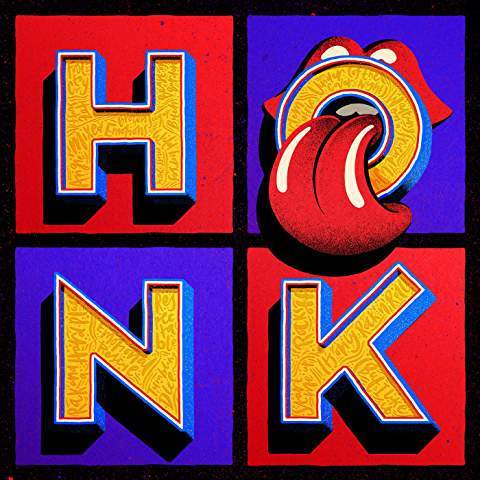
It follows that the Stones would be no strangers to “bestof” compilations, and their catalog is dotted with such, with perhaps 2002’s 40 Licks as the closest to a collectionof their greatest. Now, here is Honk. It’s another comprehensive set, but this one targets the 45 years ofalbums between 1971 and 2016; the date of their most recent studio release, Blue and Lonesome.
Mick Jagger and Keith Richards have long been masters ofmarketing, somehow managing to slot their work into advertising, developingmerchandise in which nearly any conceivable product could flash a Stones logo, dodgingexpected but quickly dissipating blowback, and still retain the necessarystreet cred to stay forever cool. Again,the answer is the music, and again, the Stones find a way to present it withenough new blooms to make it worth picking.
Sequencing is the key with Honk. As they have done with past sets, this one isarranged without regard to chronology. Rather, songs from the ‘70s sit alongside nuggets from the past decade. Hits shoulder with album cuts. And, listened in order, the two-disc journeythrough the years becomes less one of evolution, but of durability anddiversity. By the end, it’s hard toimagine very many bands that could align 45 years of material in such a way,and make one believe they could do it for 45 more.
The third disc consists of live tracks, with guests such asDave Grohl and Florence Welch likely living out the dream of playing with theStones. It’s a nice addition, and anincentive to add this to the stack of other compilations, even with the amountof songs that have appeared previously elsewhere. Honk is not intended to be definitive, but inits own way makes a defining case for the Rolling Stones as a band whose musiccan be parsed out and reconfigured time and again for repeatedly pleasingresults.\lsdsemihidden