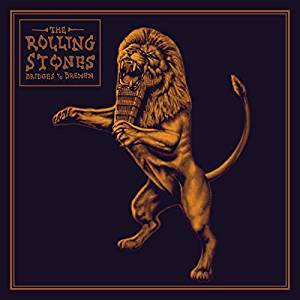
There is a moment in this nearly three-hour show, just afterthe six-piece Stones have completed their stripped down, B-stage mini-set, whenall but Mick Jagger have crossed back over to the main stage. As Mick begins his return strut, withquintessential moves like Jagger, there is a fleeting, almost bashful look onhis face. It’s speculation, surely, butthe expression suggests this: Jagger is truly happy, maybe even happiest, beingthe singer for the Rolling Stones.
Why not? On this1997-98 tour supporting Bridges toBabylon the greatest rock-and-roll band in the world would play to over 4million people. The Bremen show,presented here restored and complete, would come near the end of the run, anddespite the months and months on the road circumnavigating the world, the band-background singers and horn section included- was just as energized then asthey were on day one, maybe even more so as they were also playing for a globalTV audience tuning in as well.
Add to that the group’s latest stage spectacles- a 150-foottelescoping bridge extending out to the B-stage and an enormous circular videoscreen behind them- and once again the Stones somehow made a stadium filledwith tens of thousands feel as intimate as such a vast space could. Yet, what makes any concert worthy of suchshowmanship and set design is the music that accompanies it. The Bridges tour followed a successful studiorecord, so an album single like “Saint of Me” or newer cuts such as “Flip theSwitch” and “Anybody Seen My Baby?” co-mingling with “(I Can’t Get No)Satisfaction,” (in a surprise role as opener), or “Gimme Shelter” (also landinguncharacteristically early in the evening) gave the first half plenty of fresh varietyand verve.
There are a few deeper dives, such as Keith Richards’ “WannaHold You,” and the B-Stage homage to Bob Dylan on “Like a Rolling Stone,” thatbreak up the stretch of gold starting with a decadent “Miss You,” with Jaggerat his devilish best, and running all the way through to the “Brown Sugar”finale. These hits have become known inStones fan circles as the war horses. Still,piled one after the next, they are a relentless reminder of how great the bandhas been for so long. (The four bonussongs from a performance in Chicago also give a bit of contrast to therepertoire, and are no less charged with Stones magic.)
By the Bridges tour, the Rolling Stones had become somewhatmasterful in their execution of a stadium show. New toys gave the returning audience a novel thrill, but it was theonline voting during the show that provided the telling evidence of why thefans really keep coming back. Inreal-time, they chose a relatively obscure album track, a plaintive ballad, tobe played, and the Stones, without hesitation, played it. For all the staging and pageantry andenormity of the event, it was a simple trip to the “Memory Motel” that theywanted, and, essentially, throughout the entire extensive performance, whatthey got, from a band that, over 30 years in, seemed more than happy to oblige.