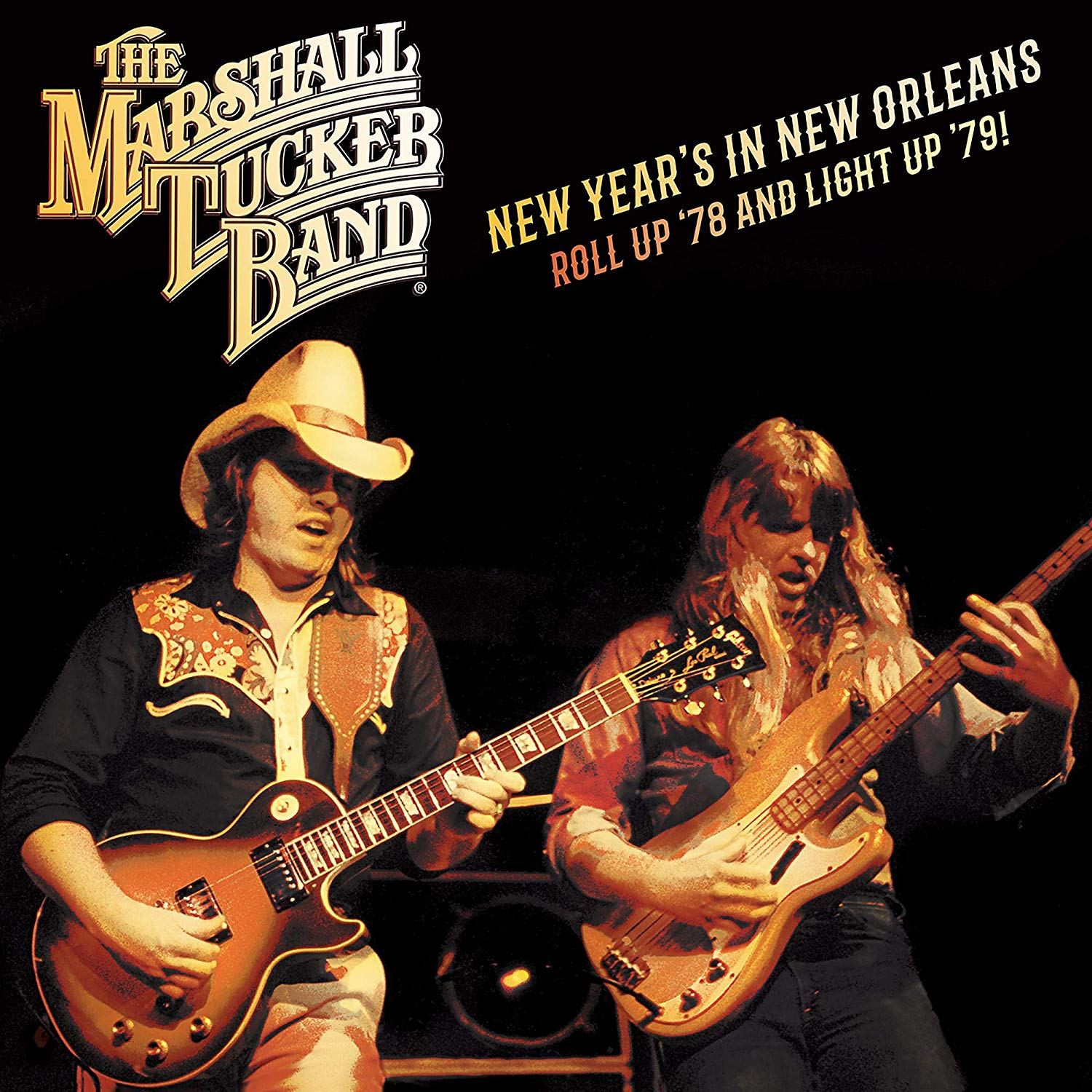
There is so much to like about this archival release from TheMarshall Tucker Band. Not the least ofwhich is the fact that it captures the legendary South Carolina band likely atits peak, both in strength of songs and performance. By the last night of 1978- this being a NewYear’s Eve recording from the famed Warehouse in New Orleans- the MTB had notonly a few certified hits under their belt, but also had reached up into arange of group improvisation allowing their various instrumental talents tosoar to their highest of heights.
It’s easy to start with Toy Caldwell’s oftenunderappreciated guitar-playing and its melodious blend of blues, swing, jazz,and country that carried the jams- and there is a lot of jamming here. Yet, just as crucial to the group’s sound, andto its ability to separate itself from the ‘Southern Rock’ tag, is the dynamicsaxophone and soothing flute of Jerry Eubanks; the latter instrument anessential tempering color of the FM staple, “Heard it In A Love Song.” Both are truly alive on this recording of the show, drawn from a nationwide radiobroadcast (and featuring cameos by an extremely excited emcee introducing theband); the tapes blessed with relatively strong fidelity and a mix thatbalances the sextet quite well. Even ifCaldwell’s voice is self-admittedly nearly gone by the time they hit “Can’t YouSee,” there is no hiding it- and that’s a good thing.
That tangible working-band instinct, nurtured by endlesstouring over their (at the time) six-year existence, is readily apparent onthis two-disc set, particularly on extended takes such as the 13-minute “24Hours At A Time.” Not to mention howthose stretches of improv served to fuel a distinctly liberating party-in-New-Orleansatmosphere- illustrated so perfectly by the booklet photo of longhairedcountdown revelers in the front row raising bottles of liquor overhead. At once, this terrific addition to TheMarshall Tucker Band’s archival catalog is both a full-color sonic photographof 40 years ago and a current notice, perhaps, of a group that deserves asecond listen in these times to fully appreciate just how good, and unique, anensemble they were as they rolled up ’78 and lit up ’79.