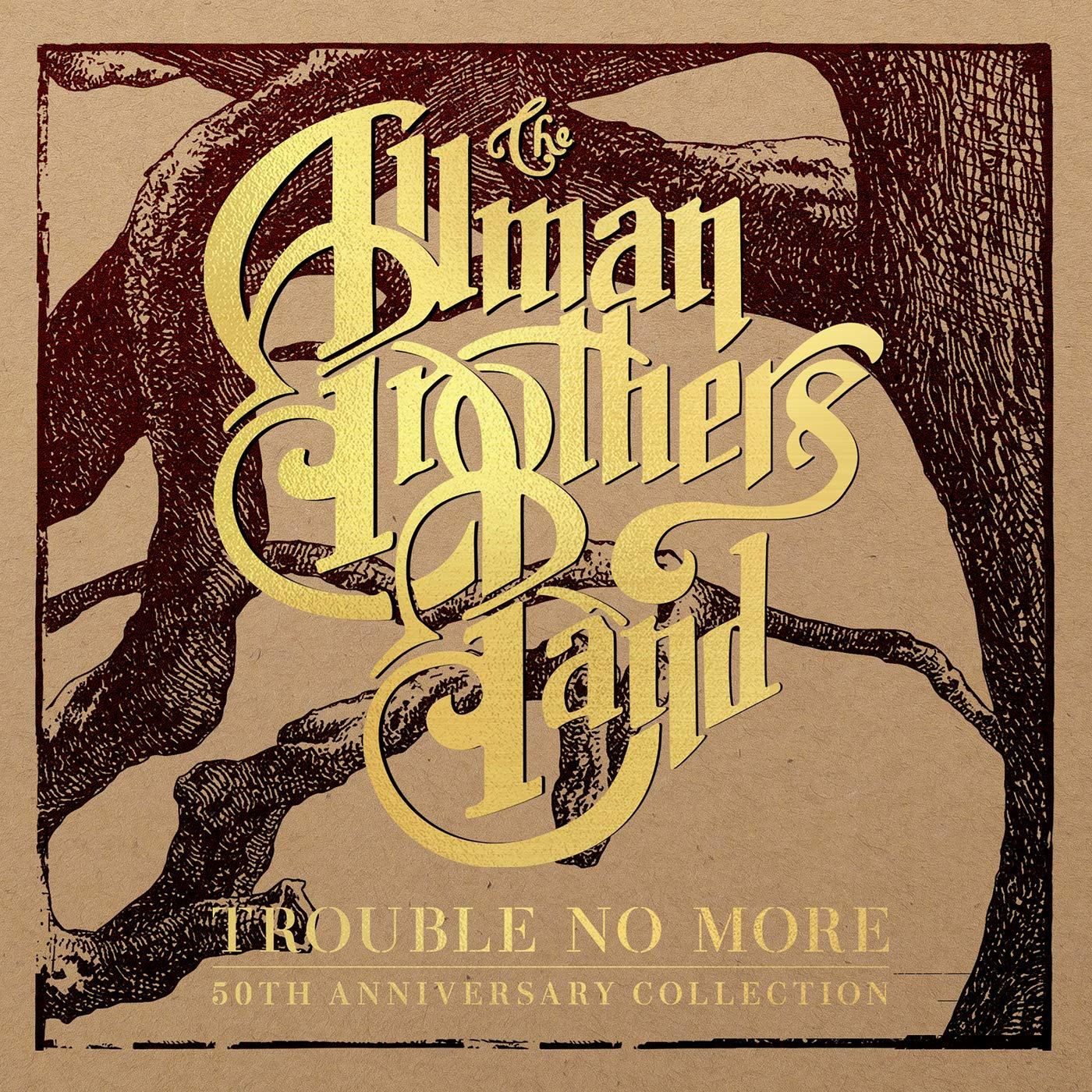
This is the second multi-disc collection that spans thecareer of The Allman Brothers Band. Thefirst, 1989’s Dreams, marked theRock-and-Roll Hall of Famers 20th anniversary and, at least in part,led to a band reunion tour and 25 more years of performing. This set in celebration of the group’s 50thanniversary will not yield such kismet; the band officially retired in 2014,and the subsequent passing of vital members laid any notion to rest.
Which is where the five-CD compilation ends, with thefarewell night of The Allman Brothers Band in October of 2014, and the finalperformance of “Trouble No More.” Thetitle track is also where it all begins- on a 1969 demo, previously unreleased-and is one of the ways this box differs from its predecessor. While Dreamswas comprehensive in selecting excerpts from the pre-Brothers bands like HourGlass and The Second Coming, as well as solo tracks from the catalogs of GreggAllman and Dickey Betts, this set focuses solely on the 45-year output of TheAllman Brothers Band.
Using their contemporaneous record label homes as markers,the five discs are divided accordingly: The Capricorn Years; The Arista Years; TheEpic Years; The Peach Years. And whilethe earliest of the Capricorn period- 1969-1973- is most often seen as theensemble’s peak, the set does quite well at making a case for several ascentscompeting with that four-year crown. Especially the Peach Years, with the twin-guitar transcendence of WarrenHaynes and Derek Trucks, and its wealth of live, previously unreleased cutsfrom their adopted home, NYC’s Beacon Theatre.
The Brothers were among the first in the download age toissue recordings of their concerts immediately following their conclusion. They’ve also routinely mined the vaults forarchival shows, some dating back to the band’s earliest tours. So, yes, there is a lot of ABB out therealready.
Why Trouble No Moreis essential to those beyond the completist is that, including the neatly inclusivehistorical essay by the group’s chief archivist John Lynskey, it’s more thanjust a bounty of great songs in one place. This is the goalpost-to-goalpost story of their five decades together- neveroverwhelming nor too finite- for a sum experience unparalleled in telling theirtale. Every lineup of the band’s 13incarnations is represented with at least one track. Every crucial venue or event- Fillmore East,Watkins Glen, the Beacon- has multiple entries. (It’s particularly worth noting that Watkins Glen is recognized with anelating, previously unreleased “Mountain Jam” that includes the Grateful Dead’sJerry Garcia and Bob Weir, as well as The Band’s Robbie Robertson, sitting-in.)
As Lynskey writes, 50 years for a rock band is almostinconceivable. What is moreinconceivable after listening is that any band 50 years from now will be ableto say it has accomplished such an incredible, indelible career as The AllmanBrothers Band. Innovating, evolving,thriving, surviving.