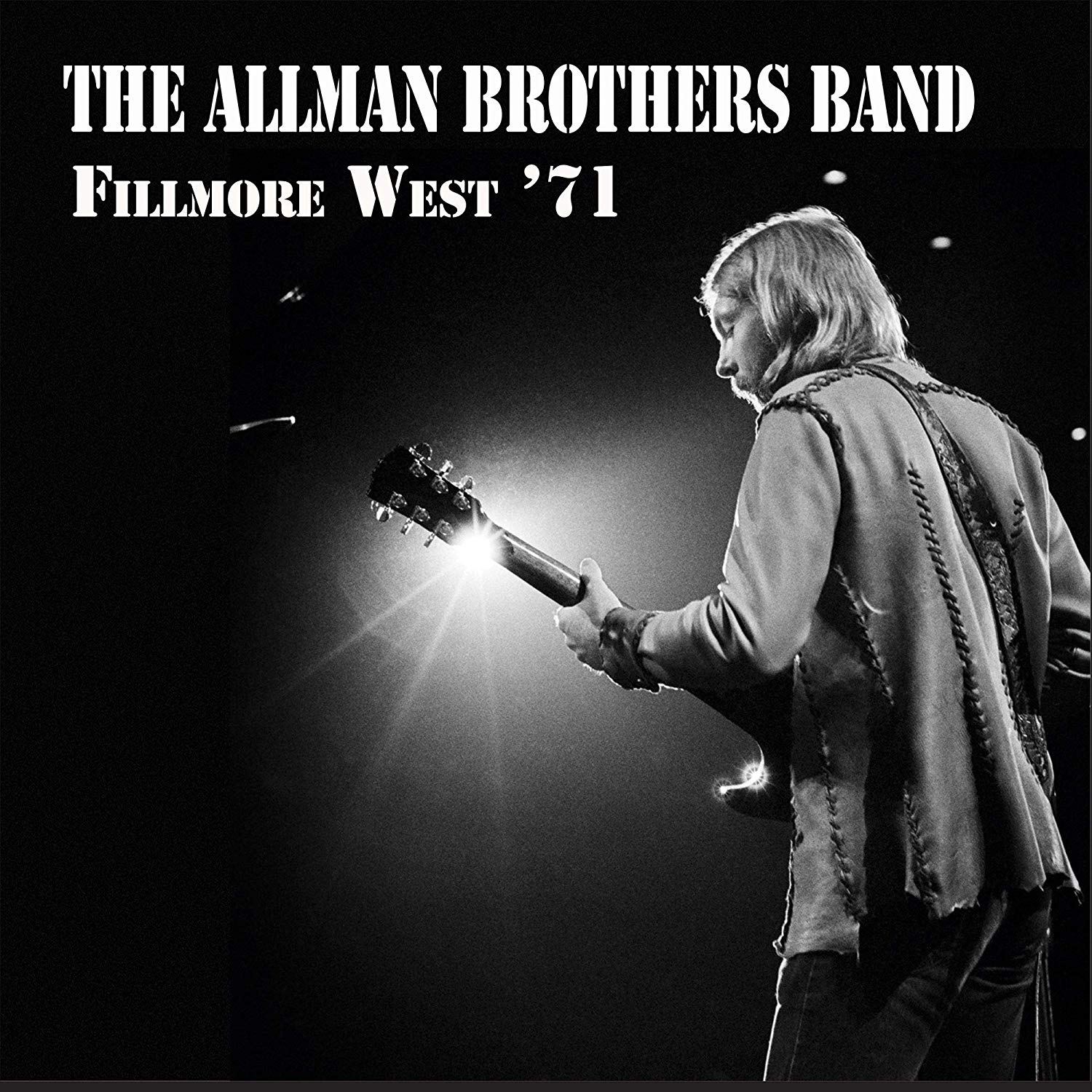
The best thing about this four-disc set comprised of three consecutivenights at the famed Fillmore West in January of 1971 is how different, yetfundamentally akin it is to the performances recorded a couple of months laterat the Fillmore East that would serve as the legendary At Fillmore East album. Certainly, the Allman Brothers Band were developing their rapidlyevolving chemistry as a group from a limited repertoire, drawing from adozen-song batch each night, with much of the list repeated from show to show. Yet, as any fan of the band knows, everyperformance was unique onto itself, led in the moment by the improvisational twin-guitarphalanx of Duane Allman and Dickey Betts.
Not only do each of the three shows captured here (and a45-minute “Mountain Jam” from a March ’70 gig at The Warehouse in New Orleans)carry their distinct individual characteristics, as a whole they suggestsomething in contrast to those Fillmore East appearances: the venue mattered. Granted, it’s speculation, but the daring,amphetamine ambition of the tempos and the wild and dark edging of the extendedjams that populate this trio of appearances seem to epitomize the streets ofpsychedelic San Francisco. Even AllmanBrothers Band historian John Lynskey, in his liner notes, refers to one of thethree versions of “Whipping Post” contained here as “evil-sounding”; an atypical,if strikingly accurate, description.
Whereas for the Fillmore East shows the band knew they wererecording a live album, here they are under no such pretense and it shows. Loose, aggressive, mesmerizing, fearless;grab a synonymous adjective and it fits. This also means, however, the quality of the recording, while exceptionalgiven the source material (reel-to-reel, two-track tape), isn’t the sonic marvelthat is Fillmore East. There are timeswhen Gregg Allman’s vocal or keyboard are lower in the mix than optimum, and,in general, the balance more than favors the two guitars. Still, the mere existence of these treasures,and their careful restoration overseen by former band manager Bert Holman, isjoyous enough, and a befitting way to celebrate the band’s 50thanniversary.
Whether the confidently unbridled charge of “Hot ‘Lanta”from the 1/31 show, the maturing blues of the lone “Stormy Monday,” from 1/30,or the nuances within any of the three renditions of jam vehicles “In Memory ofElizabeth Reed,” “You Don’t Love Me,” and “Whipping Post,” Fillmore West ’71, both as band artifact and for the scintillatingperformances, is worthy of the same exalted status as its NYC sibling.