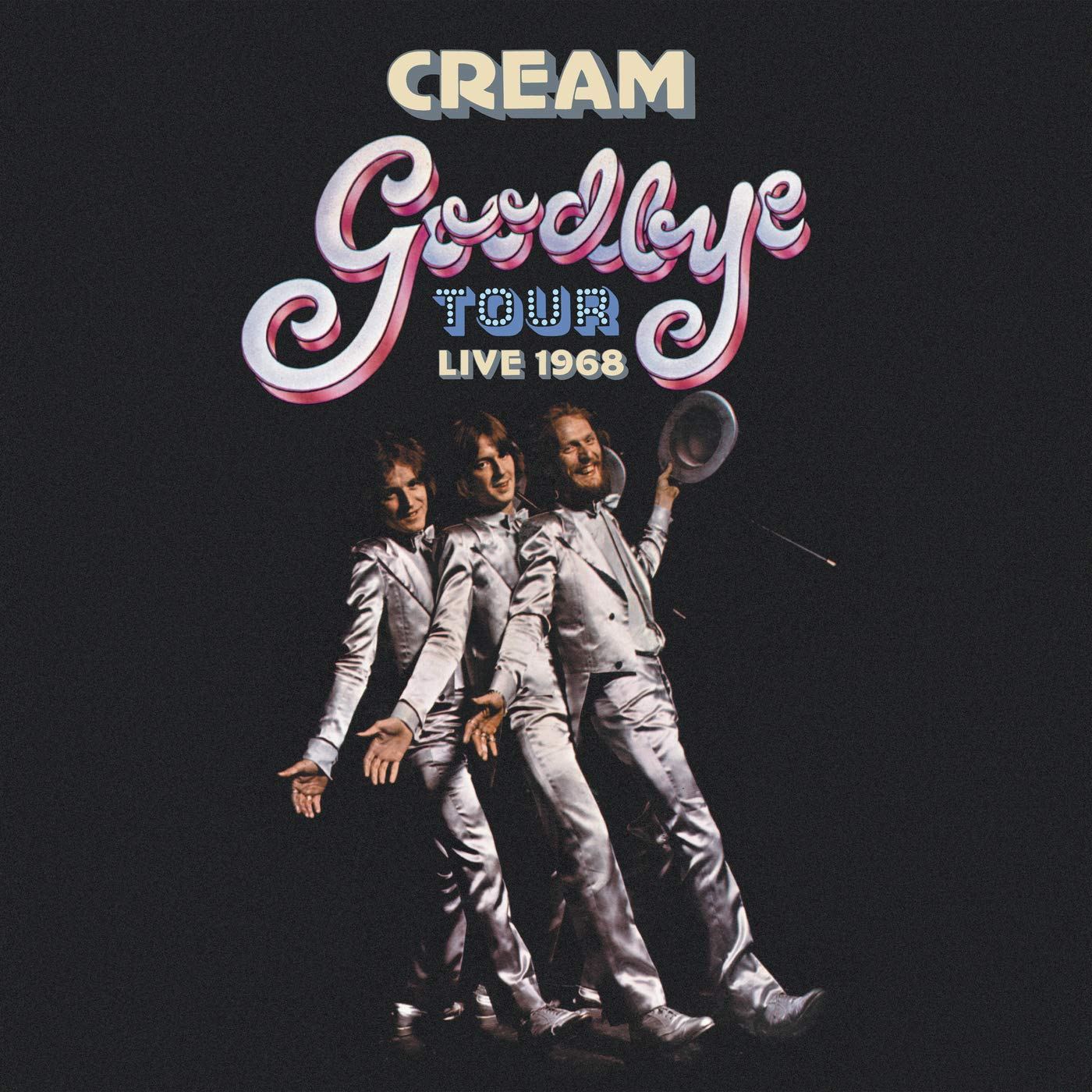
The short-lived and explosive British power trio Cream lefta crater-sized divot on the landscape of rock-and-roll in the late 1960s. In 1968, along with the Jimi Hendrix Experience,Cream was among the world’s most notable practitioners of psychedelic electricblues and rock, playing to sold-out crowds on both sides of the Atlantic. So, when the group announced that they weresplitting up, but would undertake one final studio album and tour, it was quitea shock. Sort of.
The sparring between the three- guitarist Eric Clapton,bassist Jack Bruce, and drummer Ginger Baker- was well-known, and the fact thatthey lasted through two years and three albums prior to the Goodbye run was, at times, its ownshock. They played together the same waythey related to one another: with a mercurial sense of tension and release;concerts feeling like a battle of wills. But that volatility induced some serious musical firepower, immediatelygrabbing and holding the attention of the genre’s future; Ozzy and Tony Iommiwere certainly aware; Hendrix and Duane Allman were definitely listening.
This four-CD compilation of four shows from that last tour,including a finale at London’s Royal Albert Hall, are performances mostly releasedfor the first time. Some tracks haveshown up on post-breakup live albums, but as complete appearances, this is adebut. And, it’s a treasure chest forany Cream fan. What is most rewarding,and revealed by this collection, is how much the band really jammed,improvised, and shifted from show to show. Eight to ten songs make up hour-plus sets; stretching was mandatory.
Furthermore, while Cream could just as easily tie-dye thefrontal lobe with renditions of “White Room” or “Sunshine of Your Love,” they alsobrought the heavy on extended piecesof barbed-wire blues like “Politician” and “Spoonful.” In David Fricke’s terrific essay, he mentionsa contemporaneous Rolling Stonereview written by then-Brandeis student and future Bruce Springsteen manager,Jon Landau. The critique’s affectingline, for Clapton at least, was that the band was one-dimensional, with no useof dynamics.
By this point, Eric Clapton had been anointed God by thegraffiti taggers in London’s tube stations. Certainly Jack Bruce and Ginger Baker were no less than apostles intheir own right. What Landau may have missed-and what this blazing box set lays bare- is that God’s work is just as dimensionaland dynamic in volcanos, tornados, and hurricanes as it is in meadows, streams,and sunsets.