
With apologies to Jon Landau: I have seen the future of protest music. And his name is Jesse Welles.


After catching Welles’ set before a humongous audience outdoors at Hardly Strictly Bluegrass a few weeks back, I caught him indoors Oct. 26 in the relatively intimate confines of Columbus, Ohio’s, KEMBA Live! What transpired in Ohio was an elongated version of what took place in California, but, in testament to Welles’ shake-it-up mentality, Tom Petty’s “I Won’t Back Down” didn’t make the cross-country trek to KEMBA.
There were, however, a handful of covers that we’ll get to later. But first, back to the future.
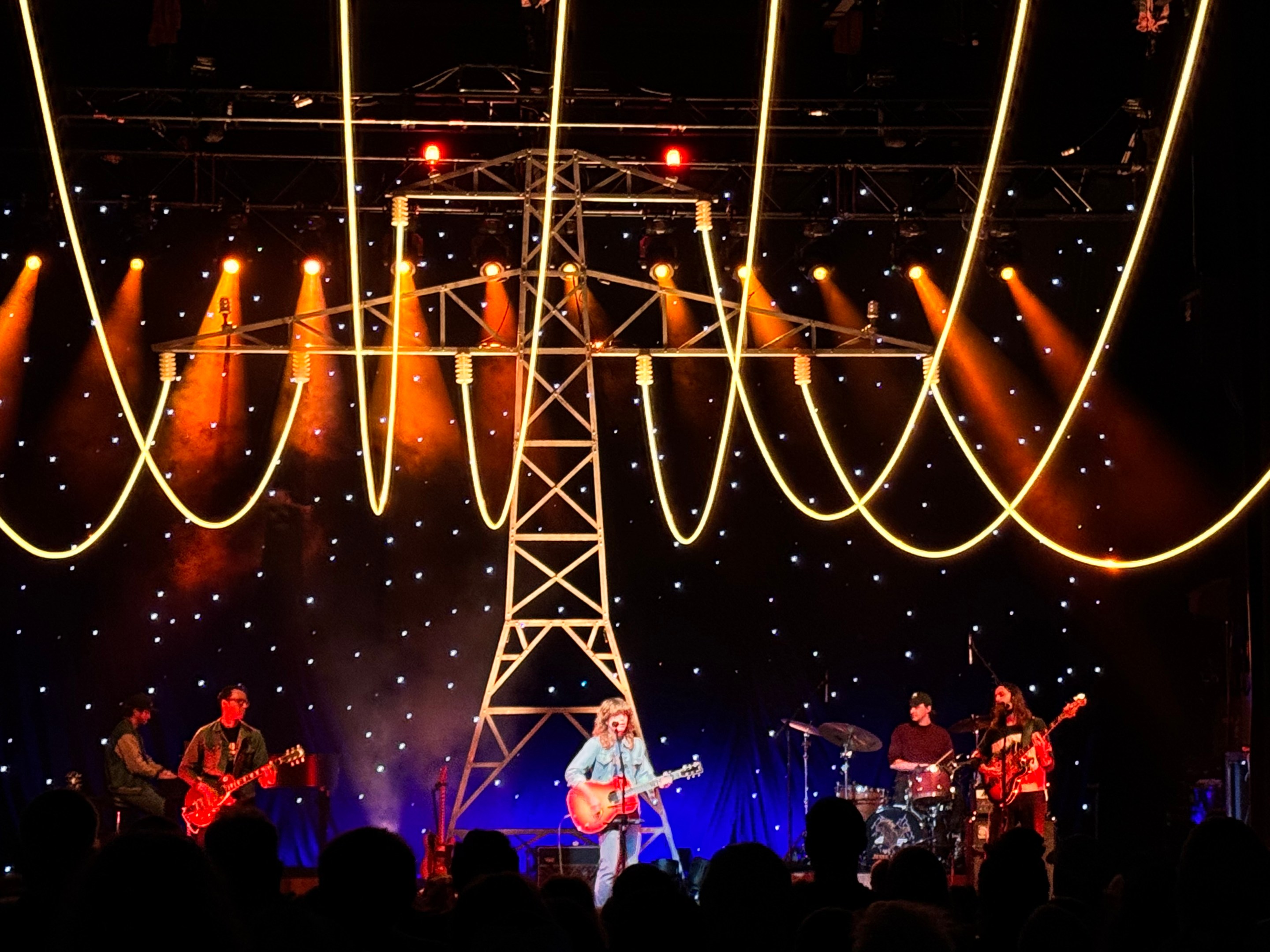
Welles set up shop on a stage outfitted with a tower and faux transmission lines to mimic the videos that catapulted him to the months-long tour that wrapped in Ohio’s capital.
As in the aforementioned videos, Welles played solo-acoustic style and offered up such acerbic folk songs as “Fat,” “Walmart,” “Fentanyl” and “War Isn’t Murder” and offset the bitterness with the whimsy of “Turtles” and “Bugs.”
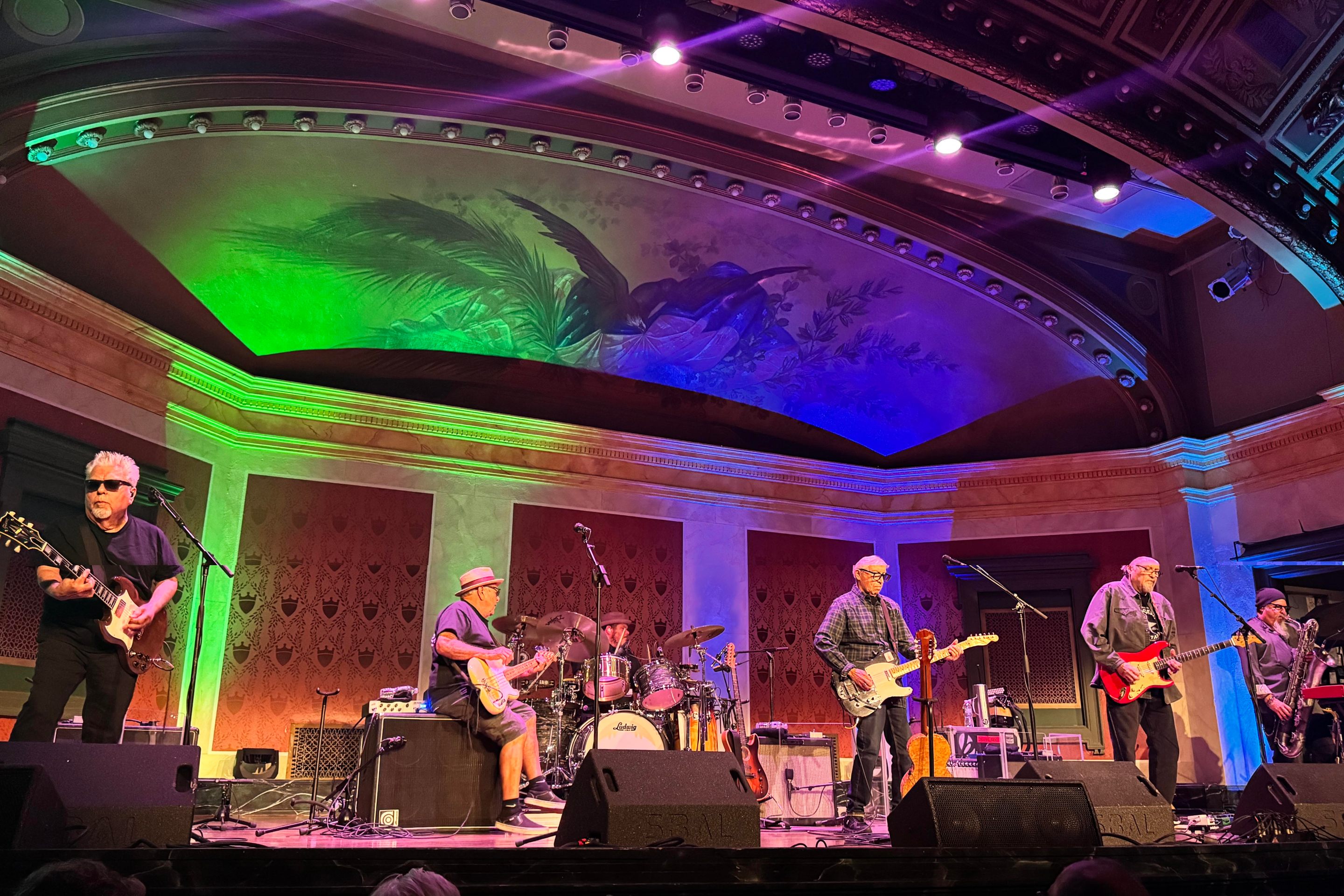
Unlike his DIY Under the Power Lines hits, Welles also performed full-band, electric style beneath the sham utilities—which pulsed with reds, blues and greens to create the illusion electric generation—and proved himself a mean guitarist in his own right. He alternated between lead and rhythm duties and joined in Allman Brothers-inspired guitar harmonies with Adam Meisterhans on “Masks Off,” “Ballad of Big Balls” and “Fear is the Mind Killer.”
Rather than splitting the 130-minute show down the middle à la Neil Young, Welles weaved in and out of solo and band segments. The former showcased his lyricism and reflected the dread and disbelief the news can cause at home, while the latter captured the rage that drives many of us onto the streets and set it to strong melodies and kick-ass rock ‘n’ roll arrangements.
As for those covers: Welles followed the original blueprints and proved his raspy voice is just part of his vocal palette as he channeled Ozzy Osbourne on “War Pigs,” Bob Dylan on “Don’t Think Twice, It’s All Right,” John Denver on “Take Me Home, Country Roads,” John Lennon on “Lucy in the Sky with Diamonds” and John Fogerty on “Have You Ever Seen the Rain?” So, as with Dylan, the question with Welles is: which is his natural singing voice? As for a question never asked of Dylan, or of Woody Guthrie or John Prine or Todd Snider—all of whom Welles draws from—where’d this dude learn to rap?
Doesn’t matter, really, as Welles’ many voices and musical guises naturally melt into a sonic mirror of modern American dystopia. These are difficult times—times that make it hard to find positivity.
Welles—even when singing of negativity on “United Health” and “Join ICE”—is a positive presence. And songs like “Red” and “Good Morning America,” the latter appearing in the encore slot, provide hope amid an era that often seems hopeless.
“Good morning Amеrica/good evening America/I lovе ya/you can like it or don’t/they’re tired, but they ain’t wore out/anyone can call this land home,” he sang to positive reinforcement from the rapturous, immigrant-loving audience.