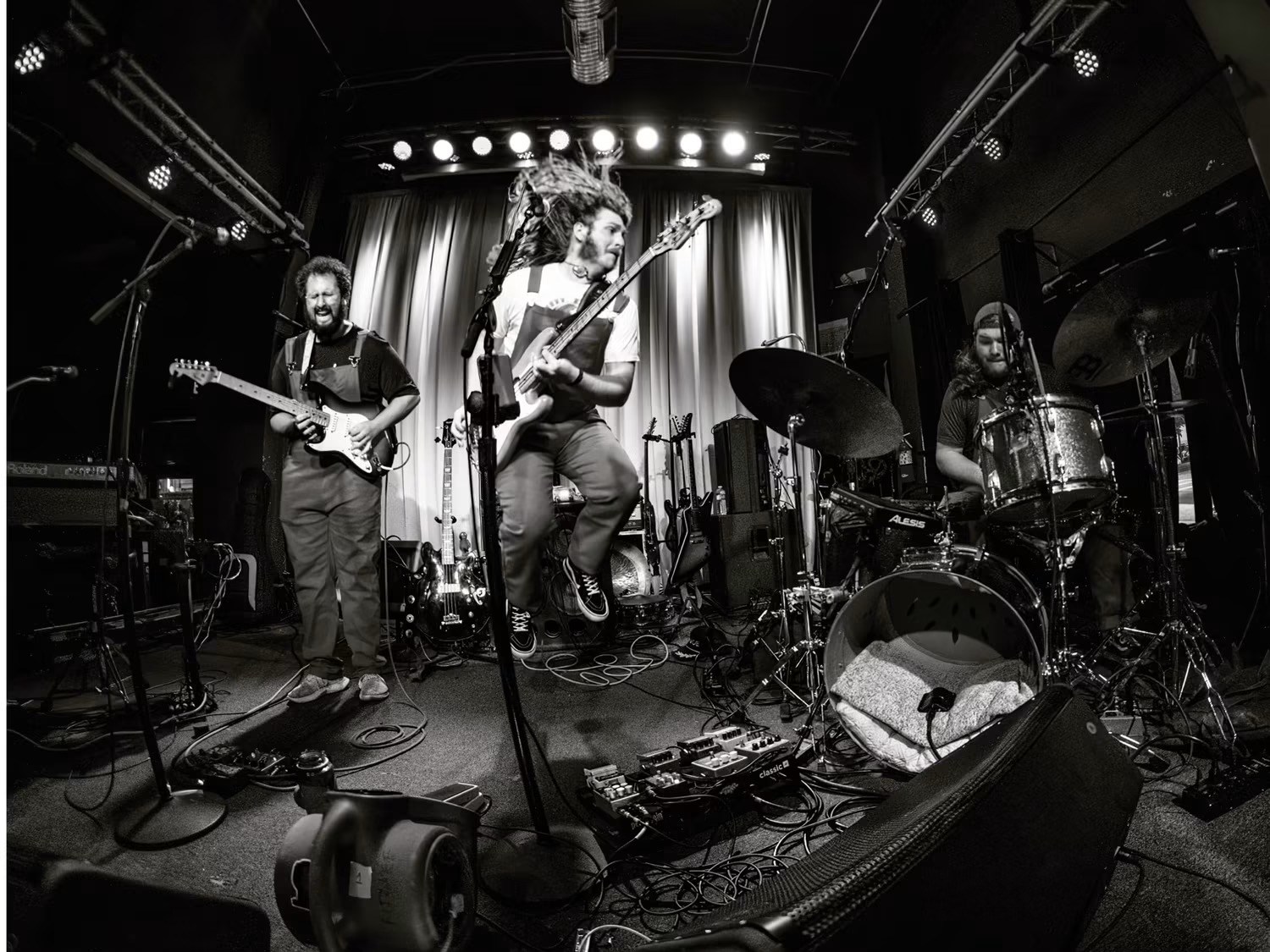
Photo by Barry Brecheisen
I’m a beer tourist. I never thought of it that way before, but I find myself at the 21st annual Telluride Blues & Brews Festival, realizing that I am just as likely to travel for a great beer as I am for great music, or for excellent scenery. Happily, for me, the beer tourist, the music tourist, and the eco-tourist are all well-sated aspects of my psyche here and now in Colorado.
“This is the most beautiful place in the world to have a festival,” exclaims Chris Vos, of crunch-blues outfit The Record Company at one of the festival’s after-hours Juke Joint shows at the Telluride Elks Lodge. The Juke Joints are a clever branding ploy on the part of the festival organizers, in an attempt to accommodate a “pop-up” music scene which, presumably, does not normally exist on the streets of Telluride, Colorado.
Though the main festival stage itself boasts some huge talent for the weekend – I caught most of a stellar set from the Robert Cray Band via KOTO-FM at 91.7 on my afternoon drive into Telluride – my money’s on the Juke Joints to really give me that intimate feel which makes the blues (and its unholy offspring, rock-n-roll) dig way down deep in your soul and make you feel something. As an aside, holy effing sh*t, see The Record Company live in a small club while you can, if you can. This was their only appearance on the Blues & Brews bill this year, though their broad-shouldered sound (think the Black Keys meet Mofro) should be filling arenas before very long.
The after-hours gigs charge a cover above and beyond the price of admission to the festival, and many are sweaty, standing-room only, wait-to-be-let-in-when-somebody-leaves kind of affairs, which only makes them all the more attractive to certain types. The grand beer tasting, which takes place during a 3-hour time period right in the middle of the festival, comes with the price of admission and, unsurprisingly, is the most crowded part of the entire weekend. I am told the normal population of Telluride and the surrounding area is about 3,000. The head count for the grand beer tasting comes in at well over 10,000. Somehow, Telluride is able to handle the influx of several times their normal population on a fairly regular basis. When asked, one of the representatives of the tourism board claims that Telluride’s slow season is “November.”
Day 2 of the festival begins with an amplified playback of the William Tell Overture, letting those waiting patiently in line know the time has come to storm the gates and claim their own piece of blue-square-tarp land for the remainder of the day. Anyone who arrives after the gates have opened are, therefore, likely to be relegated to the hinterlands of the open field, also basically known as the food court.
There are 56 breweries represented today, pouring 170 varieties of ale, stout, bitter, porter, lager, and even cider, which seems to be rising in popularity with brewers and drinkers alike. I’m not very good at math, but it’s obviously impossible to try every single brew available in this free-for-all, even if you could remain standing through it all. After considering the available options, I make a list of must-trys, a list of if-I-get to-thems, and stop there, suspecting there will be no time to go further. Many of the must-trys on my list are brewers from far afield, which I’m unlikely to have another chance to sample on tap – oddly enough, this is similar to the strategy I use to deicide which bands to watch at a festival.
Most of the brewers here are from Colorado, a burgeoning state in the craft brew realm. Julieana, a beer photographer from Ft. Collins, CO, tells me there are now 16 brewers in that city alone. Her associate, blogger Lauren Hoff, claims the front range of Colorado deserves the title “Napa of Beer,” though other beer-heavy states have also attempted to lay claim to that moniker.
When the 3-hour tasting was finished, most brewers had been drained dry of their allotment for the day. The sample-sized glasses, combined with long lines at most brewers, meant a sobering regulation of sorts for me, though I was able to sample all of my tier 1s, and most of my tier 2s. I even managed to uncover a couple of new favorites I plan to seek out when I return home.
Photo by Campbell Davis
Nothing to do now but check out more music! Though the festival has the word “blues” in its name, like most festivals, it hardly limits itself by the label. I overheard one disgruntled festival-goer storming across the field, making for the exit, say, “This isn’t blues.” “Suit yourself,” I think, “more room for me to boogie.” Most of Saturday’s after-brew lineup was pretty funky, with Dumpstaphunk and The Meter Men representing New Orleans in fine fashion, and George Clinton’s Parliament-Funkadelic representing freewheeling freaks, space cowboys, and rumpshakers everywhere with his unique brew of mind-bending grooves. He seems to be able to manage the role of bandleader just fine these days, but perhaps due to the altitude seemed content to leave the heavy lifting to his top-notch lineup.
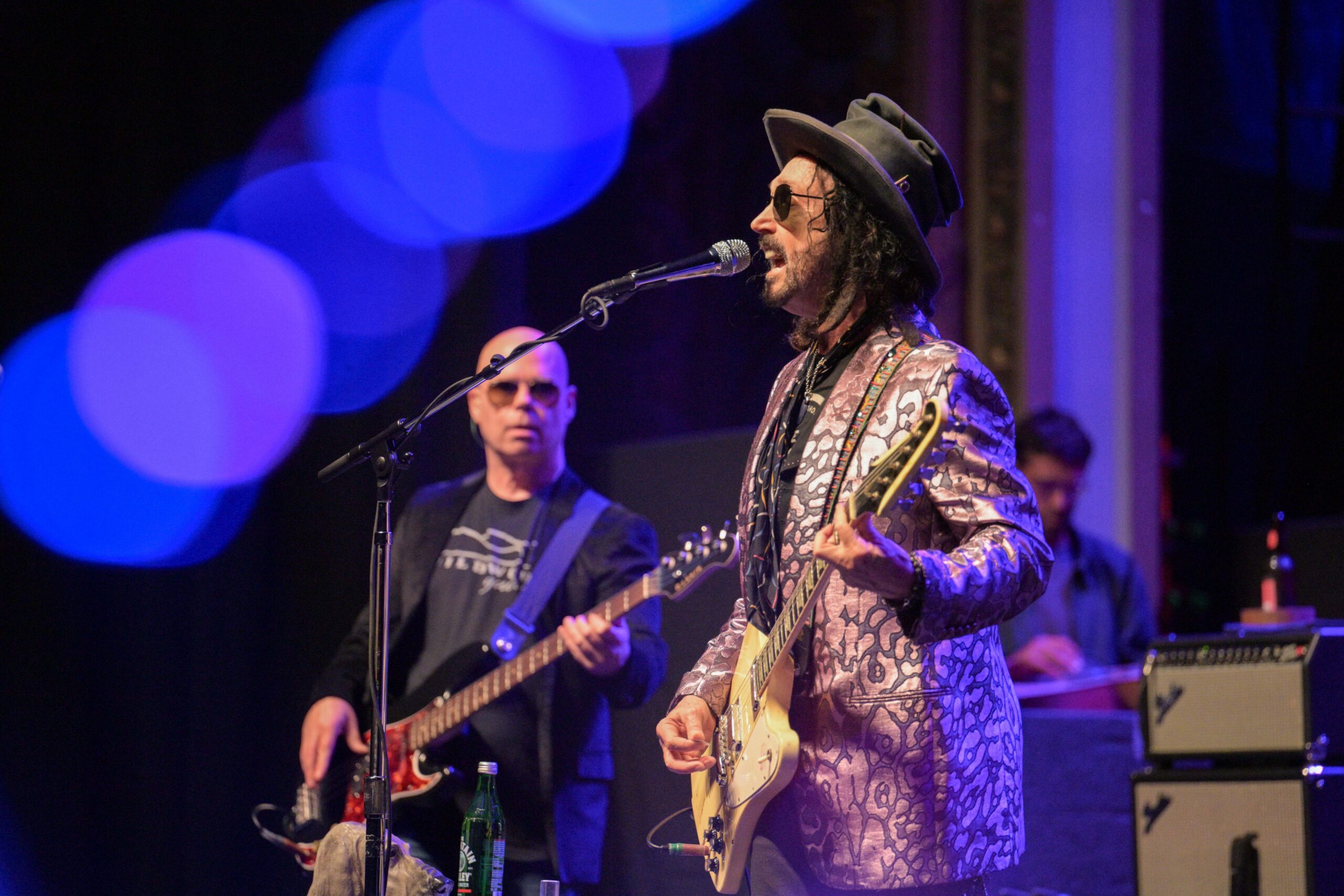
Highlights of the musical portion of Day 2 include Ivan Neville sitting in with The Meter Men on “Ain’t No Use,” and Mike Hampton (a.k.a. Kidd Funkadelic) taking the late Eddie Hazel’s lead on a “Maggot Brain” for the ages during the P-Funk set. The P-Funk show was, by turns, wacky and refined. By alternating these aesthetics, I suspect Clinton very purposefully caused all onlookers to “free their minds so their ass would follow.” Perhaps the legendary “mothership” is nothing more than the overflowing spirit of human community he engenders.
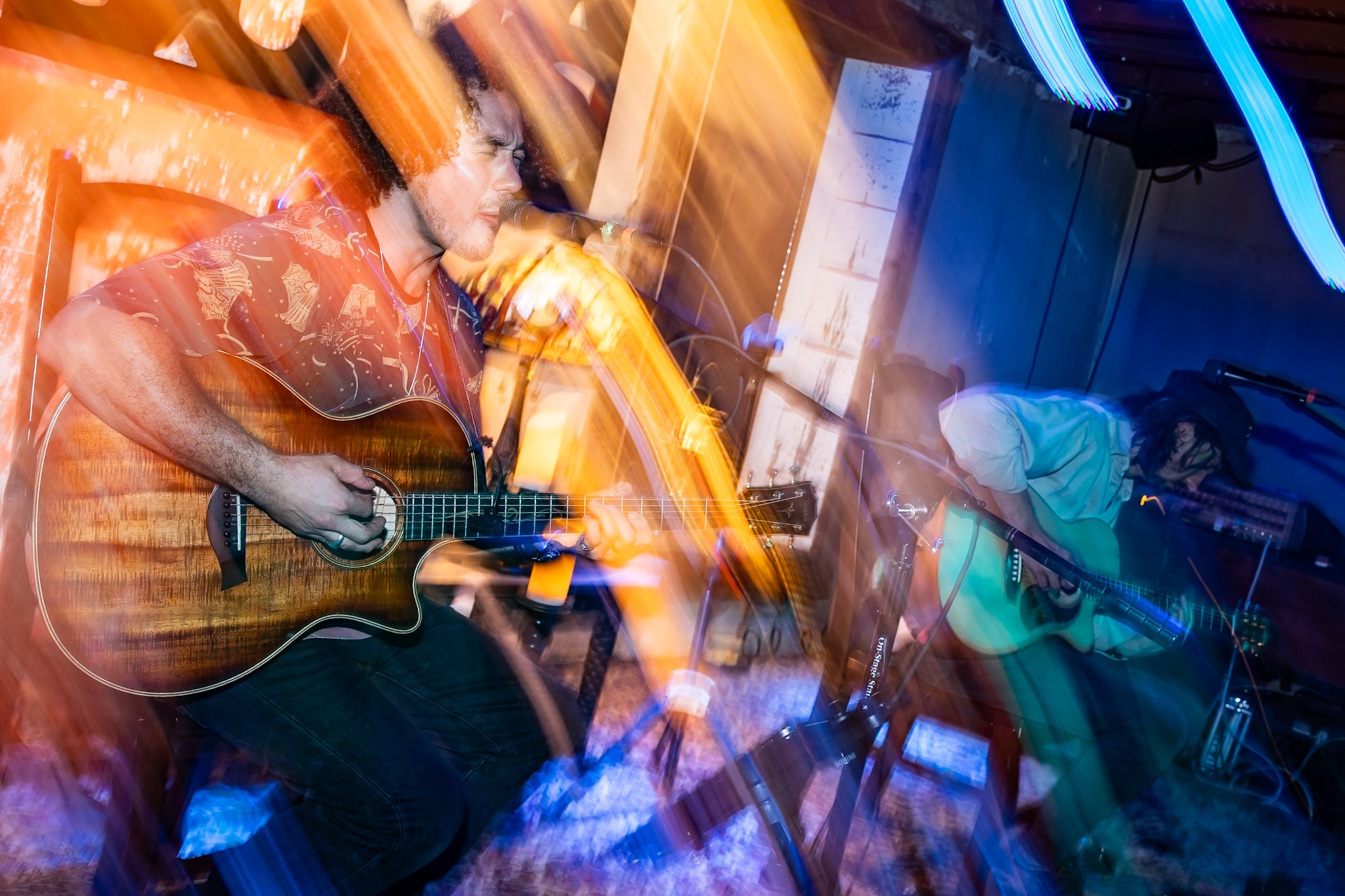
Remember what I said about those Juke Joints? The subterranean Fly Me to the Moon Saloon hosted an unbelievably cool after-hours set from one-man band Zach Deputy. We were shoulder-to-shoulder and the place was, like, Phoenix hot, but once Deputy started playing the outside world receded to insignificance and all that mattered to me, and by the looks of it, to everybody else, was to get down by any means necessary. I’ve liked several of Deputy’s sunshiney-disco-folk recordings, but nothing compares to witnessing his building of the loops in front of a maximum-capacity crowd anxious to get their groove on.
As I mentioned, the smaller venues were where I was convinced the real action was to be had. Come Sunday morning I realized I hadn’t yet checked out a satellite stage operating during normal festival hours in another makeshift affair which is normally, I’m told, an ice skating rink. New Mexico’s Chris Dracup was to be the opening act of the day on this stage and, though he had quite a few die-hard fans ready to shake it on a Sunday morning, and his tone was clean and his presentation very bluesy in the traditional sense, the crowd was, to be kind, sparse. Sunday morning’s bound to be a rough time slot after all that carrying on taking place well into the wee hours on Friday and Saturday, though. I verified this by venturing back into the almost blinding daylight to check out the end of The Lee Boys gospel-tinged R&B set on the main stage (which was awesome), followed by the spry, retro-soul antics of Lee Fields and the Expressions (also awesome) both to what seemed like a criminally thin crowd.
I got to wondering if everyone who’d traveled had packed up and gone home so they could be to work on Monday, but slowly, long about 2 p.m. the throngs started filling out once again about halfway through a much-anticipated set from Shakey Graves out of Austin, TX. His minimalist approach to instrumentation is balanced by an achingly beautiful, almost transcendent vocal delivery reminiscent of the late Jeff Buckley.
Now it was time to hunker down and get serious. If Sam Bush is the King of Telluride Bluegrass Festival (and he is), then Anders Osborne must be the King of Blues & Brews. The stage announcers claim Osborne has played every single year at Blues & Brews and I’m inclined to take their word for it if it will get them off the stage faster. Osborne comes out with both guns blazing. I’ve been dying to see him live ever since AXS-TV aired a measly 2 songs during their Jazz Fest coverage earlier this year, and he does not disappoint. Because Osborne’s performance is so engrossing, it’s a full few songs into the set before I notice Papa John Gros (of the possibly defunct Papa Grows Funk) is backing Osborne on keys. Come to think of it, he also backed The Meter Men the day before. Is Blues & Brews like Jazz Fest in miniature? I ask celebrated poster artist David Craig (whose home base is New Orleans) his opinion, and he states, “I love this festival. Jazz Fest is bigger, but this is more beautiful.” And what a sight to behold the carnival-esque turn the festival takes when hundreds of Mardi Gras beads are tossed into the crowd during Osborne’s set, and a parade of ten-foot tall costumes march their way through the crowd in an ambiguous, snake-like pattern.
I make my way to the media hospitality tent backstage to refresh my beverage when one of the pit photographers bursts in with the biggest smile I’ve seen in an entire weekend of thousands. “Someone looks like they just got some great shots,” I guess. Turns out I was right, but this guy, Campbell Davis, is gleeful that he not only got some great shots of Osborne playing one of his company’s custom guitars, but that he also got some great shots of Mike Hampton on “Maggot Brain” from the previous night, also playing one of their guitars. For the curious, the young company is Born Custom Guitars out of Broomfield, CO.
Now, one of the living legends of the electric blues takes the stage. Hardly anyone actively performing today can claim a 50-year-plus track record, but Buddy Guy can. He proceeds to show us all, including the other performers, how it’s done. Laying it down thick and hard, but with a smiling nonchalance, Guy charms even the most jaded of us into being on his side from the word “go.” He even throws a bonus history-of-the-blues-in-10-minutes-or-less lesson in for free. And he’ll be damned if he’s gonna stay cooped up on that stage for the entire set, because by golly, he’s got a mobile guitar, and he’s gonna snake his way through the audience too! He’s an almost impossible act to follow.
To his credit, Peter Frampton gives it the old college try. His early set is plagued by technical difficulties, but some of his songs are so iconic, particularly “Do You Feel Like We Do,” it’s difficult not to get sucked in. Because this is Telluride though, the mountains beg me to divide my attention between the stage and the scenery. I realize I’m wiped out but also blissfully content with the weekend. I take a deep breath and try to imprint my memory with the Alpine surroundings.
It’s a perfect evening to enjoy the walk back to the hotel, I decide. Encountering Telluride newcomer Zach Deputy on my way out, I ask what his first impressions of the festival are, and he quietly makes the “mind blown” action with his hands up next to his head, and I am in complete agreement.