Photo by Norman Sands
Before delving into this account of Roger Water’s The Wall Live tour, I’d like to warn the reader that there will be detailed accounts of the extravagant production in this article. You may wish to go to the show before reading this review.
From left to right field corners, the signature ivy covered brick wall of Wrigley Field was transformed into a white-washed cinder block division between the field and the bleachers. The ballpark was made into the most fantastic music venue in the city for one evening early in June as Roger Waters brought his production of The Wall to Chicago.
With the first strike of the guitar, fireworks launched from the stage to reach the height of a home-run ball and vanish without a trace, leaving a sea of sulfurous smoke upon the field. A series of red flags cut through the mist, handled by black-clad men on a bridge spanning the wall. Massive projectors bring the wall to life in animation as a plane descends from the roof of the stadium to crash against the wall and disappear with flame. With that the show had begun.
As Waters joined the band to play “The Thin Ice,” the performer’s anti-war message started to weave its way into the show. The faces of souls whose lives were lost in war were displayed on the round screen hovering over the band. As a new face would appear, the previous would make a leap forward and occupy a brick in the wall. With the opening of “Another Brick In The Wall (Part 1),” the visage of the projections upon the wall became a sea red as blood below the urban skyline.
A helicopter extended out from the stage to play the visual part of the well-known sound scape, its spotlight cut a path through the crowd. The sound of its blades whirring was audible in complete surround sound as the Wrigley Field P.A. system came to life. When the speakers filled the stadium with the eagle’s cry that opens “Another Brick In The Wall (Part 2),” a grotesque puppet reminiscent of a mutant Harry Potter unfurled, and a troupe of children traded blows with the beastly Teacher as Waters sang “Leave those kids alone.” The massive rampart that is The Wall began to receive new bricks to the sound of a dial tone; the building process would continue throughout the first half of the show.
The image of an underground rail speeding along the base of the wall came to a halt, and Roger and his band performed a tune that is not on the album. The image of Jean Charles de Menezes was displayed above the band as they played the song, following which Waters told the crowd of Menezes’ tragic death, killed by police in a case of mistaken identity. He clearly warns the captivated audience in the President’s city of the dangers of state violence and the slippery slope to tyranny.
Waters then introduced the next song, which he performed as a duet with his younger self. As the modern day Waters equipped himself with an acoustic guitar, a video of Roger Waters performing “Mother” in 1980 filled the wall behind him on the stage. As a new brick would take its place in the wall, the matrix of the image the projectors cast upon the bricks would instantly adjust to include the new piece of the puzzle. With the line “should I trust the government” bloody red letters exclaiming the words “no fucking way” emblazoned freshly placed bricks. Appearing behind the left side of the wall, the puppet representing mother was cloaked in a veil of authoritative aristocracy, her arms made of bricks.
The themes of tyranny that run through the wall took on a new light in “Goodbye Blue Skies.” The falling bombs from the lyrics fell from the weapons bays airplanes projected on the wall. The bombs were symbols of tyranny, first religious symbols from the seven corners of the earth. The religious powers were soon joined by corporate logos and the all-mighty dollar sign in reigning destruction down upon the promise of a brave new world.
Photo by Norman Sands
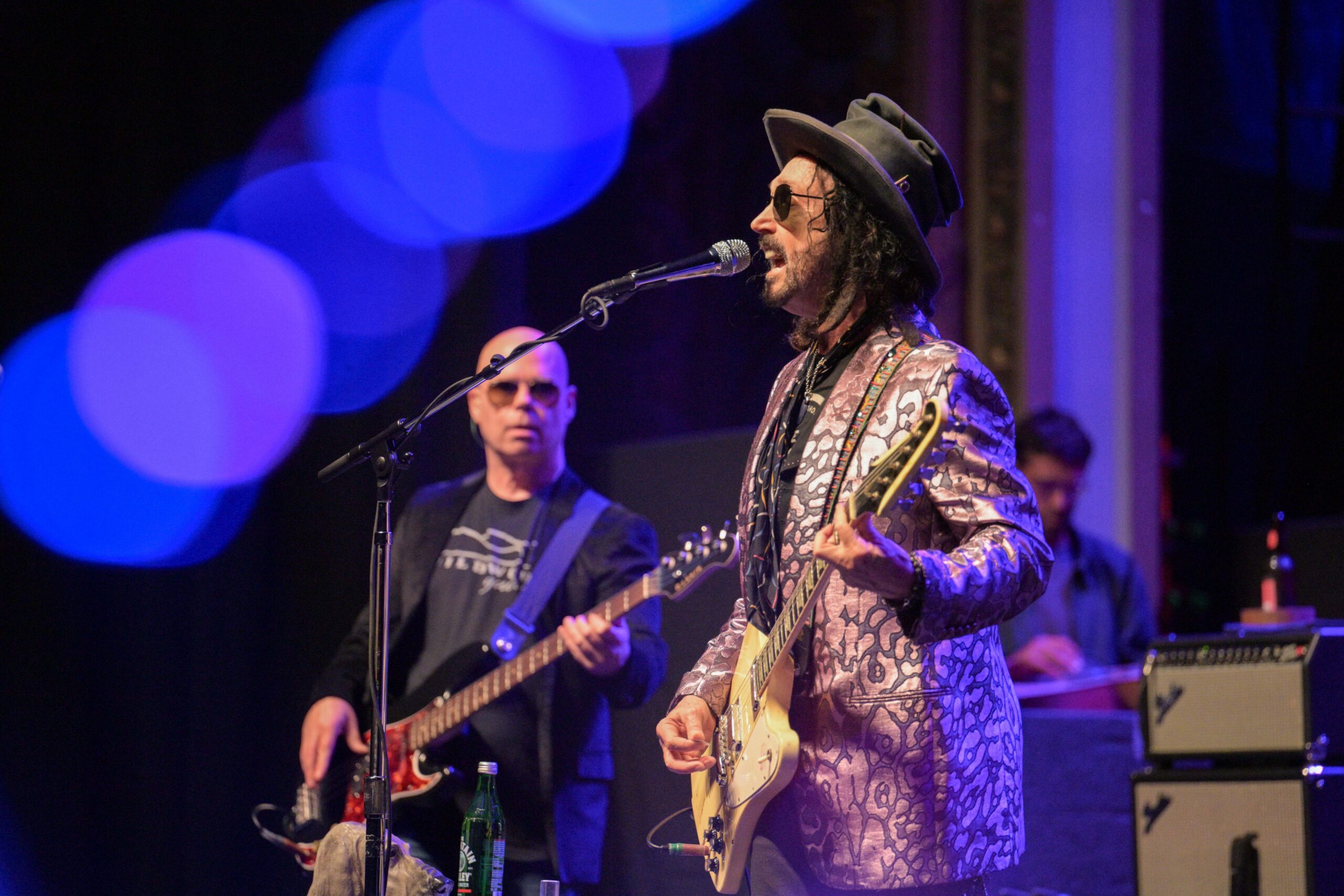
Ironically, the wall now spanned the width of the stage with three “Empty Spaces” through which the band could still be viewed as they began to play the song of that name. The band is driven to perform at incredible musical levels in both a supporting and competing role in regards to the visual imagery of the production. Even with the empty spaces directing attention to Dave Kilminster on guitar, the human eye is drawn to the forty foot tall feminine figures dancing in the nude upon the wall.
Alone, The Wall is awash with broadcast of media correspondents and politicians. With a grunt, the projected visage of TV screen garners a crack. The smashing continues until the collection of shards spill away and the band dives into “Another Brick In The Wall Part 3.” With the TVs shattered, the line “I don’t need no arms to calm me” seems to reference the manipulative nature of mass media. The height of the wall was completed as the evening’s anthem is repeated, leaving only the spaces before the band open across the entire outfield. The video upon the bricks became cast in red, and the video bricks receded from the wall while the gaps before the band finally filled in; one brick remained out of place as Rogers sang “Goodbye Cruel World.” As he steps away, the wall is completed and the intermission began.
Concealed completely by the wall, the band’s performance of “Hey You” is utterly flawless. “Is There Anybody Out There?” The lyric over the speakers seemed to call to the crowd. An opening on the left of the stage became a living room where Waters was sitting in a lounge chair, watching a war movie on his flat screen TV.
The video on the wall quickly changed to show a young girl in a classroom as the view to the living room closed. It was difficult at first to interpret the reaction on her face, displayed in slow motion to the sound of “Vera.” Her look of absolute shock revealed itself to be joy-ridden as you see the child run across the room into her father’s arms, a returned soldier of war. Images of hunger and loss cast their light upon the wall under the words of an Eisenhower quote espousing the great cost of war.
With Waters singing at the bottom of the wall, Robbie Wyckoff sings Gilmour’s lines in “Comfortably Numb” from the top of the wall. As Wyckoff sings, Dave Kilminster performs the guitar part, flawlessly capturing the performance as if it were on the album. The powerful composition is one of the few moments of the night that focuses more on the musical performance than the astonishing power of the production of the show. During the course of the outro solo, Waters pounded a fist upon the wall and the white pieces fell away like mosaic tiles revealing a sunset scene enhanced by psychedelic colors.
As Kilminster serenades, an amazing stage feat is accomplished by the crew in the act of rebuilding the band’s gear in front of the wall. As the show goes on, projected banners with the Floyd crossed hammers drape down the wall. The entire band was finally in front of the wall as another recognizable Pink Floyd symbol, the flying pig, went aloft over the left side of the wall. In his flight around the field, the pig came down in center field just enough for audience members to leap and brush the flying prop with their fingers. Following the line “I’d have all of you shot,” Waters fired an automatic rifle into the crowd. As he pulled the trigger on the prop, the projections on the wall behind him magically added gun flare and expelled casings to the gun he hoisted in his cloaked image cast upon the wall.
The band was really able shine in their performance of “Run Like Hell.” With the projections at their backs, the opportunity to observe them play was at last presented. There wasn’t mu8ch of any “Waiting for the Worms” as they weaved their way between the columns as projections upon the wall. The twin hammers marched out from the wall toward the crowd and animations from the film adaptation of The Wall were displayed on the massive screen.
“The Trial” proceeded about as it did in the film, with the powerful animations projected on the bricks of the wall. At the conclusion of the song, the entire crowd chanted “tear down the wall” with Waters. Images from throughout the evening returned to the massive projection screen in fleeting moments. The incantations of the masses were satisfied when the bricks came crashing down, falling every direction.
With the crumbled pieces strewn all over, the band returned to stage with an entirely different instrumentation for “Outside The Wall.” Acoustic guitars, mandolin, ukulele, accordion and banjo were played while Roger held a trumpet. Water’s enthusiasm and energy throughout the evening added the required amount of soul to a spectacularly executed production, an effort unequaled in on-stage performance.