Certainly for an artist the caliber of John Coltrane thereare eras within a career, viewed more closely in retrospect, that demand isolatedappreciation. The mining of Coltrane’soutput, one that was so prolifically and swiftly manifested in several distinctphases over relatively short periods of time, may have inadvertently also inspireda cynicism in today’s music consumer. Whetherit was his Atlantic tenure, or his time with Miles Davis, or his Quartet years,or his Village Vanguard residency, or his free jazz explorations, the myriadcompilations of those (and more) of the various Coltrane epochs, presented inposthumous collections and box sets, have all been hailed, of course, as necessarypurchases. And, to one degree oranother, a convincing argument can be made that they are, in fact, necessaryfor any fan or collector.
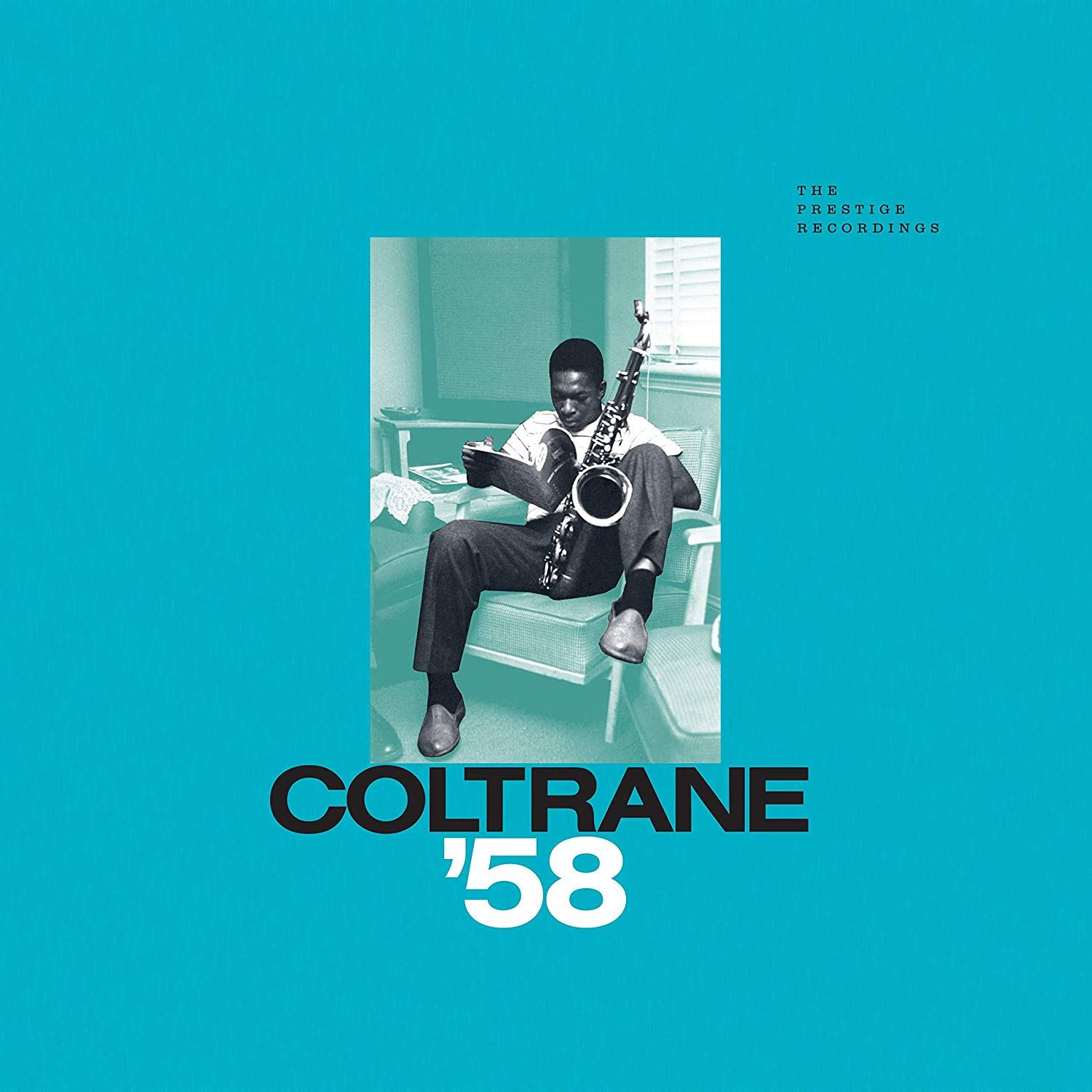
So arrives another: Coltrane’58: The Prestige Recordings, a comprehensive five-disc box of everyrecording Coltrane made- all 37- for the Prestige label in 1958. Is this one, too, essential?
Start with the fidelity. Any of Coltrane’s recordings committed to tape by legendary engineerRudy Van Gelder in Gelder’s New Jersey home studio are most often considered sonicallyimmaculate. These three dozen are notonly no exception, they are so rich, so intimate, so warm, it’s as though Traneand his ensemble are there in the flesh.
Next, this particular Coltrane era represents the initialbloom of his “sheets of sound” style, one that would become immortal, revolutionary,and singular to the saxophonist, drawing flocks of the curious in his direction-musicians included- as well as driving some critics mad. Even with mature restraint and conciseattention to composition and theme, the first signs of Coltrane unfolding freshand innovative shapes and colors are obvious and glorious, striking anastounding balance between serving the song and chasing a new, devilishmuse. The repertoire is full of classicssuch as “Lush Life,” “Stardust,” and “Good Bait,” yet the extended workout, ason “Russian Lullaby,” offers a scintillating glimpse of the expansive prowessColtrane would exhibit in the coming decade.
As for the packaging, the CD set is compact and clean; eachdisc in an individual envelope, and there’s a 75-page connected booklet thatfeatures an extensive and detailed essay by the peerless Ashley Kahn, a musicalhistorian whose knowledge of Coltrane is unsurpassed. Additionally, each track is well-notated withsession dates and performers, and there is even a sheet music transcription ofone of Coltrane’s mystical flights of improvisation.
Listening to Coltrane in 1958, in Gelder’s studio, at thismoment in his development, is not only vital to the understanding of hisartistic arc, but vital to the understanding of the history of jazz. It’s repetitive to write, but stating itagain makes it no less true: Thiscollection is unquestionably essential.i