

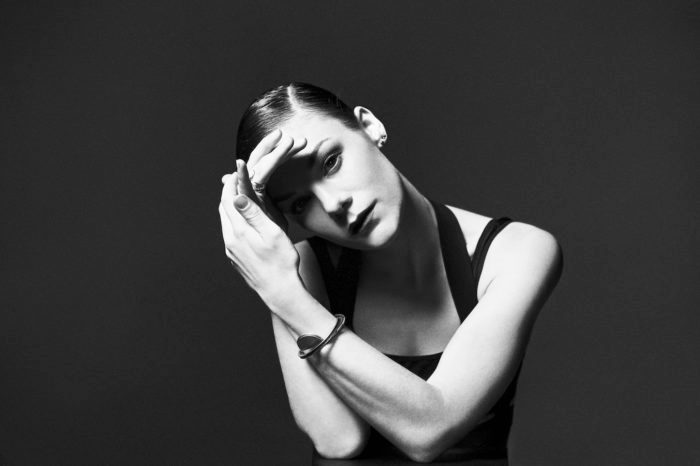
Process.
It’s a word that comes up numerous times during my conversation with Trixie Whitley. It’s an approach that allows her to come to terms with her past and present -- growing up in New York and Belgium and soaking up the sounds from each country, entering the arts at a young age, getting older, motherhood, the influence and inspiration of mentors and collaborators – and allow that history to affect her latest creative endeavors.
Listeners hear the results on her latestalbum, Lacuna, and viewers see thatin the trio of choreographed dance videos promoting the release.
“Every day I live and Idie a little/ I rise and I fall, evolve and dissolve,” she sings on “The HotterI Burn,” the album’s closing number that encapsulates her artistic approach.
From a pre-teen drummer to teenage DJ anddancer to a solo musician who released three EPs and three albums, Whitleyacknowledges the importance of collaborating on Lacuna and her previous work. The growing list includes herparticipation in Black Dub with Daniel Lanois as well as performing andrecording with Robert Plant, Marianne Faithful, MeshellNdegeocello, Emmylou Harris, Marc Ribot, Joe Henry, Bill Frisell, Antibalas,Nels Cline and Laurie Anderson among others.
Last year, she provided vocals on a KidKoala collaboration, “Music To Draw To: Io,” a 70-minute-piece thattells the story of Io, an unwilling lover to Zeus and contributed to thesoundtrack and appeared in the film of the mixed media performance “TrapTown.”
Created with Run The Jewelsproducer Little Shalimar, Lacuna findsWhitley incorporating electronic rhythms among minimalist arrangements that aregrounded by her mesmerizing, soulful voice. Over its 11tracks, she displays the influences of herfather's roots rock (the late singer-songwriter Chris Whitley), trip hop,breakcore, ambient instrumentals and hip-hop.
The work is of its time and beyond it,showing that Whitley’s commitment to the creative process succeeds as a hypnoticartistic mix of melody, rhythm and movement.
JPG:Were you in any rabbit holes for Lacunaor did this come together a little easier?
TW: You know what? It’s funny. I was just thinking abouthow I’m going to take on the next record, comparing my different recordingexperiences so far. Lacuna was reallyliberating in many ways because if there was anything that was reallyclear it was that my intention was that I didn’t have much material going intothe studio. I really wanted to use the studio as a writing tool, which isn’tsomething that I hadn’t experienced yet to that capacity previously. I hadtaken on a more traditional route in my songwriting where the craft ofsongwriting was the main intention.
But for this record, I really wanted to embrace all thepossibilities of the studio and use it as an instrument to write the songs. Ido self-produce quite a bulk of my material to a certain extent but thenthere’s the amazing gift of having a producer to work with that can be aguiding force in terms of when to…
JPG:...Stop?
TW: Yeah! Where the finish line is. Because that’sthe thing, for an artist, for myself, I’m someone that I really live for theprocess. When you live for the process, the process is just ongoing.It can be this never-ending thing, and I tend to look at it in a prettyphilosophical way. I’m going to be a student of life and music and art for therest of my life. In that sense, everything’s a process. The gratificationreally comes from the process and far less from the outcome of that process.
JPG:As far as for lack of a better term, traditional song or traditionalsong-sounding, something like "Bleak," "Fishing for Stars"and "Dare to Imagine" off the album, where there’s guitarand it's fleshed out...and even to a degree with"May Cannan." In comparison to those songs, the othernumbers are minimalistic, where it’s rhythm and a little texture and yourvoice. Some of it reminded me how it almost could have been a take of ToddRundgren’s "A Cappella," where his voice was used to replicate otherinstruments. So, was it a consciousdecision for some of the those numbers to be, again, for lack of abetter term, a bit more traditional and others were not?
TW: Yeah, yeah, it’s funny that you named those songs becausethose are literally the only ones pretty much that I had written prior to goinginto the studio. Those are all written on guitar and more similar to myprevious work. The rest was much more collaborative. It’s funny evenback in the days when [Daniel] Lanois and I would be philosophizing over thekitchen table, we’d often talk about the interesting aspect of hip-hopproduction. Spending the bulk of my life in the city, in New York, in manyways, I definitely have a deep affinity for street culture.
I’m like a city kid and, as a kid, I’ve always just schleppedaround the street. So, within that, I’ve always had this deep, deep admirationfor instance for freestylers, especially when what they were saying wassomething meaningful. I remember, as a kid, blown away by the art offreestyling. With Little Shalimar being the producer of choice forthis record, and also his openness and his background in instrumentalism,his deep knowledge of music history but also having all these skills that he acquiredin the last 15 years working with rappers, hip-hop artists, that was theperfect spark for my imagination that I was searching for to break out of myown comfort zone, of my own writing.
I’d say the things that Lanois and I used to talk about, whatwas interesting about hip-hop production, this minimalist...where the basslines are incorporated in the groove instead of it being more of a rock setupof bass and drums…that stuff from a musical perspective was intriguing andthen, of course, my own interests in terms of my own experiences in thosecultures with a great combo with Little Shalimar. That was my intention, too.Okay, I’m going to have one leg in my previous work, one leg stepping intosomething completely unknown. And that was possible with the relationshipthat we built over time, Little Shalimar and I, in the studio and getting toknow each other and really connecting on a lot of levels.
JPG:Your voice is what drew me in but it took some time for my ears to digest thesongs. And I’m still digesting them. I hear elements of that modern production.Thank you. You’re soulful voice rises above all of it and then at times like"Dandy," with that whole section where as you were saying, freestylehip-hop.
TW: "Dandy" was totally written in...again, going backto the process, right? At this time in my life, I became a mom recently. So, itwas my first endeavor in the studio since becoming a mom and redefining. Also,with new parenthood a lot of things of my own childhood wereresurfacing, like my influences.
I feel like with my last record, the trip that I was on wasrejecting influence. I didn’t want to be influenced by any references oranything. I just wanted to be as present as I could and just let whatever cameout in the moment be what it was and respect it, blah, blah. This record, whenI started it, it was very, very intentional in the sense of my influences andmy identity as a young woman. I turned 30 as I was making the record. I was 29when I started. That thing, that shift of, "Okay, entering your 30,s"but also thinking "Where do I come from?" in terms of the sonicreferences and the production.
I am a kid of the '90s. I started defining my own tasteand my influences in the '90s, in the early 2000s. Then, I had thiscross-continental upbringing where I was exposed to New York urban streetculture at a very early age but equally exposed to this really avant-gardeelectronica scene in Europe. When I went back to my memories of my own childhood,in my development, in my identity, there was never a question that I was goingto have a life in the arts. That was very, very clear and very obvious from avery young age. When I was about 14, I’d say, was when I started -- at thattime I was living in Europe -- exploring a lot of crazy electronic music, butalso the sense of defining my own place and also defining my visionof what I wanted my song to possibly be. It was so clear to me that Ineeded, I wanted to develop a language where both these primitive, primalsounds formed as expression coexist with these very futuristic sounds; thatkind of fascination, that drive, to find a marriage of both worlds. How can Iincorporate the past and the future into this present language that isauthentic to my own development, my identity and my influences?
And so, I feel like this is the first record where Iwas really very intentional about that. Electronic music is something that Igrew up with. I have a DJ past and I was obsessed with stuff like Aphex Twin,Squarepusher as a teenager, and I was a rave kid. So, that influences mymusical language. Then, there’s also on a spirit level, this side of me that’salso a total punk, also very street in that way.
Over the last years, I‘m so attracted to these punk movements,also people that have a punk attitude. With that, I mostly mean a progressiveanarchy that is driven by change and by progressive change, too. Punk, the moretraditional style of punk music, I often missed a sense of sensuality. I waslike, "Uh, I can’t really groove in the same way that I can with urbanmusic." But then, making those connections, a lot of these rappers andhip-hop artists, they’re punks as well. They’re driven by similar messages, atleast the ones that I’m appealed to.
And so, going back to the process, my intention on thisrecord, my third record, turning 30, being a new mom, an observation of whoI’ve become and what my past references have been and my influences.
Also, it’s funny, I was just writing about it today. Iwas recently introduced to this term called Third Culture Kid and it’s been awhole revelation for me. I’ve struggled within my cultural identity quite a lotup until now because I grew up ping-ponging between these differentcultures, between different continents. Whereas now that I’ve matured a bit,I’m finally coming to this point in my life, I need to embrace this wildupbringing and the fact that it’s not easy to digest. It has different layersto it. It’s funny because, theoretically, I can say I’m a Belgian/Texan/NewYorker.
JPG: That makes sense.
TW: That’s apretty odd combination. Anyway, that’s what I wanted to explore in thisprocess of if I marry all these sounds...I love the fact that this record hasall of the different aspects of my being. It has a song like “Fishing forStars,” which is a very intimate song. It’s very much a one take, andthat’s on there. And it co-exists to something like "Dandy,"something completely new for me, but also tapping into the stream-of-consciousnesswriting, which is also as much as it might sound new to a listener it alsocomes from an aspect of my being, which has always been there.
JPG: Lacuna is the current chapter of yourartistic life and the next chapter of your creative life you might do somethingdifferent musically, production-wise etc. The presentation -- musicand videos – combines you as an artist including your past as a drummer, makingit a rhythmic way of approaching the songwriting plus the blending of thematicideas and other arts such as singing and dancing.
TW: Yeah, again,it’s a part of me just growing up and coming out (laughs). It’s really thisacceptance of and also this acceptance of multi-faceted aspects of who Iam. In a way I feel really deprived as a human being when I’m notexpressing these multiple layers and even though it might not be supereasy to digest right away to me I’ve been circling it for most of mylife.
Something that Irealized at a real young age was that my integrity as an artist was theabsolute most important thing and that I had to stay curious. I had tocontinue to be driven by a sense of discovery and curiosity. Those are theelements of success that I’m drawn to much more than status and otherstuff. In that sense I have to say that I’m really proud of this recordand I feel like I did what I needed to do at that given time. Now, I’mreally excited to continue to evolve.
I was thinkingabout the famous Bowie quote of, “I don’t know where I’m going from here but Ipromise it won’t be boring.” I do relate to that in the sense that Idon’t know where I’m going, but if anything it would continuously changebecause I need to stay challenged. Then, there’s also this core identity andforms of expression within me that also will remain, as much as they can evolveand change. There’s this elemental core in my being I’m quite confidentin and that’s what I’m driven by.
JPG: Afterwatching the three videos associated with Lacuna, Iviewed an interview where you mentioned that with them, “I "discoveredmy physical language in tune with the music and learned how to feel safe againin expressing myself." Was that something that came aboutduring the two days making the videos or did you have a visualization of thetrilogy and that helped you?
TW: No, it was aprocess, man. When I go back to my teens, because I toured a lot with these...Iwas like this child performer that got asked by a lot of…again, this was inEurope, pretty avant-garde performance artists—choreographers and directors. Istarted touring when I was 11. Then, when I left this dance company at the ageof 16 to move back to New York…it was this thing of do I want to become amusician or an actress or a dancer? At that age it became really clear tome that I didn’t necessarily need to choose, that they could co-exist asone within a vision but that I needed to develop my skills on many levels withthe hope, with the ambition, the goal, to one day be able t explore a biggervision that could marry those different forms of expression to where the musiccould be a vehicle for the performance and could be a vehicle to come back todance.
Also, while I wasmaking this record and writing, the political climate is really intense. Iexperienced it really intensely as I was writing this record. Mysenses were hyper…and from the Time’s Up movement, dude, and my relationship toinstruments and, from my perspective, being a tiny, petite little girl/woman.And yes, I’ve had this immense privilege of having world-class mentors but I’vealways been this petite little girl in very male-dominated scenes, basically.
Also, thepolitical climate, I experienced it really intensely as I was writing thisrecord. My senses were hyper, and from the Time’s Up movement, dude, andmy relationship to instruments and, from my perspective, being a tiny, petitelittle girl/woman. And yes, I’ve had this immense privilege of havingworld-class mentors but I’ve always been this petite little girl in verymale-dominated scenes, basically.
With LittleShalimar, as we were getting to know each other, I shared some very,very intimate stuff with him and that was directly related to the sign of ourtimes. Within that, too, I realized drums and dance have been my primaryforms of expression. Singing was the most…I was doing that before I couldtalk, basically. But, just making the connection and going back to thepunk thing I was talking about, realizing there was also this vehicle of sensualitythat existed in me when as a child already. Why was I being brought into theseproductions as the only child doing long salsa solos with much older men? Thesekinds of things (laughs).
There was asensuality that was very pronounced and yet at the same time from a physicalrespect when I brought it into the music, it always felt really threateningwhen I brought it in because of the nature of the industry. I didn’t wantto be perceived as a sex kitten and I want to be taken seriously as a musician,as an artist, and not just as a sex object. I came to a lot ofrealizations while I was making this record and, again, with the politicalclimate that is, I am not going to apologize anymore for who I am as a youngwoman. I am not going to hide and let this oppressive nature bring me down andbring my potential down either.
That was a thingwith the drums for instance...for me dance and drums are very, very similar. Iwas talking about this with my drummer the other day because he’s a verytechnical, theoretical mind and I was saying, “Music, it’s a dance to me, eventhe way I write songs.” I listen to my body. Is it moving with it or not? Ican’t really detach that aspect from my intellectual endeavors. I thinkabout lyricism as a more of an intellectual versus rhythm, which can be avery physical one and a very emotive one. I just want to embrace both aspects.
I realized theinstruments I played, I’m completely auto redactive. I’ve now realized I’m muchmore of a hardware person than a software person, and I think that making thatrealization, I need to physically get off on something at the sametime. I can’t just be locked in my head only.
JPG: It has to move the hips.
TW: Well, thehips, even my soul, even what moves me in a way that we can’t intellectualize.When you look at the core of music and art that’s what it should do. At leastthat’s what I believe, what I’m driven by, the impression that can hit youbeyond intellectual and is still fulfilling on both levels.
So, I wanted toexpand and bring those worlds together. Again, it’s a dream I’ve had since Iwas a teenager. Perhaps, this rebellion in me that is I need to resist,suppress it, and I’m lucky to have these vehicles of expression to do that.That’s an immense privilege that I need to take responsibility for andhonor any way that I can.
JPG: When you mention music and dance what pops into myhead is someone like Kate Bush. Was that someone that you moved towardsintellectually or someone mentioned her to you?
TW: Yeah, yeah. It’s so funny that you bring her upbecause I recently stumbled on her when I was on this tour. I was like, “OhGod, when I get home, I’ve really got to study more of Kate Bush’s work andmore of her visual work," especially because I stumbled upon a music videoand she’s totally moving and doing all this crazy stuff. I had never seen it.I’m a huge fan of hers, but I will say that I’m also quite ignorant inregards to her whole catalog. I only know her biggestrecords. “Hounds of Love” is it called?
JPG: Yeah. What was the video that you saw? Was it“Running Up that Hill?”
TW: No, it wasthis random thing. It was just a small snippet. I saw it pass by on theinternet. It reminded me that she did so much. She was a pioneer.
JPG: Finally, as far as developing a better understanding of your pastand using that in a way that’s a shared experience with others, is thatsomething you feel for yourself as an artist and do you think that more artistsshould put themselves out there to have a communal experience with listeners?
TW: I have alwaysbeen unapologetically selfish about what drives me. Also, coming back tomy deep commitment to integrity, I’m driven to connect.
I think it’s anact of love, right? You can’t really love another if you’re not able toembrace yourself first, basically. It’s the same for me with art. If I’mnot doing things that feel authentic to my own spirit then whatever I’m sharingand whatever connects with an audience can’t be authentic either.
If I’m creating stuff,if I’m using this vessel of music to explore things that are authentic to myown integrity, then when connections are made to an audience, that is like aguaranteed authentic connection for me. Nothing can replace that other thanmyself. No machine can fabricate that. That’s my thing.
It’s nature versusnurture. It’s not either/or. It’s both. I perceive that with my ownwork process. Once I reach that finish line then it’s not mineanymore. It’s there for whoever can connect to it, is willing to connect to it.
Ofcourse, my hopes are from a writing perspective, and this is somethingwhere I’m really excited to continue to explore and develop. In the pastI’ve been quite confessional but now I’m driven by developing a more narrativeway of writing.
Ido want to connect on the most universal themes and that is important because Ibelieve that maturing through this record and looking at the politicalclimate...the thing that gives me hope is how universally connected we are onmany levels. That’s the stuff that does give me hope to keepgoing. Okay, when I’m depressed and you say when you’re depressed,we’re connected in that somehow even though it may be for different reasons butstill that’s a universal sentiment. That I really value and I think is importantin music and art. If the feeling isn’t authentic then what’s the point. It’sgot to hit people at least. I’m driven by ways of the heart. I want myheart to be touched and vice versa; also being able to be open with one’semotions.





