

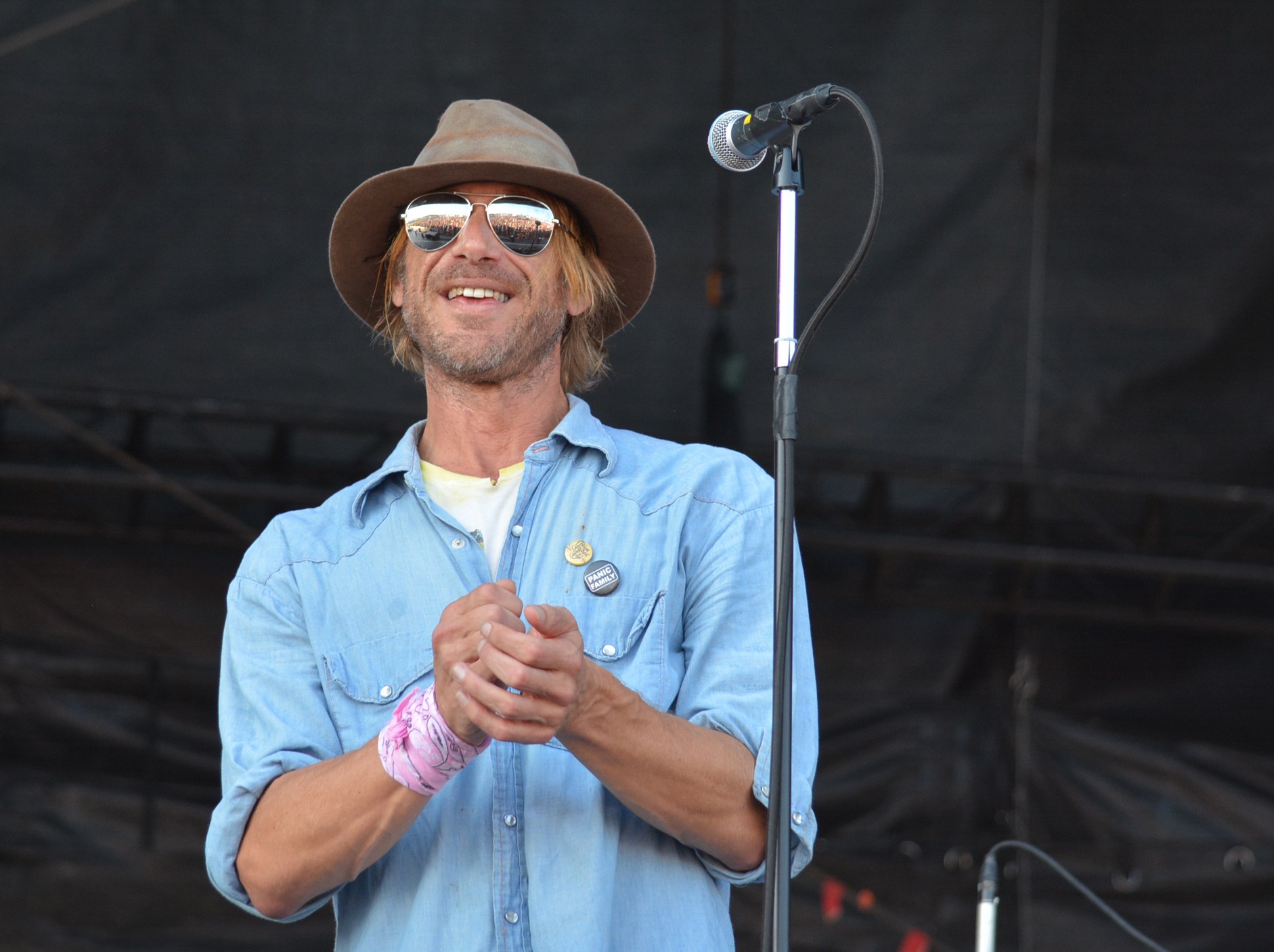
[For over 15 years here at the Jambands.com, longtime contributor John Patrick Gatta maintained a steady dialogue with Todd Snider. They were going to speak yet again before Snider's untimely passing. What follows is a piece that originally ran in 2020, along with links to four additional conversations. I've always enjoyed their back and forth, so I actively encourage you to dig in. On the subject of active encouragement, if you enjoy Todd's voice, be sure to check his 2014 memoir, I Never Met A Story I Didn't Like: Mostly Tall Tales. It's long been a favorite of my mine. -- Dean Budnick.]
Todd Snider: Deep Purple (2025)
Todd Snider Offers ‘Hope and Wonder’ (2021)
Todd Snider: A Gypsy Songman’s Stoner Fables (2012)
Todd Snider’s Latest 'Plan' (2009)
***
It's a three “C” morning for Todd Snider -- coffee, composing and cannabis – as we discuss the other letter “C”-related items in his life -- his current album titled "Cash Cabin Sessions Vol. 3,” recorded at Cash Cabin Studio, which was previously used by Johnny Cash and now run by his son, John Carter Cash.
The solo album finds the singer-songwriter returning to his folk roots following 2016’s Eastside Bulldog and two albums as frontman with jamband supergroup Hard Working Americans (HWA). Snider recorded all the instruments, mainly guitar and harmonica, for this release and is joined on backing vocals by friends Jason Isbell and Amanda Shires. He gets political on “Talking Reality Television Blues,” exhibits a touch of sentimentality on the changing world during “Just Like Overnight” and honors the inspiration of his HWA band members on “Like a Force of Nature.”
The album is the culmination of a recurring dream Snider had that involved The Man in Black after he first visited Cash Cabin Studio to record with Loretta Lynn. That led to a hallucinatory excursion on the studio’s grounds before recording there with his Americans bandmates. He relates a glimpse of his dream in the Cash Cabin track, “The Ghost of Johnny Cash.”
It’s through the days and nights, weeks, months and, sometimes, years of working on a song that Snider’s thoughts have the opportunity to be shaped, edited and, then, edited some more into his engrossing and engaging storyteller material. During a conversation he doesn’t have that luxury and admittedly rambles in a manner that eventually gets to a particular point or trails off to a thought that never quite coalesces into concrete form. In spite of this his affable stoner charm makes talking with him a delight that demands a little extra care in relating the experience while maintaining the atmosphere of our time together.
He discussed the songs that make up Cash Cabin Sessions, Vol. 3 with frequent references to his involvement with Hard Working Americans as well as his tribute to Col. Bruce Hampton and the video of him playing for a longtime friend after she received cochlear ear implants.
When I brought up that I didn't expect him to be up so early in the morning for the scheduled interview, Snider brought up how he keeps musician's sleeping hours which entails a few hours of rest here and there but rarely a full eight hours at once.
[This conversation took place in August 2020, prior to the death of Neil Casal as well as the recent passing of John Prine.]
JPG: Did you work on any songs today?
TS: Didn’t get very far. Most days don’t go great but I’ll keep going for hours today.
JPG: As a writer, I, sometimes, have to remind myself that what comes out is a draft and don’t get down on myself if it’s not perfect or coherent from the very beginning.
TS: Yeah. If I made up a line today, it’ll be a few months before I will realize that it may be part of the song I’m working on.
JPG: Is that something that you had to learn over time or is it just the understanding that you need to be patient as a songwriter?
TS: Yeah. There was this guy in San Marcos who passed away about five years ago named Kent Finlay and he owned a songwriter honky tonk kind of place in San Marcos, Texas that was very very close to Austin. If you played this bar, it’s considered playing Austin essentially but it’s on the far outskirts. They would have bands like the Fabulous Thunderbirds – this is my day, the ‘80s – and you could put about 300 people in there. But on Tuesdays they would have songwriter nights. You could do three songs and no one was allowed to talk. This guy that ran it, Kent Finlay, it was like a circle, and he was the leader. And when I got there I was on what you call the Sofa Circuit, sleeping with friends….My family lived in Austin, my dad did anyway.
So, I had three songs and I went there. On the very first night he thought I was like John Prine and I hadn’t heard of John Prine. Then, he said you’d like Kris Kristofferson and I thought that he was an actor. He invited me to his house and there was this after-circle.
And in the ‘80s, James McMurtry or Hal Ketchum or Bruce Robison, those guys would say, “Snider, that’s an exaggeration.” And it is a vast exaggeration but this Kent Finlay who only really had a few handful of songs was very Dave Schools-like in his ability to understand intention…I'm really rambling now but it’s true. Everybody really gravitated to him for that element of it. And he took care of anybody with a song. And he let me stay at his house for a summer or so and really taught me the thing that I do, the way I make up songs I learned from that guy. His thinking was it’s got to be a few hours every day, and most days you’re not gonna get anything. It turns into a habit, like the coffee/weed songs…
JPG: That brings up this because you hadn’t heard of John Prine before that…
TS: …I was like 19.
JPG: …so before that were you always a storyteller and that musical format suited you? Then, you discovered John Prine, Jerry Jeff Walker, Townes Van Zandt and others. You knew you were on the right path by seeing others who did that.
TS: Right. For me it was that I was from Oregon and my family had splintered and I’m sort of a person who always needed a ride, always needed a place to crash, never could be relied on to tell the truth completely because I needed a ride and a place to crash and was becoming a young grifter, I guess, or bullshitter.
Then, I saw Jerry Jeff Walker play at Gruene Hall and it was…the difference between a freeloader and a free spirit is three chords. My first thought was, “Who’s not gonna want me on their sofa if I can play a few songs?” I could go make up some songs and I live like he’s singing about, rambling and scrambling and being a gypsy and being free. I’m like, “I got that going on all day everyday. I could be rhyming that just like this guy is.”
That seemed to me like if you’re aimless, it’s so much easier with a guitar. And then, pretty quick I would sing at the open mics and stuff and it just started to work out that I didn’t have to work in other ways. Then, I met that guy (Kent Finlay) and felt passionate about it and got into more than just getting by. All of a sudden, for no good reason I wanted to make a song as good as “[Me and] Bobby McGee” and still do. And I’ve already accepted that I won’t.
JPG: Well, there’s always tomorrow or later today.
TS: (slight laugh) It does get you up in the morning with something to do.
JPG: Maybe you’re already there and you just don’t realize it because you can be your own worst critic.
TS: I hope so, but you never know. There’s a couple that I like. Well...I like my songs. All of them are true. I never did any of them for any other reason. Some of them people like better than others.
JPG: Well, some people like certain Beatles songs better than other Beatles songs. Some people like the long version of “Revolution 9" better than the shorter, acoustic or electric versions of the song.
TS: Right (laughs) I’m one of them, actually.
JPG: Since we’re discussing songwriting that segues to Cash Cabin Sessions, Vol. 3. Some of the songs sound as if they’ve been worked out but then there’s "Timeless Response to Current Events,” "Talking Reality Television Blues" and a couple others that sound off the cuff. Is that just your style and that’s the way I’m hearing it?
TS: Yeah, those ones take the longest. The “Timeless Response" one and the “Blues" one, those take the longest.
JPG: They do sound as if you said, “Hit record" and you just come up with stuff.
TS: (laughs) And just ramble. I made one record, Eastside Bulldog, where I, for the most part did that, just let it out, but the rest is more like chiseling away. Like, I think I'm Hunter Thompson or something and then going, “Oh yeah. I’m supposed to be singing.”
I have weird songs, sometimes. “Ballad of the Kingsmen” reminds me of the two we're talking about. Those take a couple of years, it seems.
JPG: Is it compliment to say that it sounds as if you’re just riffing off the top your head or is it an insult since you put so much work into it?
TS: Part of what you’re working on is hoping that it feels conversational.
JPG: You do have that element about you, of being a storyteller, of having a conversation that’s done in a song format.
TS: I feel like the talking and those songs, those two in particular, part of what goes into with the group I got into, Hard Working Americans, is to try to get out of that place that’s more improv.
JPG: Can you elaborate on how “Like a Force of Nature" is influenced by Dave Schools.
TS: I started making it up for him, and it could be about all of ‘em [in Hard Working Americans] and how much that whole thing for me, what a force of nature that group can be like when it’s together.
The main thing I wanted from getting into that group was to be a better folk singer. Better is such an arbitrary word but I wanted to grow and find ways…I still learn a lot from that group.
JPG: From the press release, “Snider discusses his folk music journey stemming from the teachings of Dave Schools in their original jam band. In his single/album, Snider explores the concepts of "intention, passion, and absurdity and things you could apply to anything..."”
TS: YES! (laughs) I was probably stoned when I said that. But that’s what I think. That's exactly what I think. That’s so much better than the last 10 minutes of babbling.
JPG: (laughs) No. Babbling's fun.
TS: (laughs) That’s what I was just trying to say. And Duane [Trucks] and Dave have studied under Col. Bruce Hampton
JPG: Now, being a singer-songwriter can be a tightly-structured format whereas with them it’s more open.
TS: Yeah. That’s what I like. I'm more of a stoner, hippie type maybe than I am a singer. But then, I have this idea of a better folk singer that I’m always trying to be.
JPG: Did it take being in that band to finally admit that you’re a stoner hippie at heart?
TS: For sure! Well, I guess I’ve always admitted that but it felt for sure…the hardest part of a person who makes songs, you don’t get to really do it because you want to. It happens and you’re there, ready for it. If you put yourself someplace new, it might happen. If you go on a new adventure, if you get in a car with someone that you don’t know because they said, “Get in,” it might happen. So, I’m mostly trying to put myself someplace.
JPG: That kind of relates to the Cash Cabin Sessions but it’s the opposite of what you’re talking about. It’s your third time there. It’s familiar. Living nearby, is it a matter that recording there is convenient or is it the vibe there that you want?
TS: It started when Loretta Lynn cut the song I sang [“Don’t Tempt Me”], and I was living out here. Her and I had made up a song a year earlier and she was gonna record it there (at Cash Cabin Studio) and meet John Carter Cash. I felt like we hit it off and I started having dreams about it, which, again, at our age, anything that looks like it might be a song or something, I'm after it. So, I booked it and asked John Carter if I could record over there. I had some poems and recorded them, and started hanging out there and being friends with him and Chuck [Turner, engineer/producer].
Then, I kept having the dream and in the third or fourth version of it…it was always the same dream and the fourth time, I’m sleeping on the floor and Johnny Cash wakes me up. That’s the whole dream. The fourth time I had it, he points to the studio and says, “You’re missing it."
The next time the Hard Working Americans were together, I was telling Dave about this story. He goes, “Dude, we have to spend the night out there and trip balls." So, he called them and they said we could. That night I had a poem called "Just Like Over Night” and I went out into the woods and got a melody with it. Then, John Carter came down and we were all kinda spaced out and when he heard the story, I was telling him, “What do you think I’m missing in this corner?" He asked me if I thought the place seemed haunted and I said, “I don't know about that.” He said, “Loretta said it was." Then, he tells me the story that ends up being the song called, “The Ghost of Johnny Cash.” I made up the music part but the story he told me and then I made it into art.
Then, we recorded those two and recorded some others. I kept making up songs and going back there. I wasn't sure if the record was gonna come out. So, I kept on having new songs and felt like I wasn’t done with that moment in time over there. Even though I liked our record, it just felt like I was adding to it ‘cause it wasn't coming out.
So now, I have this record. Then, there’s a "Vol. 1" that's mostly poems and then there's a "Vol. 2" that I don’t own.
JPG: Now, why did you record without a band or as some have put it, gone back to your folk roots?
TS: A lot of that was...who am I gonna get to play drums? (slight laugh) Duane Trucks. So, I just kept working alone. The more I did it the more I felt like it's okay, it's time to go back and show what I learned from my band and make a folk record. Now, they’re sort of intertwined because the other record didn’t come out. My hope is that it will.
JPG: You did have some company in the studio. Jason Isbell and Amanda Shires joined you on “Like a Force of Nature.”
TS: I play everything. Alone. The only thing I added was vocals and that was Jason and Amanda. That night, Jason liked the song that came out (“Like a Force of Nature”) and just had some ideas, "Can I try some other stuff?” I said, “Yeah." So, now there’s a third version of that that didn’t fit the album but I like it. So, I’ve got three “Like a Force of Nature”s. (slight laugh) and I’d like them all to see the light of day.
I think of my whole time at the Cash Cabin as one event, even the poem part...I’m not good at poems. And not all the songs are terrific. I'm not good at whining and there’s a couple of those, maybe, because I’m divorced. But I like the whole thing and I hope that everything that happened over there comes out.
JPG: Maybe you can put the poetry to "Metal Machine Music."
TS: (laughs) I know! Or maybe Circles Around the Sun or something. You know, I came up with a game…well, I thought it was a game and it’s really what I thought was the rules was this really long poem that takes a half an hour to read. It was maybe going to go with “Rest in Chaos” [by Hard Working Americans]. Those poems came in that time. And I got poems now, too. Then, I never know when one poem is gonna be a song or if a song’s gonna be a poem.
JPG: Are you still writing prose? Is there another book you’re working on after I Never Met a Story I Didn't Like: Mostly True Tall Tales?”
TS: I want there to be…man, thank you for asking me all this stuff. I forgot I’m a fucking author but, you know, really Peter Cooper is the author and if he can’t do it then he’s too busy. I’d do another but I would have to have that guy.
JPG: You toured with John Prine, and I read that you mentioned about learning from Dave Schools. So, with Prine are you still learning from him or are you able to kick back and enjoy it?
TS: It’s both now. Before it was more just learning and this time it really felt like…I really really learned a lot on this tour, maybe more than others but it also felt calmer around John, probably from being older. I got to relax and catch up with a friend where in the years I opened for him it was just hard to relax, not for anything he was doing.
JPG: Speaking of iconic figures, after the album came out you released “The Legend of Col. Bruce Hampton, Ret.”
TS: Yeah, I’m glad you wanted to ask me about that.
JPG: Well, a lot of people might not have known about you as a solo artist, singer-songwriter, and only discovered you after Hard Working Americans. Now, that’s more of a jamband kind of group. I’ve never known you to be associated into that area before that. So, what is the connection between you and Col. Bruce Hampton? How did you know him and interact with him?
TS: It was very new. It was something I learned about in the Hard Working Americans that Duane and Dave taught me, the religion that is very real. In my world, I’d say the equivalent would maybe be Willie [Nelson]. He’s not just a musician. He’s a way to live. And Col. Bruce represents that in a really profound way.
There was a poem to do before shows and a dance to do before shows that all came with the group when I joined. A lot of why I joined was wanting to understand all that ‘cause I liked it so much, being a part of it and getting to meet him, and in a sense study under him was life-changing just like everyone else says. Sometimes, he’s kind of like a Zen master is what I would describe it.
JPG: What did you learn from him or how did he inspire you?
TS: Like Zen, it feels like it’s an unspeakable thing. It’s more of a sound or a laugh, like intention and, I guess, absurdity and insanity as a starting place. To me it all led to a freeing of the spirit, very much like Jerry Jeff Walker was a similar type of a person. I liked him.
I’ve always tried to be that. At a young age, I wanted to be like Col. Bruce before I knew who he was. I don’t think there’s ever going to be another Col. Bruce but there’s a lot…Dave lives like a Zambi, Duane lives like a Zambi. I try to. That whole band, I think, adheres to that philosophy, very much. And then all the other ones do, too -- CRB and Widespread Panic.
At that last show when they got together to do the pre-show ritual I couldn’t believe who all knew it. Peter Buck knew it. The guy from the Stones knew it. Everyone knew it. I thought it was just Dave and Duane and Derek [Trucks]. It was every Southern musician I’d ever seen. It’s like a cult but it’s a positive one.
There’s a guy named Hondo Crouch that inventedLuckenbach,Texas. He was to the Outlaw [Country] movement what Col. Bruce is to the hippie movement, more than just music. I’m babbling now but I’m coffee-ed up and stoned.
Some musicians just do it and go home but others don’t ever want to turn off whatever that is, that you’re channeling. I feel like there is a way to access that and stay accessed to it.
JPG: What exactly is Zambi? (Later, I found this from the facebook page for the documentary "Prophet.Col Bruce Hampton, Is It The American Dream?”– ““Zambi”, a semi-spiritual philosophy created by Hampton that was is as difficult to describe as the man himself.”)
TS: I asked him personally how that started, and I believe, unless he was lying to me, which is full on…Zambi was a person that Col. Bruce went to school with and he had the highest IQ. He got the highest grade point average. He aced the SATs, and he got offered scholarships to any college he wanted to go to. And so, what he decided he wanted to do was set the record for driving a car backwards faster than anyone ever had and he broke every bone in his body doing it. Col. Bruce would say if you can’t see the genius in that, then this church isn’t for you.
JPG: That’s wild.
TS: That’s next level.
JPG: Was it different for you because you’re more of a singer-songwriter rather than an instrumentalist?
TS: He told Dave I was the last troubadour. He came to see my solo show once and went, “I didn’t know there were still troubadours.” He was thrilled that there was someone who knew what a talkin’ blues song was. He came to my show and afterwards he was, “I know Ramblin’ Jack Elliott.” That’s my lifestyle choice, very similar.
JPG: The way that he left us is the most shocking but almost the most perfect way.
TS: No doubt about the fact that he set the land speed record for driving a car backwards. Just destroyed it. You know the [Hampton] Grease Band, they asked him what that meant, 'grease'? And he said, “Grease means dying onstage, dying during the gig, dying during the song.” And that’s the only goal he ever had. A lot of people thought that his death was a testament to the cosmic truth of what he was preaching. It was almost like a fulfillment of what he said. It could all be this fuckin' magic insanity, if you want it to be.
I can’t imagine…he sang, "Without a warning, you broke my heart," and then he died. That’s genius. It was genius. And what happened to the room, I don’t think I’ll ever see anything like that again. Wasn’t all great but I’ll never see anything like that again.
JPG: I could imagine. Like I said, it was shocking, sad and in a way perfect.
TS: It was so strange. Right before he passed, they said it was his turn to go back out onstage, and he said, “Not yet. It’s not my time.” He waited another minute and then he said, “Okay, now.” And Derek was like, “He never says anything like that.” Is this a magic person who might have known? I just adored him.
And then when I was going to make up a song, I thought that he reminded me of a Zen Master. There was this whole Zen story about a Zen student who says to the master, “Isn’t this a beautiful day? Doesn’t the river run, exit perfectly and hug the mountain…?” And the other guy says, “Yeah. It’s just a shame you had to say so.” (slight laugh)
So, I thought, I don’t know if words are going to do it. Then, I started thinking, but if I did an instrumental and made it sound for one split second like, maybe, I was about to sing and I could get Duane Trucks into thinking I was about to sing, that was sort of the whole goal. So, I played a little harp like it was an intro and then I stopped, then I started playing harp again and I thought, “Duane will understand it.” (laughs) And he did! He loved it! I was so happy. I said, “I hope you found out that it was an instrumental by listening to it.” And he said, “Yes.” So, I was, “Okay, Thank God.” ‘Cause it would have spoiled it if someone said, “Here’s this new song that I did about Col. Bruce, it’s an instrumental.” And so, I got away with it. That was my whole point. (laughs) And Dave, too.
Dave is a Zambi master and so are all those Widespread dudes. Another way of saying it is certifiably insane. (laughs)
JPG: I saw a YoutTube video of you sitting in a living room singing to a friend…
TS: Oh yeah! My friend’s ears!!
JPG: Yes. You sang to Anita Webb who just got cochlear ear implants.
TS: That’s one of the closest friends I have in the world. I have a song called “Moondawg's Tavern." It was about her brother. He was Michael “Moondawg" Webb. We’ve just always been like family, her and me. And her passion in life has always been music. Then, about seven years ago, eight, probably even longer, she lost her hearing but she would still come to the shows and sit with me and she could read lips a little. In a weird way it was a little bit like losing a friend because she couldn’t hear you anymore and our conversations got slowed down and all that.
To make a short story long, she got those implants. She got ‘em in Nashville. So, she came over. We had been saying for a couple of years that for the test we would do that song because that’s the song she likes. And so we were testing to see if she could hear music.
JPG: What was that song?
TS: “Better Than Ever Blues Part 2.” It’s from the second record. She was in my life way before I made records and stuff. I think there’s a “Part 1.”In fact, I know there is. In those days, I guess, I thought that they would all end up on albums. It wasn’t that happening. I don’t think I’d sing it now. In those days, I used to think it was so good. Now, these days I hear it and it doesn’t sound like it’s about anything.
JPG: Have you seen the video of you and Anita?
TS: Yeah, oh yeah, made me cry the first time I saw it.
JPG: It was so damn cute. You were happy. She was happy.
TS: I was about to cry right there ‘cause I could tell as soon as I started singing it, she could hear me. We just hadn’t had a conversation in so long. We had so much catching up to do. It wasn’t that bad. We just had to talk so much slower. Say so much less. We couldn’t talk like you and I are.
She’s just one of the sweetest women ever. She always supported me. Her brother had like a speakeasy in his backyard that Col. Bruce would have loved.





