
image by Robert Berry
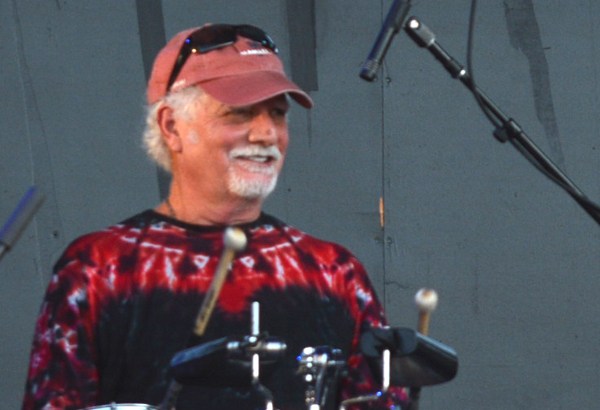
As a founding member and violinist of Railroad Earth, Tim Carbone has helped the New Jersey-based band showcase their unique brand of Americana for fourteen years. Boasting a range of genres all collected under a warm blanket of bluegrass, the group has become a staple in the “newgrass” movement of American music. And while Railroad Earth may be the most recognizable aspect of Carbone’s career, it is far from his only contribution to the music world.
Besides a heavy schedule of side-project bands, collaborations and his work as a producer that has included almost fifty albums over the span of almost thirty years, Carbone has recently lent his musical and vocal talents to Waywords and Meansigns, a project bringing together various artists from around the world with the end goal of creating an unabridged and experimental audiobook of Finnegans Wake, James Joyce’s famously abstruse final novel. Speaking from his current post in Denver, where he’s continuing to add to his producing credits, Carbone gives us an in-depth look at his process in interpreting this puzzling work, along with a preview of upcoming projects and why he might be the envy of even some of the most devout Deadheads.
We’re really interested to hear about your involvement this Finnegans Wake audiobook. How did it come to your attention?
The spearhead guy of the whole thing, Derek [Pyle], he emailed me and asked if I would be interested in doing it. I remember reading—I guess when I was in high school—I read Ulysses, the James Joyce novel, and I can’t even remember—I remember that it was difficult to read, that much I do remember. And so I didn’t really know that much about Finnegans Wake, but it seemed like a cool thing to do. I have a history of that kind of stuff, because a long time ago, back in the ‘90s, for over ten years I did a public broadcasting radio show that was three hours long. It was weekly show, and I would open up the second hour by reading a science fiction short story while playing odd classical music behind it. So I’ve been reading stuff on-air, on microphone—I’ve done it probably 100 times. And in that period of time, I had also volunteered to read books for the blind. So I had a background of reading on-air and adding some drama into texts while reading it, so I figured I’d give it a try.
How did your process unfold, not knowing much about the book to begin with?
Of course, my schedule is usually stupid busy. It’s mostly my fault—I wind up taking on other outside stuff, outside of Railroad Earth, the mixing, you know. I realized I was coming up on the deadline when [Derek] wanted to have this thing delivered, and I was like, holy smokes. And so I delved into it—got the book, went to my chapter and immediately realized a) I didn’t understand a single word of what was going on, and b) It was next to impossible to read, because the language is incredibly difficult. Have you ever ever read Finnegans Wake? Holy Christmas. So, on the one hand I knew I’d got myself into something, and on the other hand I don’t wanna not do this, because when I tell somebody I’m gonna do it, I do it. I hate to back out of things, unless I absolutely have to. So I emailed Derek, and I was like, what can you offer in the way of help to get me through this? And he sent me an mp3 that sound like it came from a record, of an English guy reciting my chapter. And it definitely helped, because I could refer to it when I had to.
So when I actually started to get down into it, I set up my little studio—I have a studio near my home. And I set up a little reading table and a light and got in front of the ProTools with the microphone, and I thought, it’ll probably take me three, four hours to get through this. Well that was a big joke. At first, literally was going sentence by sentence. Over the 58+ minutes it took me to read the text in a linear fashion, I counted up all the edits—I stopped counting at 100. I had 100 breaks over the course of 58 minutes of reading. So what I thought was going to take me four hours wound up taking me four days. When I first was listening to the original cuts that I was trying to do, it was like I had sudden-onset Tourette’s Syndrome. I’d start reading and I’d go, “Ah, fuck—shit.” And I started questioning, like, what the fuck am I doing here? Can I do this? There was no way I was gonna read the whole novel, and to be completely honest, I hadn’t got a fucking idea what the book was about—at all.
Once I started getting into reading it, I realized—and the weirdest thing about it, if you ever get around to listening to my portion of it—I start out and it just sounds like me talking, but I realized that I started to morph into an English accent, because it actually is easier to get the diction if you have like an amalgam of UK accents. So you’ll see, as it goes along, I become this English person. But the other thing I realized, that actually wound up being fascinating, was that the language and the diction and the way it’s written becomes percussive, and it has it’s own groove. And so you start to realize that this book is really good to be read out loud—it probably needs to be read out loud. And you see, once I get halfway through it, I get right into the groove of it. I’ve listened to it like three times all the way through, and it gets better every time every time I listen to it. The words are largely made-up, or they’re puns, like inside jokes that refer to mythology and refer to current affairs that were going on in the UK in the ‘30s, referring to his own life. And I know that if I read the whole book and tried to grasp it, I would get what the hell he was on about, but I realized—and what really made me continue and finish the project—that there’s an absolute beauty to the cadence of the language as you read it. And it becomes mesmerizing. It all of a sudden lulls you into this hypnotic thing. I’ve played sections of it for various people, and everyone turns to me and goes, “Holy shit dude, I can’t believe you did that.” [Laughs] So really, one of the most difficult things I’ve ever done in my life.
And then once you get through with the reading of it, now you have to create almost an hour’s worth of music coming behind it. I’ve listened to excerpts from other people that are on the project, and some of the stuff really is composed. I tip my cap to the people who are gonna get in and really get into the whole composition of putting together a piece of music that’s almost an hour long—and some of them are longer, some of them are 75 minutes. What I chose to do is I just improvised some stuff. One of my hobbies is when I hear interesting noises, I’ll just record them on my phone. So I have a library of all these—you know, bird songs, trains going by, crowd noises, church bells, kids playing in the street, fireworks—anything that sounds cool to me, I’ll record. So there’s a few interspersings—I even have John Wayne come in right in the middle. There’s a break in it and then John Wayne comes in and says, “All right, let’s make some music.” My stuff is all improvised. I did lots of distorted drone guitar with church bells, and then I had Railroad Earth’s Andy Goessling come in and play electric zither over the top of some of that stuff, and then I manipulated delay and all kinds of weird distortion in behind it, all on the fly while he was playing it. And then in the middle there somewhere, I add in an old Irish air on the violin, with distorted guitar in the background. And I listened to the thing as a whole the first time I mixed it, but the music was at one level, and it never really went anywhere. That’s just the nature of doing that drone. I went back and I decided I was gonna gradually make the soundtrack get louder and louder until it got to the end, until it built to a crescendo. So overall—at first an incredibly frustrating, difficult experience that became, actually, an incredibly rewarding and amazing experience for me. I had no idea what the hell I was getting myself into.
Do you know anyone else who’s involved with the project?
I know two of the guys on here—I know Mike Watt from the Minutemen, he would be the one name that stands out—but the other guy is Gareth Flowers. He’s like a twelve-tone composer, horn player, that has played with all kinds of people like Phillip Glass and that kind of thing. So I’m interested to see what he comes up with, I bet that’s gonna be really cool. But the list of people is all across the board. They’re from a pretty wide range of music, and also there’s a couple people here, I’ve noticed, that have Finnegans Wake blogs, so they’re kind of Joyce geeks, so to speak. There’s a smattering of those. To be honest with you, I’m not sure where it’s all gonna go, because everything’s gonna be available for you to listen to, and I’m not sure who’s is gonna take the amount of time—I mean, we’re talking in the essence of two weeks worth of listening if you were gonna listen to the whole book. My thing, you could put it on in the background and it would be—unless you’re familiar with the language and how it’s spoken—I’m not sure what it would be except an interesting sonic landscape. Which is kind of how I viewed it after a while.
Do you think you’ll ever try to get through the whole book, or is it just too much?
It’s a funny thing that you should mention that, because I just spent some time this morning listening to some excerpts, and I read through the blogs of some of the people. The one that I jumped on was “Finnegans, Wake!”—it turns out that this guy [Peter Quadrino] is actually reading one of the chapters. I think he’s reading chapter three in book three. So he says, “I chose this chapter because it’s always been one of my favorites.” So obviously the guy’s read the book, probably many times. It was kind of mind-expanding. He says, “The opening finds a giant sleeping figure named Yawn, whose yawns and sleepy groans create huge gusts of wind. His Brobdingnagian”—okay, so that’s a total Finnegan word—“sleeping body is also an enormous, otherworldly mountain. Four chroniclers (and their donkey) approach the mountain-body, braving treacherous winds and an impossible ascent, ‘traversing climes of old times gone by of the days not worth remembering.’” That’s the kind of stuff that you get—that’s a quote from the book. Another quote is, “‘His bellyvoid of nebulose with his neverstop navel…his veins shooting melanite phosphor, his creamtocustard cometshair and his asteroid knuckles, ribs, and members…his electrolatiginous twisted entrails belt.’” What? You know, I don’t know what the fuck it is, but it’s amazing! I mean, “creamtocustart cometshair.” “His bellyvoid of nebulose with his neverstop navel.” I get that—he’s got a giant bellybutton. That’s what it says to me. But the way he says it! And so, I’m reading this and I start to get that this is a mythology, obviously. And in my thing, you can glean current events that are going on in Ireland, that there’s references to world events at the time, but not in such a way that it dates the book. Totally amazing. I mean, I have no idea how this guy wrote this shit. They hadn’t invented LSD yet—or actually maybe they did. So maybe he was tripping, I don’t know, because it’s totally trippy.
Switching gears a bit, you’re making a record out there in Colorado, right?
Yeah, I’m out here for two weeks, and I’m mixing a record right now for the band Great American Taxi, their new record. And it’s really great, actually totally off-the-hook. It’s gonna be an unbelievable record. And if I do say so myself, as an Americana record, I’m gonna say it’s Grammy-worthy, even just on the basis of the songwriting. But the playing and the arrangements and everything—it’s really stellar. And then I’m starting right away, as soon as we’re done with that next week, I’m starting another record out here in Denver with this young band out here who’s really, really great. I predict great things for them. For a young band, they’re like ten miles ahead of the curve. This band called Gipsy Moon. They sent me the demos, and they were maybe one or two degrees away from being realized. As a producer, a lot of times I’ll get involved with bands that are producing their first or second record, and they have an EP, but this’ll be their first full-length record. But most bands doing their first full-length record need a lot of arrangement help and little song doctoring and that kind of stuff. Not a whole lot of that with this band. These guys are fully-realized and pretty fucking amazing. So I’m super psyched to get to start working on them.
And then I’m gonna go home for a week and then come back out here—I’m kind of ensconced in the studio out here, Silo Sound—and I’m gonna track the last three songs for my side project, The Contribution, with Keith Moseley from the String Cheese Incident and Duane Trucks from Hard Working Americans and Widespread. We’ll track all those and then we’ll finish them up probably some time in June out in California where I usually work over at TRI, Bob Weir’s studio. And then I go home for a week then come back here to start another record with a singer/songwriter named Chris Thompson. So, pretty busy.
And you also have some summer plans with Railroad Earth, right?
Yeah, we just finished the record with Warren Haynes, and we’re gonna be doing some touring to promote that. And then we’re gonna be going down to Maryland to participate in that Jerry Garcia tribute, which looks like it’s gonna be super fun.
How was it working with Warren Haynes?
Working with Warren was fantastic—and this is not just some guy trying to blow smoke up Warren’s ass, it’s not that at all. The guy is brilliant. He’s obviously a fantastic guitar player, but he’s also a great songwriter. What was really cool about the project was that we went in, and he never sent any demos or anything. He’d show up and we’d all get around him with his acoustic guitar, and he’d play the song for us in the control room of the studio, and we’d chart it out. Then we’d go play it. And that was it—that was the song. And he allowed all of us to have our input, artistically, and John [Skehan] and I arranged some strings on a couple of songs. The structures of our solos were all left up to us—pretty much what we brought to the song was what he was looking for. Which is really great, because as a producer—I’ve been producing records since 1986, once I’m done with this group of records, I’ll have produced 50 albums in my career—working with an artist, they’re either gonna know exactly what they want, and that’s not quite as enjoyable all the time, or you can get an artist that knows what he wants, but he knows it when he hears it and allows that to blossom in front of him. And that’s exactly what Warren Haynes did with this record, and it was really super cool. He’s great to work with, one of the nicest people on the planet. So, overall, super positive. [Laughs]
Railroad Earth is also doing a couple Chicago shows during Fare Thee well, some late-night shows?
Yeah. To be honest with you, I’m not usually a fan of doing “after-show” parties, but obviously this is a pretty special event.
What’s your connection to the Grateful Dead, you and the other guys in the band?
Some of the band members are big Deadheads, some not so much. Myself, I kind of fell off the Grateful Dead bandwagon after American Beauty. I’m the oldest guy in the band, so I’ve been around awhile. I’m one of those people—when I say this, Deadheads usually go, “what, really?”—I saw the Dead with Pigpen twice. I first saw them—actually you can go to archives and hear this show, and I almost had a flashback when I listened to it—the first time I saw the Grateful Dead was Halloween 1970 at Stony Brook University in New York. And there’s a board mix of that concert, and it’s actually pretty fucking amazing. I don’t [usually] go to archives and listen to whole shows, but I grabbed that show and listened to the whole thing, and it was kind of a revelation for me, because I was there. Then I went and found the other iconic show I saw in that same year or the following year, but also at Stony Brook—The Allman Brothers. And that’s the same year they did the Live at The Fillmore. It’s funny, because I’m doing this Great American Taxi record, and Duane Trucks plays the drums. And he was talking about his uncle, telling some Allman Brothers stories, because, you know, hell yeah, we might as well listen to somebody that’s one of the family. And I told him the fist time I saw the Allman Brothers was at Stony Brook University in 1970, and he goes, “Shut up! That show is famous!” That’s supposed to be one of their best live performances ever, even better than the Fillmore show. So there’s a really cool board recording of that show that you can get. That’s the only other live show I ever listened to front to back.
Any upcoming new projects that you’re particularly excited about?
The new Contribution record is gonna be released as singles. At first, we will release a song every two months online as a digital download, and 100% of the money will go to a nonprofit—a different one every two months.
When does that start?
I wanna get at least the record mixed before I start committing to doing it, so I’m gonna say probably September. And we’ll go for a period of ten months or a year. And the reason why I’m doing that is because I can’t really tour with the band, only one or two gigs per year because everybody’s schedule is so crazy. Generally speaking, the only real reason to make a CD anymore is to provide promotion for your tours. That’s a big part of it. Since we don’t tour, that doesn’t make any sense. Then you have to ask yourself, why exactly am I making a record? So I came up with the idea—since the name of the band is The Contribution—let’s just give it away. We’re gonna spread the love, and hopefully that’s gonna help us in a way, to keep the band visible, because every two month’s there’s a new story to talk about.
What kind of organizations will you be donating to?
Some of the usual suspects, like Conscious Alliance and Rock the Earth, those kinds of things. And yet to be seen. The band members have different pet projects, different ones they want to promote, so we haven’t finalized the list. And how it helps the band is that at the end I’ll [say], look, we wanna do this all the time, because we’re writing new material all the time. So at the end, I’ll hold off two songs, and I’ll say, okay, you have these ten songs, and we’ve given any money that you put out—it’ll probably be name your own price—to nonprofits. We’ll make an LP, CD, digital download of the twelve songs, with these extra two songs, and we’ll use that money to make the next record, then we’ll start it all over again. And we’ll just give it all away again, and this is something that we hope will just perpetuate itself. That’s my latest thing, and I’m super excited about it. And obviously there’s a million other things going on, so it’s just yet another project to work on, but it’s a good one.