

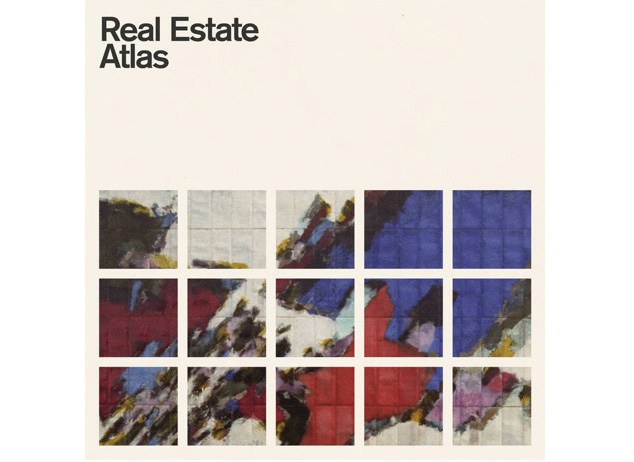
Real Estate emerged from the DIY New York club scene sounding fully formed, dropping their self-titled Woodsist debut in 2009 to immediate buzz and blogosphere accolades. That momentum helped them sign with another top-shelf label, Domino, in time for their sophomore set Days in 2011, which cemented their status as a career band and national headliners. So, when the group entered Wilco’s fabled Loft studio in 2013 to track what would become their third LP, Atlas, they arrived with both a well-earned sense of confidence and the desire to expand their sound beyond its original descriptors—without losing the hallmarks of their early work.
In retrospect, the group’s seemingly quick rise through the indie-pop ranks was at least particularly a result of the founding members’ lifelong friendships, which dates back to their childhood days discovering music together in Northern New Jersey. Atlas was also well-received and expanded the group’s reach ever further—and during the past 11 years, the group has continued to expand and hone in on their sound, including on last year’s more direct, song-driven Denial.
In September and October Real Estate will celebrate Atlas on the road, performing on record in its entirety as part of dynamic show full of bust outs and setlist swaps. Before the run, singer/guitarist Martin Courtney and bassist/singer Alex Bleeker looked back on the recording of their third release, the recent departure of guitarist Julian Lynch—who singed on in 2016—and why at least one member of the group may have skipped out of tracking at the loft to attend a three-set Phish show.
Real Estate recorded Atlas at Wilco's famed Loft. How did you find yourselves at Jeff Tweedy's studio and can you describe how the studio's feel contributed to the sound of Atlas?
Martin Courtney: We had been working on new material, and it finally got to the point where we felt ready to go to Domino and start talking about recording. We sort of half-jokingly brought up the idea of having Jim O’Rourke produce, or maybe we were completely serious, but we knew it was a long, impossible shot. O’Rourke remains the dream producer. We were talking about how we wanted the record to sound live, capture the band in a moment. Wilco came up as a band that consistently made great sounding records—one thing led to another.
There were a number of things that I think contributed to the sound of the record. This was our first time working in a studio in a city that wasn’t our own, staying together in Airbnb, working with a limited time frame. We were very well rehearsed and went in ready and expecting to just capture what these sounds sounded like as we played them live, with very few overdubs. And that’s what we did.
The Loft is conducive to this way of working because it’s basically set up as a rehearsal space/clubhouse that also happens to be a studio. We felt welcome and relaxed immediately. Tom Schick, their sort of in-house producer there was such a pro and so funny—the gear there was so awesome. It was full of insane guitars that I felt completely unworthy to be playing. Plus, lots of snacks.
Atlas was the first album Real Estate recorded after fully making it on the national touring circuit thanks to the success of Days. What do you remember about the pressures, if any, the band felt going into recording Atlas, as opposed to your first few releases?
Alex Bleeker: Honestly, I remember the writing and recording process of Atlas feeling a lot more chill than the previous two records. We had released a slew of well received and buzzy singles prior to our first record, and thanks to the birth of the blogosphere, it felt like we had a bit of a spotlight on us. It was literally hard to finish that first record because a lot of it was recorded in the bedroom of our friend Sarim's house, and he would go AWOL for a few weeks at a time while he finished up his last semester at Rutgers. Then when we were making Days I really did feel this pressure to deliver—to prove that we had more than one great album in us. By the time we got around to Atlas, I think we had enough humility and swagger to just let our guards down and follow the process. We knew it was going to be good.
In retrospect, do you feel that the music on Atlas is a reaction or conscious continuation of Days in any specific ways?
MC: It’s a reaction in certain ways. There was a conscious effort on my part to try and write songs that felt classic, timeless. This mainly took the form of me adding bridges [Laughs]. Much to the chagrin of our drummer at the time, Jackson [Pollis], who said the bridge was always the worst part of any song—debatable!
A lot of the songs on our first two albums were very dependent on their arrangements. The guitars and bass worked together in a way that made a whole that was hard to replicate solo on an acoustic guitar. With Atlas, I was making a conscious effort to write songs that could stand on their own and then dress them in these sort of clockwork arrangements.
Production wise, there was a conscious moving away from the washy reverb that we sort of defined ourselves by on the first two records. Again, in an effort to make something that felt a little more classic and a little less stylized or trendy—or “indie rock.”
You mentioned a desire to capture the live feel. How much of the material on Atlas had you been playing live before entering the studio and, in what ways did you feel that you were able to use The Loft to channel the band's proven live energy?
AB: We definitely wanted Atlas to feel like a "live in the studio" kind of record. We kept talking about how we wanted to capture the sound of "the band playing in the room." Most of the tunes on there had already been worked out a bit on stage, but definitely not all of them. The outro to “The Bend,” for example, was totally a moment of studio magic. Still, we had been touring and playing together a lot before we got to The Loft, so we were ready to go. Most of the basic takes on that record are full-band ones.
Was Jeff Tweedy present for any of the recording sessions and, if so, did he give any feedback on the material the band was developing?
AB: A lot of people don't know that Tweedy initially wanted to produce the record himself, and we turned him down. Looking back, I don't really know why we did that. I mean, we are all big fans, and he's a legend. I think we were young and scrappy enough to feel like we wanted to "do it on our own" and that we didn't want it to be pegged as "Jeff Tweedy's Real Estate Album." I guess we'll never know if that was the right decision or not. He did stop by the studio one day just to say hi—he was on a day off from this big tour Wilco was doing with Bob Weir and other legends. [Wilco took part in the AmericanaramA tour that summer.] We were in the middle of tracking a big jammy song that didn't make it on to the record, and he made a big deal about it. He said that the inherent psychedelia of the thing totally blew him away. There's got to be tape of that somewhere, but I haven't heard it since then.
If I remember correctly, you were working on Atlas at The Loft in Chicago during both the Pitchfork Music Festival and a famed Phish run that included a truncated show due to weather as well the bust out of "Harpua." Alex, I believe you attended some of those events as well. Can you share some fun memories of those scenes coming together at a time when they felt much farther apart than they do today?
AB: I definitely took off from tracking a little bit early to go and catch Phish—only for it to be rained out during “Prince Caspian” in the second set. I was super stoked the next day when they announced that they'd be playing three sets and consequently took off even earlier that evening. [Laughs.] I'd also been to all three nights of the SPAC run just before we left for Chicago, so I was definitely feeling the improvisational spirit in the studio. The band all went to check out the Pitchfork festival that weekend too, which always was a good time. I think Rob Mitchum and I might have been the only two people in Chicago who went to both events that weekend. As far as the enduring legacy of Phish goes, I'll say this—Pitchfork fest doesn't exist anymore and Phish is doing avant-comedy sketches as the cast of Seinfeld on one of the most popular TV shows on Netflix in their downtime between three gigs at the Hollywood Bowl. I'll leave you to do the indie-x-jam math on that one.
Martin, Real Estate released Atlas around the time you became a father and now you have three daughters. Do you feel that the album captures some of the uncertainty and excitement that comes with starting a family?
MC: Well, I remember clearly finding out my wife and I were going to have a kid right at the end of the process of making this record—during the time that we were mixing at the Magic Shop in Manhattan. So, that didn’t necessarily play into the songwriting in a specific way, but I do think I was in a traditional time in my life for sure. I had just gotten married and was starting to take things maybe just a little bit more seriously.
Atlas was also the first album to feature Matt Kallman and the first record since the band brought on a full-time keyboard player. How did Matt come to join the group and how did having a full-time keyboardist in the studio expand the range of material you were able to write?
MC: Real Estate had always had keys on our records, mostly played by me and mostly pretty rudimentary stuff. I always knew that I wanted to have real keys on this record—organ, piano, Wurlitzer. We knew Matt as the keyboardist in the great band Girls. He was living in Brooklyn at the time, as we all were, and we’d see him around a lot. Girls ended up breaking up the spring before we went to Chicago to record Atlas. We asked him to join the band a couple weeks before we were scheduled to start. He practiced with us a few times, then we went to the studio and got started, and he joined us a week later.
Having a keyboardist who could actually play really opened things up moving forward. I could articulate to Matt what I was hoping to hear, and he’s always been able to nail it and add his own unexpected flourishes.
Though I have fond memories of being 11 and 7 months old, it is not the usual round anniversary that bands celebrate when it comes to their albums. What made you guys decide to revisit Atlas on this upcoming tour?
AB: I mean I think it's pretty self explanatory, really. 11 years and 7 months—right on the precipice of 12—it's a milestone in the lifetime of any timeless piece of art. I can't imagine doing these shows at any other time.
Real Estate still plays most of the material on Atlas live, which is a testament to its longevity. As you prepare to perform the LP in full, how do you feel playing the tunes in the album's sequence changes their flow and feel?
MC: It’s been really fun rehearsing this record from front to back. The majority of these tunes have remained in our live repertoire over the years, but there are a few that we haven’t played in a long time. And there is definitely something nice about playing them in order, bringing the record to life. I’ve been having flashbacks to our tiny rehearsal room in Brooklyn, working these songs out all those years ago.
In 2021, Real Estate performed Days in its entirety on tour. Looking back, how did you feel that performing the tracks in order brought some new life and a different energy into them?
AB: We play a lot of the songs from Days live in our sets, as we try to mix things up and play tunes from all of our records if we can. But there is something about playing an album in its original order that feels totally different. It transports me back to a time and a place and a feeling, and I'd imagine that's what the audience is in it for too.
Last year was a big year for Real Estate with the release of the album Daniel. I saw that you even got to have a conversation with Elton John, whose song "Daniel" you covered. What was that conversation like?
MC: The whole thing was over Zoom or FaceTime or something. We were on the road in southern Colorado and didn’t have great cell service. We decided to try and do the call in a Starbucks, but when we walked in, we realized it was way too loud in there. We had just enough service in the parking lot outside to make it work. So I talked to Elton John from the back of a sprinter van in a parking lot in Colorado—normal. The conversation was sort just standard interview stuff, but he was very nice and complimentary about our music and we’re best friends now. [Laughs.]
Daniel was also something of a return to the more direct songwriting of the band's earlier days. Was that a conscious decision and how does Atlas fit with that sonic development? Real Estate has always balanced pop hooks and more artful songwriter-material quite well.
MC: Daniel was really the first record since Atlas that we went into with a fairly specific idea of what we wanted it to be in the end. With both records, the goal was for it to be relatively stripped down and live sounding. The difference is Daniel was really much more tailored to be a collection of straight pop songs, Atlas has some tunes that meander a bit more, though still mostly fitting into a classic-pop structure.
Sadly, Julian is stepping away from the band this fall. Can you talk about some of the things he contributed to the group during the past 10 years and even before?
MC: Alex and I have known Julian since we were kids. Julian and I went to the same elementary school, though he was a year ahead of me. Him joining the band always felt like the most obvious, natural step—"We need a guitar player, let’s ask our brilliant, gifted friend who is not only an absolute shredder on the guitar but a writer of incredible soulfulness and depth.” I’m not exaggerating, I think the man is a genius, and what he brought to the band was the perspective of someone who has known us forever but could see what we were doing from the outside and could help us to evolve and introduce new textures and sounds that we would never have thought of on our own.
Before he joined the band, before the band ever existed, before I wrote my first songs, back when we were in high school and college, he was the guy we looked to as the best songwriter among us. I leaned a ton about songwriting by playing bass on his songs in earlier bands like The Enormous Radio and Lese Majesty. It’s very inspiring to be friends with someone with such a clear musical voice at such a young age.
AB: Even before Martin and I were in Enormous Radio with Julian, he was in another band that always shared local bills with us in our local ska/punk scene. Julian's been foundational to my musical development—we have always played together and I know that we always will.
Julian was actually on Atlas as well. Can you talk about how he ended up contributing to the LP?
AB: Like I said, Julian's been a part of Real Estate's musical fabric even before its inception. He was living nearby at the time, and it only felt natural for him to come and hang out in the studio for a few days. He wound up playing sax on the album's last track, "Navigator." And because I know this interview is for the Relix crowd, I'll drop the little nugget that the working title of that song was "Phil 72."
Who does the band plan to have fill his spot this fall and what were the conversations like when you discussed finding a replacement, temporary or more permanent?
AB: Our good pal James Richardson, who some of you may recognize as the guitarist from MGMT, is going to be filling in on the road. James is a deep head and a real mensch and a great player so we are super stoked to have him. He splits his time between the Hudson Valley and California, which made him a total shoe-in for our outfit.
Real Estate dropped a rarities compilation this year. What was the process like of sorting through that material and deciding what to include?
MC: We’ve never been the type of band to end up with 20 leftover tracks at the end of the album making process. Usually, we’ll go into the studio with a few songs more than we need, and then we’ll see how they shape up in the studio and pick the ones that flow together best to be on the final LP. Sometimes the leftovers get finished, sometimes they just fall by the wayside. It was only after our 7th LP that we turned around and realized there’s enough unreleased stuff here that we could probably make a record out of it—and people might be interested in hearing it. I don’t really spend a lot of time listening to our recordings, and I have a tendency to think, if a song didn’t make it on the record, it probably wasn’t very good to begin with. Listening back to these recordings, however, I was very happily surprised to remember how good these songs are. It was nice revisiting these songs and being like, “Damn why didn’t we release this earlier?”
We ended up treating the comp like an LP and choosing the songs for how they flowed together, rather than putting them in chronological order. There are still a few more tracks that may see the light of day down the road.
Martin, next year will mark the 10th anniversary of your solo debut, which was your full-length follow-up release to Atlas. Do you see a sonic throughline between those two records?
MC: I always forget that I started recording Many Moons only a few months after we completed Atlas. I don’t think Atlas was even out yet when Jarvis [Taveniere] and I started working on that record. They were just made under such completely different circumstances. Many Moons was sort of a reaction to certain frustrations I felt during the final steps in the process of making Atlas—creative friction in the band. Jarvis and I were friends and our two bands [Real Estate and Woods] had toured together and shared countless bills in NYC. We had talked about making something together, so we did.
I don’t really see a lot of a through line between Atlas and Many Moons—Atlas was made in collaboration with a band that had already been together for years, and the songwriting on that record was sort of intentionally genre-less and open. Many Moons is very much a collaboration between me and Jarvis. It really feels to me like a power-pop album in the vein of Big Star or the Kinks—not power-pop, but still. It was never meant, in my mind at least, to be a solo record—Jarvis was the one who encouraged me to put it out under my own name.
I’m super proud of both records. I think Many Moons is pretty special and dare I say, underrated? [Laughs.]
In addition to playing all of Atlas, you have promised catalog material and deep cuts. Are there certain “eras” of the band you are going to focus on in addition to the Atlas tracks, especially since the band recently released a rarities comp?
AB: We're 100% digging into that rarities comp for setlist inspiration, and I think the crowds can expect more than one bust out on this tour. We also hope to be working out some new tunes out there because we're always looking forward to new music!
MC: We’re definitely looking to expand the live repertoire a bit from what we’ve been playing for the past year or so on this tour. We’re doing a couple B-sides from the Atlas era, plus the “new single” from the compilation, “Pink Sky.” We may even debut a couple new, unreleased songs. As always, we’ll switch the set up every night—the difference obviously being there’s gonna be a 10-song chunk in the middle or every set that does not change.
Real Estate released a big record, Daniel, last year. As you revisit Atlas for this run, how do you feel those two records relate to each other?
AB: We were kind of channeling Atlas a bit when we set out to record Daniel. We were in Nashville and were guided by a similar vibe in the studio. It was very direct, on both records we really just wanted to capture the sound of the band playing good songs, live. The next one is bound to be a little different.
Have you started working on any new Rela Estate material since Daniel and, if so, do you think it will follow a similar blueprint to that record?
MC: I have been writing, and we did some rehearsing last month—where we spent some time on the new stuff. I’m pretty stoked on how the new record is shaping up. The songs feel different from Daniel, maybe a little less stripped down, more ornate. We have a plan for recording that is unlike anything we’ve done before. It’s all very exciting, hopefully more on that soon.
I remember there were a number of B-sides and unreleased songs from around Atlas, including my personal favorite "Easier That Way," which was an early “jamband song” from Real Estate. How much material did you record that is still in the archives and do you plan to dust some of that off live?
AB: That's the tune I was referring to earlier, the one Tweedy happened to catch in the studio. I really don't know how to play that song anymore—[Laughs.]—but it would be fun to play it again. We definitely still have a few unreleased tricks up our sleeves.





