

MikelParis is a voracious multitasker. Whether it’s music, short documentaries, livestreams or musical performances, he maintains a full schedule that finds him transitioning from one project to another and then offers them to the world (wide web).
The multifaceted artist has been the keyboardist, percussionist and backup singer for O.A.R. for two decades. Previously, he performed with P!nk, Train, The Dan Band and Jewel. As a filmmaker, he acts as the producer, cameraman, editor and host of TuneTrek, which he films at lesser-known historic places and includes a song written specifically for each location and episode. MP made “Music Drink Stories,” which followed his “A SONG A DAY” series. Started while at home during the COVID shutdown, he worked on new material during livestreams.
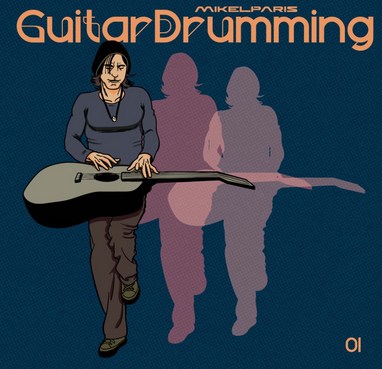
Over the summer, he toured with O.A.R. and during any downtime, MP did solo dates in music venues or as part of his home concert, “HouseTrek,” performances. Earlier this year, he put out GuitarDrumming 01, where he focuses on the guitar drumming technique he started to develop as a touring member of the percussive-heavy production, “STOMP.” On the album MP did all the songwriting, lead vocals, keyboards, bass, percussion, stomps, “mouthbone” (vocalized horn parts) and guitar drumming on acoustic guitar.
Joining him on this release are special guests Vernon Reid (Living Colour) on electric guitar on “Good 2 Go,” G. Love on harmonica on “Hitme,” while “Downtime” brings together Of Good Nature’s Cam Brown on vocals, electric guitar and bass and David Hamilton Jr. on drums plus the onetime O.A.R. horn section of Jerry Depizzo, Evan Oberla and Jon Lampley.
Although he’s promoting GuitarDrumming 01, MikelParis is already setting up the GuitarDrumming 02. “I've got three albums planned,” he said. “The second one, I've already released the first song with good friends of mine, Simplified from Charlotte [North Carolina], “I’m OK. Then, I' got another one called “Mother” with my friend Stephen Kellogg.”
Recently, a third single came out – “Floweez” featuring Brady Watt.
Although he has much to do throughout the year, Paris is excited to be out on the road with O.A.R. “It’s been awesome to be back on a tour bus. It’s been almost a year since the band’s been able to travel like that…just for logistic reasons.”
Our conversation takes place in the afternoon prior to an O.A.R. show in Clear Lake, Iowa that evening. Afterwards, he planned to visit the “Not Fade Away” exhibit that’s dedicated to the final concert by Buddy Holly, Ritchie Valens and the Big Bopper before their plane crashed in a farm field north of the city.
JPG: Being on tour with O.A.R. is just one part of what you do. You have band shows and solo shows and rarely have time off.
MP: I started releasing music and I realized that I needed to play solo shows to support it, like artists are supposed to do. [Laughs.] Last year was an experiment for me in figuring out a tour within a tour; how to route and book my solo shows within the context of an O.A.R. big summer tour, and it was pretty successful. It was a lot of fun. I've incorporated that model for this year as well and got a lot of solo shows coming up that I’m excited about.
JPG: Are those solo shows in venues or HouseTrek events?
MP: A combination of both. I like the HouseTrek formula. It's been really cool. Then again, I also really like playing in venues where it's an intimate setting, and I'm gonna reach some people who have never heard me before.
JPG: Are you doing these shows on guitar or keyboards or even looping?
MP: No looping. My solo rig, if I have everything with me, it's my guitar drumming. I have a stomp platform that I have a kick drum mic in. I have two vocal mics -- one clean, one affected, distorted with overdrive and delays that I control on the fly. Then, I'll have a keyboard off to my right side. So, everything is being created in the moment.
I experimented with looping. I got the gray line 6 JM4 looper pedal and kudos to people that can really do it and who have made it become second nature. For me, it was all about, “What can I do live in the moment? which goes back a little bit to my STOMP days as well. What can we create onstage with the eight of us [in the STOMP cast] with no recordings? That really instilled that ideal in me of I want everything I'm doing up during my solo shows to be…not that looping can't be organic. I don't want to say that. But, I want it to be, “How is he making that sound and he's doing it all at the same time in the moment?” That was my challenge to myself, and the guitar drumming in and of itself covers a lot of bases, no pun intended. It covers that bass texture often, and the percussive and guitar sound. That's already filling it out a little bit.
Then, adding the stomping as I'm doing it. The stomp platform, I didn’t just arbitrarily do that. It's a two-by-two wooden platform that my dad and I made. It comes out of my time with the show. That's my justification for doing it and that has become a large part of my musical vocabulary, that stomp texture, that added thing.
The fact that I can do it while I'm doing everything else is because of all my time -- 10 years off-Broadway with that show -- it's ingrained in me.
JPG: Regarding the technical aspects of it. I believe Neil Young, when he was doing a solo acoustic show, had something he was stomping on, and there’s a band called Bonepony that stomped on a board. Do you need to use a particular type of wood to get a sound or use whatever you want?
MP: No. In STOMP they have developed a very specific material, multiple layers of materials, to get that specific sound that the creators wanted of that show with how it's miked and everything. I wasn't trying to emulate the exact same tone of the STOMP show and that STOMP stage. I wanted something that wasn't one of those stomp boxes. They sell them, and I've tried them. It seems to work much better when you're sitting with those. For me, it was about the show STOMP, and where you're placing your feet from any given moment. It's always fluctuating a little bit.
So, having a little stomp box that was very specific -- four inches by four inches -- for me to do that was never going to work and I wanted to have that space. So, now, it's two by two platform. I put my pedal board on the top of it. So, I have it all figured out.
And it's not any particular wood. It was just my dad and me. “What does he have lying around the workshop?” It's eight inches high. We cut a little channel in the front so that I can stick the kick drum microphone in there, and that's it. It's got padding on the bottom. It's solid enough so that me standing on it and stomping on it isn't gonna crack it.
JPG: I want to get to the origins of the guitar drumming, but, also, I want to bring up STOMP. I'm fascinated by it. I interviewed someone from the current touring production recently, and I remember seeing the show years ago. When did you join STOMP? How long were you there and were you a keyboardist first and saw it as an opportunity?
MP: Yes. Piano was my first instrument. Four-years-old. My mom had the Baldwin upright in the living room and I was listening to her play it. She said that at one point I walked over when she wasn't playing it, sat down and started messing around with the keys, and she saw that I'd taken an interest. So, she asked if I wanted to take piano lessons. We found a great piano teacher, and it was amazing.
So, piano's always been my first true love or entrance into the music world other than singing in the tones that babies can make when they're trying to match pitch with what they hear around them.
I went to school for piano as well. I went to the Hartt School for music. I was trying to be a jazz piano player. Musicians always trying to search “Where's my niche? What is my journey? How do I navigate this maddening industry?” from one moment to the next. I'm still doing that. [Laughs.]
I remember, I was in New York City, sometime around the 2000s and I saw an ad in the Village Voice, just one of those random things. I moved to New York City originally as an actor. I minored in theater. It was always back and forth between music and theater for me. And I just remember seeing this ad for this show STOMP. It said, “Wear boots.” I thought that was cool. I didn't really know much about the show at the time.
It was an open call. Multiple callbacks. That whole story of an artist who moves to New York, works in a restaurant or a bar, hustling, auditioning, auditioning, auditioning, trying to find…and everything aligned somehow at that moment. My attitude was right. I didn't go in there, saying, “Oh my God! I want this! I want this so badly. I need this!” I went in, “This could be fun.” That was my attitude going in, and it turned out that they liked my attitude.
The creators of the show -- Luke [Cresswell] and Steve [McNicholas] – and some of the original British cast were there for all the auditions, and I remember Fiona [Wilkes], one of their original performers, saying to me later that she really noticed that I was helping other people with the choreography. It was a little slower process for them to ingest this stuff, and I was getting it kind of quickly, and they really saw that. That was one of the things that put me into, like the A-list, as opposed to the B-list when they were considering.
I traveled all over the world with that show. It was amazing. I have lifelong friends. I was already interested in the rhythm and the music of our environment, of the world around us, and hearing rhythm and music and everything around me. So, these guys, having the confidence to be on the streets of Brighton [England] busking with trash cans, people looking at them side-eyed, sometimes, or like, “What are you doing? That's just noise. That's just a racket,” but they knew they were on to something, and they believed in it. That has given me the confidence with the guitar drumming, working my way to that style that I've developed and created over the years.
When I got into STOMP, I really thought back to this time just out of college. My first apartment, my friend Todd and I, late night, he had an acoustic guitar and I picked up those devil sticks and I started drumming on the strings as he was doing chords. I thought I created and developed a whole new sound that no one ever heard before, and then I didn't really think about it.
Then, three or four years later, I get into STOMP and “You know what? I’m going to go back to that.” I had an old, cheap Yamaha acoustic guitar, one of the starter ones. “Let me start experimenting. How can I do this without a partner?” I didn't even know what it was called yet, but if I was going to do this approach to the acoustic guitar where I lay it flat and I look at it more like a piano, a chromatic…I'm usually DADFAD as far as the string tuning. Then, my thumb is doing a lot of the chord work. Then, this [finger’s] doing a lot of the minor major color tones. This finger reaches around. I just started messing around with this idea again.
I remember I was on tour with STOMP. It was the first tour, and I brought my guitar with me. I was in a hotel room with the cast. We were hanging out. “Yay! We're touring this amazing show around the country and people are going crazy.” Don't forget the Orpheum Theater in New York City was like 380 capacity. Then, STOMP goes on tour for the first year to houses that are 2,000, 3000. All of a sudden, as performers, we were hearing this incredible response and energy from these larger crowds, which was absolutely incredible.
So, the guitar drumming evolved during this time. I was in that hotel room, and I was just messing around with the first song that’s on GuitarDrumming 01, “MoveIT.” I wasn’t singing. I was messing around with the groove and the pocket and the feel of it and the mechanics of, “How am I hitting the strings? How am I getting that sound?” And, within, like 30 seconds, the whole hotel room got quiet. I didn't realize it at first. I looked around and, they used to call me, “Paris,” because there were multiple Michaels. They're like, “Paris, what are you doing? That's incredible.” And I was like, “Okay. That's another little sign that, maybe, I should pursue this. I should see this through to its fruition. I should not make this a gimmick but have it be a way that I write songs; another way that I think about music and composition with this instrument and how I'm playing it with this guitar drumming style. And how does this guitar drumming sound converse with other traditional instruments.”
So, that's what GuitarDrumming 01 was really a lot about, an experiment in how does my guitar drumming sound work with a drum set? How does it work if there is a bass? How does it work with a harmonica? How does it work with a horn section, tonally and timbre and all of that stuff? It continues to be this experiment for GuitarDrumming 02 as well, looking at instruments to put in place with this style that I've developed and created to see how they converse and see what kind of dialogue they have. It's really been fun and exciting for me.
JPG: You mentioned earlier about being into jazz piano. Was Thelonious Monk an influence because when I hear him, I hear the rhythm of his playing.
MP: All those rhythmic piano players, the jazz players—McCoy Tyner, even Herbie Hancock and Chick Corea—as much as I wasn't as fast and quick and virtuosic a player as far as modals and patterns, I developed my own way to do fast stuff as a piano player. But for me, it was always about rhythm and people don't always think about the piano as a rhythm instrument.
It's funny that you bring up Thelonious because those were the people that I gravitated to when I was in the jazz world; those almost experimentally tonal chromatic players. Philip Glass even, some of his stuff really inspired me. They looked at that instrument very different. Thelonious, we all know, he was his own thing, and his piano was not a piano. It was something else. It was some other instrument. So many of those great piano players, the stories of how they developed and the struggles were definitely very inspirational for me during that period and continue to be.
JPG: How long were you with STOMP?
MP: More or less about 10 years. There were a couple breaks. I played with Pink for about a year-and-a-half, 2001, so I had a break there, which was good. The show is incredibly physical and demanding. It really took its toll on me, and I did not have the greatest core strength during that show. It caused some issues because your posture, often in that show you're hunched over with brooms and things, and I had some issues. My last couple years with STOMP was…I remember Luke and Steve saying to us, “If you're ever doing this just for a paycheck, find something else to do.”
I was really starting to struggle physically just to get through a show from those last year-and-a-half to two years, my back, my knee, my heels. Your heels get compressed from doing that show. There was a point where, I think, I had three insoles in my shoes because I was trying to find some way to soften the blow.
I knew that it was time. But, like anything else, especially as performers, we get involved with something that's a steady paycheck and touring and traveling, you're going to do what you love to do. The thing I loved about STOMP was that it was musical and it was acting. There was no dialogue but there was non-verbal communication and you had to look at each other onstage and try and create moments between your characters. Everyone has a different character in that show.
So, it was a wonderful 10 years. The idea of the vocabulary of that show is ingrained in my musical structure forever. I do it all the time. You can ask the O.A.R. guys, too. I'm always still doing stuff with the body. (Demonstrates by tapping out a rhythm on his chest) From when I was a kid, my parents told me that I would be in the kitchen trying to entertain people at the table with body and rhythm and vocal percussion, grabbing a pot or a pan, and doing something because I had an idea for a rhythm. I was always doing that.
So, when STOMP came around, it was like, “You guys wrote this show for me!” We all felt that way. So many people in the world feel that way. And what a brilliant show for there to be no language. We traveled all around the world with that. I was in China with it. You didn't have to speak. All you had to understand was the language of music, and you can say the same about music in general. People from different languages will sing a song in English and know the lyrics, but they don't know how to speak English.
I can’t say enough how thankful I am for the different journeys and experiences that I've had as a performer, as a creative, because all of our journeys are different for every creative, for every performer. I learned early on you make your creative choices in your career based on the things that are presented to you, sometimes, and, sometimes, you go for the things you want. And we don't know what that journey is going to be.
So, I've been very excited and thankful about all these experiences that I've had, that have led me to here and led me to this moment where I feel, finally, that I'm ready to get this guitar drumming project out. I'm ready to get this solo stuff out there, and for people to see me as an artist in my own right.
JPG: Your previous solo albums released before Guitar Drumming 01 -- Snidbits, HIHOWAREYA VOL. 1 and Flow -- had some guitar drumming on them. Correct?
MP: Yes, it's always been there since I've started releasing solo stuff. It's always been in the texture, but it's never been the focus.
It's been multiple decades of getting to that point where I feel like everything is ready. I've got this huge catalog of songs where the guitar drumming is the driving force, so why not focus on it?
I've got three albums planned. The second one, I've already released the first song with good friends of mine, Simplified, from Charlotte [North Carolina], “I’m OK” and another one called “Mother” with my friend Stephen Kellogg.
The album is loosely scheduled for November 2025, GuitarDrumming 02. I've got another 20 songs or so on deck for GuitarDrumming 03 to choose from. Then, I've got HIHOWAREYA VOL. 2 ready. I've got Snidbits and Slippies on the burner, and I've got MikelParis TuneTrek. I don't know if you got to check any of my TuneTrek [YouTube] series. I'm calling it “Season 01.” It'll be like 14 songs, and then 14 episodes as companion pieces.
I've got a lot on the list of things I'm trying to get through in the next two or three years as far as solo releases and projects.
JPG: What I liked about the TuneTrek episodes is that it’s live performance and history.
MP: That project was born out of this idea of, “I'm touring around the country. I'm in a tour bus, staying in hotels, and I'm not going out and having adventures in these cities that I’m in. I'm not exploring and finding new places and new things.” One of the things I love to do, I've always been an explorer. I've always been behind the woods as a kid in the house, just having adventures, finding a new trail or lifting up a new rock to see what was underneath it. That sense of adventure has always been with me and I realized that I got complacent with it.
This was in 2012, and I was like, “Okay, let me figure something to motivate me to get off the tour bus, to get out of the venue.” My whole day in Iowa not just be on a tour bus in a parking lot. Then, I go out. So, I was, like, “Let me find historic places that are lesser known.”
I’m a big fan of Anthony Bourdain’s Parts Unknown, big fan of Les Stroud (Survivorman), big fan of Daryl Hall’s “Live at Daryl's House.” Those were the really three big ones for me that I was starting to watch and “What can I take from these to make into a solo adventure that I do with my guitar?”
I write a song for these places, and I interview a person, learn about the history. Lyrically, it was a real fun thing for me because I was able to research the history of this old house or this old factory or this old lighthouse and start getting inspiration for lyrics just from the story of these places. It was a real different way for me to write and create.
Then, people would say to me, “I walked by that house a thousand times. I didn't know that was the history of that, that there was that story about that or that it was built in 1711. I had no idea it was that old.”
It was real exciting for me to do that, and I'm really excited to get back into that with the album and the release and, maybe, try and get some network. I had about seven episodes run on three different PBS stations as interstitials. They were like 90 seconds to two minutes, and I was really excited about that. I like the short form, but I really wanted to get more into that five to six minutes and do a half hour where I'm at three locations. Once I get back into that “TuneTrek” headspace early next year, that's part of the team that I'm trying to get together for that project. There’s got to be some place that that can live.
I've got 69 episodes, 12 or 13 are up on my website right now that I've edited, that have the new theme song and all that stuff.
JPG: Moving to your solo albums, HIHOWAREYA VOL. 1 has a bit of an O.A.R. vibe to it and Snidbits is more song-oriented more than the rhythm-oriented GuitarDrumming 01. Your thoughts on the differences between the albums.
MP: So, Snidbits were songs that were written primarily during my A SONG A DAY (ASAD) livestream from 2020 to 2022.
One of the things that I created was a thing called the Snidbit Workshop…and I know it's supposed to be “snippets,” right? That's the real dictionary word, “snippet,” but I always said, “snidbits.” So, snidbits became these little ideas in my phone on a voice memo. I would sing a snidbit.
The Snidbit Workshop was where for three or four weeks I’d work on a song during the livestream in front of the audience. It was really about breaking down the wall of me feeling like a song needed to be perfect before anybody heard it. That’s never gonna happen. You can strive for perfection, maybe near perfection, as far as we think for our creative endeavors. So, that was about me writing and workshopping new songs during the pandemic and it really captured where my headspace was during that time period, too.
I did 29 Snidbit Workshop songs and decided last year… “I want to do the guitar drumming project, but I don't think I'm quite ready yet with that concept. Let me put out “Snidbits.” Thematically, rhythmically and lyrically, those songs are all over the place, just where my brain was in…where all of our brains were during that time period. We all have unique memories and experiences of that. I was really trying to give a little time capsule on the “Snidbits” album, of this is some of the journey I went through during that time period. A lot of it was letting go, and it was less is more. It was like, don't fill these songs and these tracks with every moment. Let there be space…and let it breathe.
“B Good 2 Me” on Snidbits is a real exercise in that every instrument has its space, and there's not a lot of instruments. I get chills when I sing some of those songs, sometimes, which is an okay thing to say as a musician; if you created moments in music that affect you in that way when you're performing it. I want to be able to listen to my music. I'm not an artist that can't listen to themselves because for me that’s the ultimate payoff as a musician. We get to travel. We get to perform. But, we also get to write and then enjoy what we've created. I want to be able to enjoy my creations like I enjoy other people's creations.
JPG: With Guitar Drumming 01, the music has a rhythmic feel to it as well as a lot of the vocal melodies. Was that purposeful or accidental?
MP: That's one of those questions where you ask somebody where they got the inspiration for something. Sometimes, it's just a subconscious thing. I'm not necessarily consciously aware of those decisions that I make. Often, I try to go back to the moment of inspiration as much as possible. “What was the melody that I sung? What were the notes? How did it fit in with the other rhythm that I came up with?”
For the most part, it's just an innate decision but then you go back to the song, and you start fine-tuning it. I do think that that there are conscious moments, yes, where I was – vocally -- let me try something more rhythmic and see how that connects with what I'm doing on the guitar and everything. So, I have embraced way more now than 15 years ago. Just because you sing something one way or play something one way doesn't mean that that's the way it should be. You can go back and look at those moments and edit and tweak things.
But, like any artist -- a painter or anything -- you need to know when to stop and, sometimes, the hardest thing is to know when to stop. “When do I stop editing? When do I stop trying to make this better?” Sometimes, you go back to that moment of inspiration of me just with my guitar and singing this idea into the microphone on the iPhone and you're like, “That's still better. Okay, I need to…” and being okay with that, being okay with spending time on a song and then realizing this is the wrong direction and not beating yourself up, “I just wasted all that time on it.”
I used to feel that way. Silly. Stupid. I gravitate towards singing more rhythmically and yet I realize that there are times where I need to push myself to get out of that comfort zone and sing things more legato (to sing smoothly with notes flowing from one to the next without any breaks) and longer phrases and I have to push myself to do that.
JPG: The rhythmic way of singing was more noticeable on Guitar Drumming 01. Prior to that, you were singing more legato on the other albums. This one, it was more noticeable because I heard the rhythmic aspect of the guitar drumming approach. Since you mentioned learning to stop yourself from editing that brings up the idea of adding. You have the addition of special guests on the new album. What brought you to that decision?
MP: There's so many reasons behind that. All the guests on this album and Guitar Drumming 02 are meaningful relationships, some of which have been relationships for 20-plus years. We see more and more now from a business music standpoint, the value of collaborations, especially as independent artists look to try and get their music to new audiences, in front of new ears. Collaborating with a guest artist who's more established than you, hopefully, is something that I saw the value from a marketing standpoint. From a heart standpoint pretty much all of the collabs on “Guitar Drumming 01” were full circle situations for me.
I met Vernon Reid (Living Colour) in Guitar Center in New York City over two decades ago. I just recorded a version of “MoveIT,” which is on “Flow,” just an instrumental version. That was the first time that my guitar drumming style really was just by itself with no vocals on an album.
So, it was on “Flow,” and I had a CD on me in Guitar Center. I went over to Vernon, and I was like, “Hey man, just a big fan,” and he was very gracious and very nice, and Guitar Center has those listening rooms in the back with the speakers, and you can go and choose what monitors you want to use in your studio. So, I was like, “Hey man, I got this guitar style I've been working on, and I really think you're going to like it. Would you mind listening to it?” He said, “Yeah.” So, I took Vernon back and I'd already listened to it. So, I knew what speakers I liked the best. “This guitar drumming. It’s just me on guitar. I just want to get your feeling.” He listened to the whole thing. He was nodding his head and he's like, “I get it,” and we just started having conversations about music. I would meet him, sometimes, like at Astor Place and start meeting some of his people. I was always a Living Colour fan, just incredible. I saw them at Irving Plaza. That was the first time I saw them.
So last year, I was thinking about “I should start bringing in some guests, collab or feature.” And, I thought about Vernon right away. He was the first person I thought of, hearing his guitar playing from Living Colour, his soloing, his melodies and his tones and effects and all that. I got this song “Good 2 Go.” So, I called him. “Would you be willing to do this?”
I sent him the track and gave him my brief notes -- here's a moment where I hear you ripping an amazing guitar solo, the rest, do whatever the heck you want. And he sent me tracks and the stuff that he put down in the verses and the outro were things I never heard of.
Part of what came out of having these incredible musicians be on my songs is that they added things that I never would have thought of that made the songs, in my opinion, better than it would have been if it was just me. That was a real coming full circle with Vernon, getting him on that and being so happy with what he did.
And G. Love! I saw G. Love & Special Sauce open up for Blues Traveler when I was in STOMP. A bunch of us went and saw them. That first G. Love & Special Sauce album. That was so good. So, I was a fan from way back when. Then, I got to meet G. Love with some O.A.R. stuff. He started becoming friendly with the band. The band’s done some touring with G. Love.
I approached him a year-and-a-half ago, maybe, if he would ever be interested in doing something. Then, last year, I sent him “HitMe.” He's, like, “I'm gonna be in a studio next week, on this day,” I was like, “Alright, here's the track.” And, again, I couldn't be happier with the harmonica that he played. It was so great!
My friends Of Good Nature are doing another song. It’s for GuitarDrumming 02. We’re working on that right now.
The whole collab idea, the whole feature thing, has been nothing but a positive, uplifting experience. I don't want to do a whole album where it's all featured artists on every song but for this next record, there's going to be four and there'll be four or five songs that is just me; eight to 10 songs on “Guitar Drumming 02.”
Moving forward, why the heck not? Why wouldn't you want to have some songs that you're sharing, creatively, ideas with someone else who’s gonna create something different and new that you couldn't do by yourself? I'm all about it. I'm super-excited about the new ones. I can't wait for you to hear what's coming up.
With the Stephen Kellogg one. That song's been with me for a little while, too. I’m really excited about it.
JPG: How did you hook up with the O.A.R. guys?
MP: Dan Finnerty, a STOMP friend, started a project called the Dan Band. A good reference is in the movie “Old School” during the wedding scene when he started singing “Total Eclipse of the Heart,” and he starts swearing and making up his own lyrics. So, that’s Dan Finnerty. The Dan Band is this whole project where he sings women songs, but he's very crass and very off the cuff and interjects his own lyrics and words. He's got two straight men in suits doing choreography, a full band, and he does this whole show. It's just incredible!
Going back to me feeling like my body was failing me in STOMP and I was like, “I can't do it anymore.” He reached out to me in 2005, that summer. “I'm doing a House of Blues tour, do you want to play keyboards in The Dan Band? We're gonna go to all these House of Blues around the country.” I was like, “Thank you!” I needed something. So, the tour manager of that run, Adam, who also did front of house for The Dan Band, had done some tech with O.A.R. in that same period 2003, 2004.
After The Dan Band run Adam was at Feeling Better Than Everfine Fest. O.A.R. used to do a festival every year with the label [Everfine]. So, Adam was hanging out at the festival, working with another artist and he’s sitting with some of the O.A.R. crew guys.
They were like, “You know any keyboard players? The band’s looking for a steady keyboardist?” Up until that point, the band, to my knowledge had friends sit in or a band is opening up that has a keyboardist. It's a friend. “You want to sit in and play during our set also,” but they never really had a focused, dedicated [person] to learn all the keyboard parts.
“Stories of a Stranger” was coming out that year and Bernie Worrell played keyboards on all of that stuff because Jerry Harrison (Talking Heads) produced “Stories of a Stranger” for O.A.R. Adam texted me, “Can I give your info to the O.A.R. crew because they're looking for a keyboardist? I didn't really know who the band was, at that point, in the summer of 2005.
Then, Jerry [DePizzo] called me, and we talked a little bit. Then, he sent me like nine CDs. (laughs) I was like, “Who are these guys?” And I just started listening. And he's, like, “I’m going to have you meet up with Mark [Roberge] and Benj [Gershman] in New York.” I think they were only seeing three people, and they were all people, from what I understand, who were referred to them by somebody.
I started familiarizing myself with all these songs, trying to understand what is this band's vocabulary? A lot of the songs didn't have keyboards. What do I do on those? There was one CD that was written on with a Sharpie. And I saved that for last. Of course, that was “Stories of a Stranger,” the new album, but I didn't really pay much attention to that because I'm gonna focus on these.
Jerry calls me one day. He's like, “Are you available on Friday to come in and meet up with Mark and Benj? which was three days from when he was on the phone with me. “Yeah. 100 per cent!” He's like, “Can you prep “Program Director,” “Lay Down” and “The Stranger?” I was like, “What are those songs?!?? From what album?” He said, “Stories of a Stranger” Of course, the one freaking CD that, “I'll save that one for the end,” was the one they wanted me to prepare songs. So, I was cramming those songs, trying to learn something.
I meet up with Mark and Benj in New York City at a rehearsal space. Someone else was coming out. I came in, sat down, and literally, Mark and I talked for 20 minutes. He loved my background with STOMP with percussion, obviously, being able to play keyboards, having played with Pink. My resume was okay. When you think about a resume builder for a piano player, STOMP doesn't do anything for you. No one plays piano in that show. As a performer, as a professional, it helped.
Finally, I was like, “You want to play something?” and he's like, “Yeah, let's do it.” So, we played through those three songs, and as I was leaving, some guy had flown in from LA and he brought all this gear with him. “Well, I guess my chances are probably pretty slim here.”
I went to my friend's studio opening, a gallery in New York City in Tribeca, and I was really focused on all the artwork and reading everything because Mark's like, “Someone will call you.”
I was just waiting, waiting, waiting, and then, Mark called. “You want to do this?” I was like, “Yeah. I do want to do it.” It's one of those, again, not putting so much pressure on myself going into these audition situations, was definitely something that I learned throughout the years because, as an actor, you go on an audition for shit in New York City all the time, and it's just denied denied…you have to learn how to deal with rejection. As a musician, that was always scary because “This is my music. This is my song that I wrote. How can you reject it?” I was always so afraid of it because it was way more personal than acting because I'm doing a character. It didn't run as deep as getting rejected as a musician.
I'm not trying to prove myself, but I still feel like every day I wanna show this band that I'm gonna give my best and my all and try and bring something new and different to every show. That's the only reason I could still be part of this group for 20 years. It's the same reason I could be part of STOMP for 10 years because every show is different. Every setlist is different with this band. There is never the same setlist from one show to the next. For me, being on this planet and living every day, that's how I want my days to be.
When I go to my job, when I go to work, it's gonna be different. It's not gonna be me doing the same things, playing the same songs the same way every time. Some people need that. There were some STOMPers that did the same solo every time because that’s in their makeup. They need that, and they spent time to make that perfect hands and feet solo or perfect double broom solo. That gave them some power. For me, the power comes from it not being the same and always being different.





