

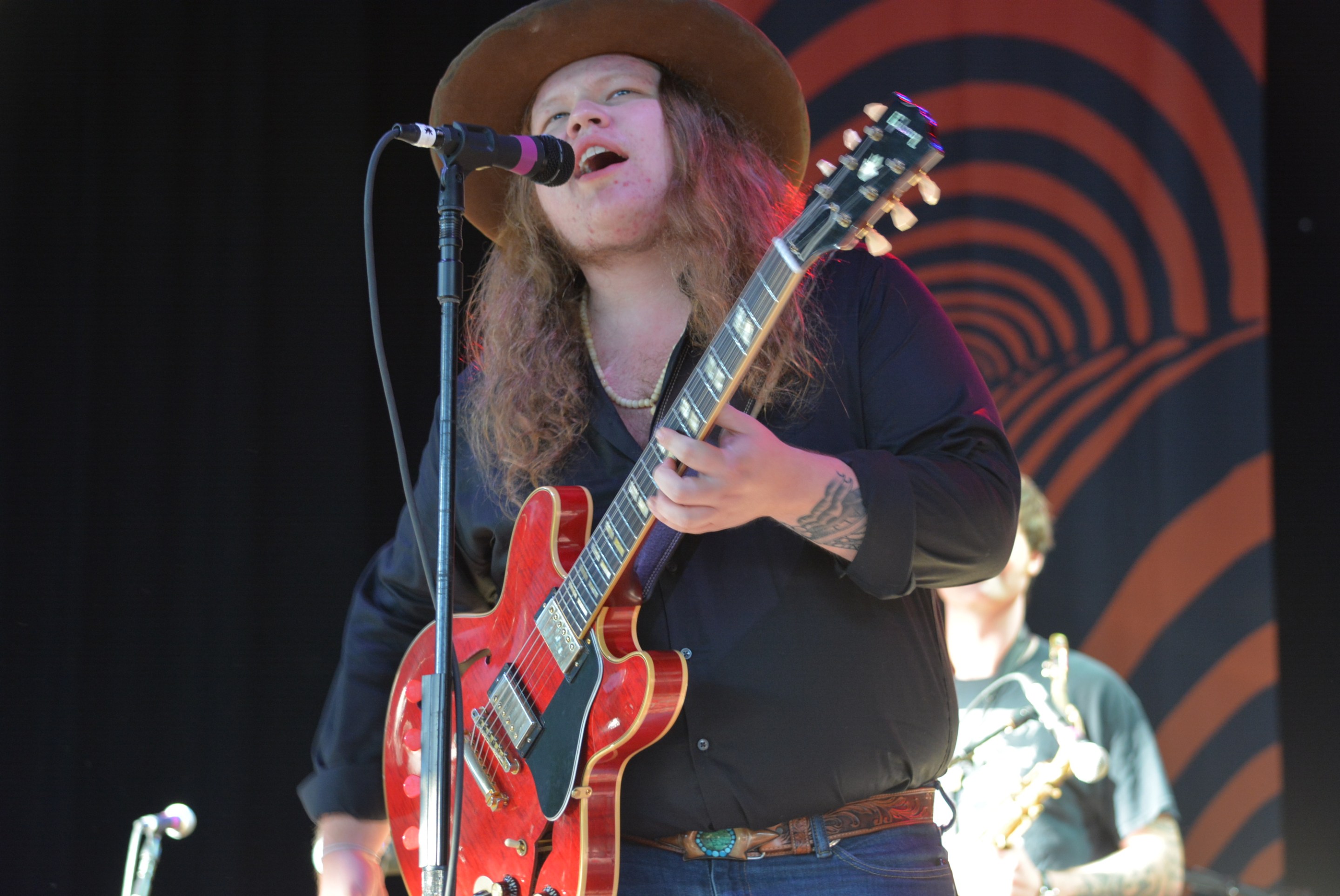
At only 23 years of age, it’s somewhat ironic that Marcus King already has a work schedule which is so hectic that he has to worry about missing events back home. Then again, the South Carolina native isn’t any stranger to the rigours of the road. He’s a fourth generation musical prodigy who’s proven his skills as a guitarist, singer and songwriter since his teens, often sharing the spotlight with such like-minded musicians as Derek Trucks and Warren Haynes. And like his dad, revered blues band leader Marvin King and his fiddle playing grandfather and great grandfather, he’s dedicated himself to his craft, even when it’s at the expense of being home with family and friends.
To solve that predicament, King initiated the Marcus King Family Reunion, a hometown festival taking place at the Pisgah Brewing Company in Black Mountain North Carolina on September 27 and 28. Hosted, naturally enough, by the Marcus King Band -- King, drummer Jack Ryan, bass player Stephen Campbell, trumpeter/trombonist Justin Johnson, sax player Dean Mitchell and keyboard player Simon Thomas George -- it boasts a star-studded line-up that includes such luminaries as Jason Isbell and the 400 Unit, Yonder Mountain Band, Josh Ritter, Amanda Shires, Doyle Bramhall II, the Futurebirds, and of course the Marcus King Band itself. While the line-up is reason enough to pursue this venture, King says there’s a practically reason behind it as well.
“It’sa beautiful site and it’s always been my pick for a live outdoor venue,” Kingsays. “The reason that we chose that location is because we really feel at homein that area. It was the first place that kind of adopted us and it felt like aquasi-hometown. We’re all from around there and it’s really grown in the pastfew years. I originally put the festival together as a get together. We’re onthe road all year and that means you miss a lot of family birthdays, holidaysand get-togethers. I missed a few of my key family reunions so I said, ‘Heck,why don’t I put together my own family reunion. I missed the home cooking andseeing my family, and I loved for all my bandmates’ families to be involvedwith this cookout and it kind of grew out of that. It became a two day eventand turned into a festival. I’m kind of proud of the fact that it grew into areal event.”
Still,it seems like more than a modest undertaking at this point, especiallyconsidering the fact that King’s career only really launched officially sixyears ago. With that in mind, we sat down with him and spoke about thefestival, the band’s first three albums, their upcoming plans, as well as theimpressive musical trajectory King’s seen so far.
It seems like with everything else you do, this festival is an ambitious undertaking.
Isee where it can come across as ambitious, but that’s kind of the catalyst foreverything we do. We just kind of just go for it. It is a lot of work. When wedid the first festival we got terrific support from the people in the area andit’s really just grown from that.
How did you connect with the other bands on the bill?
Becauseit’s family oriented, we wanted bands that we’ve crossed paths with on theroad. They’re like our road family. You only get to see them at differentfestivals. So we decided to invite bands that we knew, and bands that we likedas well. That’s kind of how it started, and we still put together the lists ofthe bands we want, send it to our agent at William Morris, and. he puts theword out and sends out the dates, and then sees who’s available. People havebeen so kind to come out and participate in our festival.
I would imagine that there’s opportunity for a lot of jams.
Absolutely.That’s something I always observed at these different family gatherings as akid. My grandfather would bring out a PA, but as my relatives got older, theywould all jam on acoustic guitars around a table and the PA disappeared.Eventually that fell off, and I wasn’t able to make it because I was travellingso much. I wanted to bring that back and so we’re doing it with a much largerPA now. (chuckles)
You come from a decidedly strong musical background. Did you know early on that you wanted to pursue a musical career?
Yes,I did. I was talking about that last night with my father who was in townvisiting. We were talking about how I was a very introverted kid and thereweren’t really a lot of kids on the block to play with. I used to sit in thebackroom and play guitars for hours. I didn’t really think of it as practicethough. There was never really a definitive moment where I thought, this iswhat I’m going to do, but there was never a thought otherwise. I just thought,this is what I do. (chuckles)
How old were you when you first started playing?
Iguess I was two or three when my dad first put a guitar in front of me. He wasalways very good about just giving me the option to play. He never pushed me.Everyone has these awkward years where working hard is not very appealing,especially to a kid. During those years, my father was on me because he saw mypotential. My father is still my favorite player and my guru. He was able toshow me the craft, and it’s still something I want to be better at.
How have you seen your evolution so far? You have three albums to your credit, and so how would you characterize your journey over the course of those three efforts?
That’sa great question. I just think about that first record that my drummer and Iwent out to San Diego to record. We self-produced that first album. With thesecond album, we had an actual producer come in, and we realized we had beendoing some things wrong. We’ve always been open to criticism. It’s always constructive.That’s our motto. So with our second record, we thought it would be good tohave someone who really knows what’s going on, and that was really a goodgrowing period for the band. At that point, Justin Johnson, our trumpet player,had finished school and joined the band full time. When we met StephenCampbell, our bassist, the group grew from there. With our third record, wereally felt a creative push, and we did , a lot differently as far as the waywe approached the album. In the past, the songs we recorded had beenroad-tested for a number of years. This time, I went in with a number of songsthat I had written in hotel rooms. The band and me and Dave Cobb the producergot together every morning, and I played them the songs for them and we builtthem from the ground up. That was a completely different approach than we wereused to.
When your name is synonymous with the band and you’re the guy responsible, it must be a fine line between trying to oversee everything and still make it a democratic process. How do you navigate that?
Itcan be hard in a groupsetting like this. It’s very important in any group situation to have delegatedroles for each individual. This group was kind of grandfathered in. When I was14 or 15, I used local musicians who were like 30 years old because I wanted towork with musicians who really wanted to work and make the money. That’s howthey supported their families. And that’s how much I wanted to work as well.When I started travelling, I had to find people who were willing to leave thepack. Now it’s very much a band. I never wanted to have my name on it, but Ibecame the guitar player and songwriter and singer. We don’t want it to comeacross as “Marcus King and his band.” That’s a constant struggle to make that clear,but moving forward, I plan to make the next band record much morecollaborative. We plan to be in the studio early next year.
At 14 and 15, it’s a very young age to be leading a band. You’re still very young. So is it ever intimidating for you to be playing with these seasoned musicians. Do you ever feel like you’re sharing something they already know?
Ialways feel gifted to be around like-minded people, and there was always thisfeeling that we all want to make music and we want to get paid what we deserveto get paid. And so here I was making executive decisions at the age of 13 and14. I had older musicians working with me, but I was the one that had to getthe check at the end of the night. It all stemmed from my father’s advice to bethe guy that runs it. My dad had a couple of record deals and he instilled inme the fact that a leader has to be a good leader. He also taught me to be agood man, and so I tried to be the best man I could be. I figured that if thereis going to be a leader, it’s going to be me, and I’ll do a good job. So I tookon that job. We had club owners who wanted to stiff us on the pay, and try totake advantage of the fact I was so young. So I said, “Screw that, if you’regoing to stiff us on our pay, we’ll just take your PA.” (laughs) A lot of clubowners didn’t take kindly to that.
You weren’t even old enough to sit at the bar...
Right.I had to deal with a lot of that. My drummer at the time was my chaperone. ButI never had problems with the band. It was always club owners who tried to takeadvantage of the situation. There are always bad people in this world, but itmakes the good people shine much brighter.
You had some great mentors early on. So between your dad and people like Warren Haynes and Derek Trucks, you must have gotten some good advice. What was the most profound piece of advice that you got early on?
Ican go back to what my dad said about encapsulating what you do. It’s not justabout yourself. It’s about the band. This group is very much a democratic unit.He always bestowed upon me the idea not to think of the band as replaceable,because that’s no way to have a healthy environment to work in. I’m veryblessed to have these wiser elders of mine to kind of lead me along the wayalong the right path. When you’re a kid, you should take any advice you cantake, even though sometimes it doesn’tbite you in the ass until years later. You think about the things that weresaid when you were younger, and thenyears later, you think, wow, they were right. Warren and Derek really took usunder their wing. When they speak, they tell stories about their own pastexperiences, and if you listen closely enough, the advice shines through theirwords.
That’s the advantage of first-hand experience. Then you had Warren and Dave Cobb producing your records. That must have been an invaluable experience as well.
Absolutely.Dave and I, and obviously Warren and I, had this mutual respect for oneanother, and that’s a big factor when you’re doing a record because you’re relinquishingcreative authority. You’re putting somebody else at the helm of what may or maynot go on that tape. It’s really a fragile thing, and I’m very blessed to workwith producers that I’ve respected immensely. In fact, there were certaininstances on the last album that became a matter of give and take. There wasone song on the album, “Goodbye Carolina,” that was a very melancholy song, andDave wanted to add an upbeat element to it, which to me didn’t really conveythe essence of what I was writing about. I went home, listened to the mix, wokeup in the morning and listened to it again on the way to the studio. When I gotthere, I told Dave I wanted to try something different. So I went out with anacoustic guitar and tracked it by myself and built it around that. I feel likethe situation would have been a lot different if I stamped my feet and said Ididn’t like his idea. It would have created a hostile environment. It’s arespect thing. I respected him enough to listen to his initial opinion andsleep on it.
That’s very diplomatic. It’s probably very difficult to maintain that balance. It does take trust.
It’sa crazy thing. A producer working with an artist is one thing, but a producercoming in and working with a full band is like adding a new member to thegroup, one who lacks any road experience with us or has any previous knowledgeof what we do. But you still have to humble yourself and allow for hisconstructive criticism. If you can’t handle that, then it’s going to make itreally hard.
So when you get ready to record your next album, who do you go to? Is it going to be a choice of which of your previous producers you work with next or someone entirely new?
Iknow the producer I want to work with next, but I can’t say much about it. Thenext record is going to be a solo record. Direction-wise, I know where we wantto go. We’re in the middle of trying to decide who will oversee that project.
When is that album scheduled to appear?
I’mhoping to have a single out from that project this summer. I’m very excited toshare it with the world, but that’s all I can say.
At this point, how would define the Marcus King Band sound? You bring in so many diverse elements to it. Can you share an idea of where you would like to go from here.
Ialways refer to our music as American roots music. I feel like there’s alwayssome pressure to define who you are, especially when people come up to you andask, ‘What kind of music do you play?’ If you respond with some rambling answerlike I often do -- describing all the different kind of nuances that we do --it becomes better and much easier simply to say “American roots music,” becausethere’s a gospel influence, there are blues influences, there are lots of jazzinfluences, lots of rock influences -- a real confluence of all theseinfluences that we love, and so we’ll go off that. We also incorporate thesound of bands like Blood, Sweat and Tears, the Ides of March, Chicago... It’sa fun time for us because we’re still kind of learning. Some of my favorite bandsnever really knew how to categorize themselves. You have to create your owndirection and just kind of go with it.
Of course, there’s a danger in trying to categorize a band’s sound. You don’t want to be pigeonholed or put into a specific niche. On the other hand, maybe it’s a good idea to set the record straight, or simply let the music speak for you.
Iagree with you. It’s good if you can create the narrative before someone doesit for you. I’m tempted to call us Americana, but then people might say, ‘Theydon’t sound like the Lumineers!’
Maybesoul music would be a better description of what we do.





