

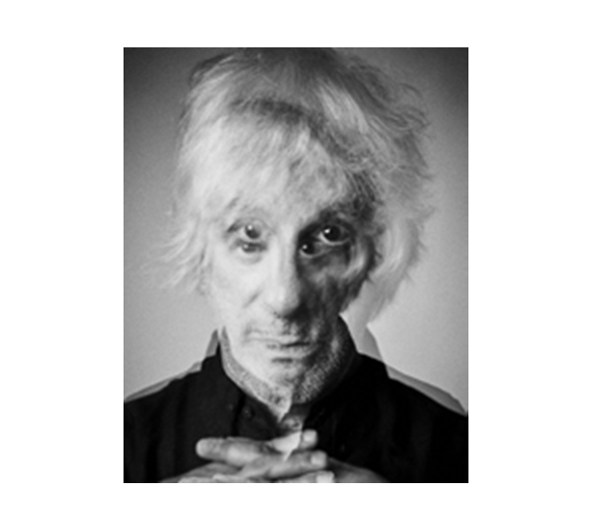
The blossoming creative partnership between Lee Ranaldo and Raul Refree reflects where the artists have been and where they may be going.
The latter produced Ranaldo's guitar-centric albums Acoustic Dust (2014) and Electric Trim (2017). Then, the twocollaborated and shared billing on the recently-released Names of North End Women. Guitars barely make a presence on theeight tracks, which favor a more collage-like approach to songwriting andarranging.
“Thisalbum loosens the bonds from the idea of what songs can be,” said Ranaldo.“Raül and I are excited to see where we can push it further.”
Excited by this “newconfiguration," Ranaldo – Sonic Youthco-founder and ranked by Rolling Stoneand Spin as one of the greatestguitarists of his generation – and Refree – flamenco guitar innovator andproducer/arranger of Rosalía’s internationally-acclaimed debut, Los angeles – incorporatepercussive instruments, tape manipulations and spoken word on the new album.
“Thisrecord began as playing with samplers and cassette players,” said Refree,“as experimentalmusic, musique concrete, polyrhythms.”
During our conversationRanaldo explained how the process of recording Names of North End Women eventually coalesced into non-traditionalyet embracing songs. Through that the material simultaneously became artisticin nature yet contemplative for our current times of self-isolation.
I spoke with Ranaldo justas the world was changing due to the spread of the Coronavirus. Living in NewYork, he discussed how different life is in what is now a less bustling city aswell as reassessing what to do next following cancellations of shows in Europe,Texas and his hometown and the uncertainty of others taking place this year.
JPG:How are you dealing with everything that’s happening due to theCoronavirus?
LR: It’s definitely getting a little weird. Being out on the streets yesterday,it was the first day that I was on the subway and thinking, “Is this a weirdthing to be doing right now, being on the subway with all these people in closequarters, people wearing like rubber gloves to hold the rails and stuff likethat?” We did some food shopping yesterday and the shelves are weirdly,strangely empty.
Most of life has been going on, although, Iwas supposed to play an art gallery show last night that got canceled and I wassupposed to go to Texas next week to do some film event and that's canceled.I've got a new album come out and we had a month long tour in Europe in Apriland that's been canceled.
It's time to think outside the box. Basically, it's a moment when for largeparts of the world, whatever they had planned is going up in smoke. So, it's aninteresting time to have that happen. That doesn't happen very often when plansall over the world go up in smoke and you have to just be where you are. Ifyou're stranded in a foreign country and can't get home, you just have to makethe best of it, whatever it is. So, we’re rolling with it so far. Waiting tosee what's going to happen.
We've got festival dates in Europe in June, I think it is,and we're still not sure if those are going to happen or not. Who knows rightnow how long will this go on? I thought yesterday Mayor de Blasio was talkingabout six months or something like that. It's hard to imagine that that wouldbe the case but...
JPG: In your case because of people thatyou know and also how you work musically and visually I would think you couldset something up as a visual online presentation.
LR: Do you know that's exactly what has been started to get bandied about. Istarted thinking about that a couple of days ago and all of a sudden otherpeople have been mentioning it to me. It’s something that a lot of people arewondering about right now. How do you create a virtual presence in a momentwhen you can't create an actual presence?
Depending on how long this thing lasts, Ithink that a lot of people are gonna brainstorm ways to do live stream events,exclusive live stream events in concert at eight o'clock on your computerscreen or whatever it is. I don't know how effective it'll be for large groupsof artists to do that but certainly those who get started early will, maybe,get a little bit more traction out of just being the first to try and do it.
JPG: Let’s move from the strangeness ofthe world to something that can console us – art. On your new album you'reworking with Raul Refree (Fernandez) again. We spoke several years ago when Electric Trim came out, which heco-produced with you. This one went to a different place than that album did.
LR: Yeah, yeah. We certainly have. It's partly just anindication of the evolution of our working relationship together. That albumwas in a way a first step away from what I'd been doing before that; basically,two guitars, bass, drums, band format. When we got back together to make thisrecord, we imagined we were going to start in a similar fashion but so manythings had happened in the interim. We've been interested in so many new ideasand we'd actually gone out on the road together and tried two or threedifferent versions of a band format, looking for what the right thing was andfinding in the end in this trio format that we had for the last couple of tourswe went out and did. Raul was coming off a project that he did for the Sonarfestival where he was working with a lot of high-tech equipment like samplersand drum machines and stuff.
As soon as we got together, even though I brought in demos in the same fashionthat was how we started the previous record, we just took off in a newdirection, almost immediately. We wanted to reference different musical pointsin terms of what we were thinking about while we were trying to make thesetracks and we were reacting a little bit to certain ways in which we worked onthe last record and certain ways in which we structured the songs, things likethat.
It's kind of a testament to the fact thatour main thing together is just to be as experimental as possible in the studioand the experiment this time took a much more…for starters, they took amore electronic feel and then we still were recording a lot of stuff. We justweren't recording a lot of guitars overall.
As we got more into recording gamelaninstruments and marimbas and vibes and stuff, we were mixing and matching a lotof stuff made with these high-tech digital machines and drum machines andmixing and matching it with a lot of stuff we were recording ourselves in the studio.We always have been kind of in this frame of mind of, “What does this songneed? What does this section of the song need?” whereas in the past there wasalways a bed of guitar on everything as a given. In this case we almost putthat in the same boat as all the other instruments like, “Where do we needguitar? Where don't we need guitar?" rather than make a record in the rockworld especially where guitar starts at the beginning of the first song andgoes to the end of the last song.
We wanted to use the guitar in morespecific ways on this record without even being conscious of actually doing it.It wasn't like we put up signs with the red circle with the X through itsaying, "NO GUITARS" or something like that. It's happened as weevolved that there were places where we needed guitars, places where songsstarted still from guitar demos like the old ones but we were using everythinga little more judiciously and we really wanted to make an open and moreatmospheric record. That meant we didn't want to slather guitar distortionacross everything for starters.
JPG: It's very different in regards tothe sound of modern music. It's very meditative in a lot of ways but then it'salso modern in some ways because there's something like Billie Eilish's"Bad Guy” with a slight repetitive rhythm that gives it, I don't want tosay sinister but it gives the song an underlying sense that something's wrong.The minimalist rhythm is on your album but it also feels like it could be asoundtrack to an art piece as well.
LR: Yeah. For this kind of minimalist thingon this record, I tend to write songs that have lots of changes and parts andthemes that come and go and we grappled with that alone on the last record.When we started this record, one of the things we wanted to do was strip thingsdown. In a way, a lot of modern music is made like that these days where it'slike that song you're talking about by Billie Eilish. It's kinda just onerhythm movement that carries through the whole song, and most songs are madethat way these days like R&B and rap songs where a beat gets establishedand then a bunch of vocalizations take place over the top of it without achorus and a bridge and...
We were trying to streamline some of this music a little bit more in that regardand make more landscape kind of tracks rather than a rock rhythm-driven tracks.That was definitely one of the things we started with was we wanted this stuffto be more open and airy and have fewer parts. With Electric Trim we worked the vocals up at the last stage of theprocess, which in some cases the songs were waiting around for me to finishlyrics and things like that. In the meantime we kept, “Well, let's put anotherguitar on this," something like that. The tracks may be a bit denser thanthey needed to be in some cases.
For this record, we knew we wanted to keep things open and as soon as we hadanything down to work from, we wanted to start introducing vocals and get vocallines in there, whether they were serious lyrics or melodic babble, just to layplaceholders in. We found we got a lot of keeper vocals right away, and havingthe vocals there really shapes the songs and allows the songs to exist withwhatever instrumental backing was already there. We didn't need to keep heapingmore stuff on top of it.
We also knew we wanted to do a lot morespoken word stuff, which we did a little bit of on Electric Trim. That was one thing Raul wanted to feature a littlebit more. We just wanted to branch out a little bit in general without having aclear concept entering this record. We wanted to do some things differentsonically but we didn't have a strict mandate or manifesto for what we weretrying to do with this record. We just knew we wanted to push a little bitfurther.
JPG: I'm getting a greater sense of thiswith what you’ve said so far but to put it in concrete terms about yourcreative approach, how does it change, if it changes, from being amember of a band to being a solo artist to now this, a duo collaboration?
LR: Well, being a member of a band is a special thing in a way, especially ifit's the kind of band that clicks in the way that Sonic Youth did where thewhole is greater than the sum of the parts kind of thing. We felt like we hadsome special connection and creative force when we were working together.Moving from that into being a solo bandleader was interesting and, maybe, in asense necessary. But one thing I love about music is the social aspect of it.So, even if you're a bandleader, no matter who you are, you're working with thepeople that are in your band and whether they're getting credit for it or not,they are contributing to what makes the music happen. That's what a band'sabout. It's a group of people making the music happen. Otherwise, everybodywould go out as a solo artist with nobody else on the stage, and however littleor great credit you give to the band that you're working with they have a greatinfluence on what's going on and it's a very social process together.
Sonic Youth was a group of four creatorsand then I was out in this wilderness taking all that weight on my shoulders.As with Sonic, when you get together with a band, you never can predict whetheryou're gonna work together for a year or for 10 years or in our case for 30years. Each is impossible to predict but every once in awhile you findcollaborators that are meaningful in a longer term way and that's what happenedwhen Raul and I met. We were each looking for someone to spark off of and it'sslowly built. We did an acoustic record with my band, The Dust, before we did ElectricTrim and has gone on to the present day, now performing live and in a bunchof different incarnations and working together on recorded projects. Although,we each do a lot of other things, this relationship is pretty central for bothof us right now.
With this record we realized that we movedpast the traditional artist-producer relationship. Frankly, we probablycould've put both our names on the cover of the last record but with this onewe certainly realized that, “Okay, we're writing this music together. It's gonebeyond me bringing in demos at this point. We're writing it together. We'remaking it together." We felt like this is a new band. This is an ongoingexperimental project at this point that we'll take whatever iteration each timewe get together is going to take. This record moved us somewhere different thanthe last record and we feel free and open to have each record be its owndifferent thing at this point as we explore different aspects of musicalcreativity that we're interested in.
JPG: The final number on the album, “Atthe Forks." It's the last number, and when I think of “forks” I think offork in the road, “Which way do I go?" Since Electric Trim was one type of record and this is a different typeof record...fork in the road. Do you have an idea where your next collaborationwith Raul may go or where it's already going?
LR: I tend to think that the next things we do together are going to compoundon what we've learned with this record because we stretched ourselves in awhole bunch of different directions on this record. It was an interestingevolution because the first tracks we made started from acoustic guitar anddigital machines. A little bit later, we started recording more percussivethings -- marimbas and these old gamelan instruments that Sonic Youth haddragged back from Indonesia in the '90s -- and this old, weird cassette machinethat I used to perform with 20 years ago, this crazy modified cassette machinethat you can speed up and slow down the tapes and play them forwards andbackwards and all this crazy stuff. And we started bringing in these old realanalog elements, like these hissy cassette tapes.
By the time we were done, we had reallytried a whole bunch of new avenues. The songs on this record represent a wholebunch of different new avenues that we could potentially explore further and Iwould think the next batch of songs that we make, whether it's an album or justthe next two to four tracks, are gonna to expand on the stuff we created withthis record.
It's funny about that track “At the Forks" because it's one of the firstones we created. And it is kind of cool that it got these connotations that youjust brought up, that it's the last track on the record and, yeah, there's asense of you're at a fork in the road or something like that, but it has aslightly more innocent genesis which is that the forks...the song “Names ofNorth End Women" is about this place in Winnipeg in Central Canada inManitoba, my wife's hometown, and the Forks is another place there where thetwo big rivers in town meet and it's a gathering place for the population, aplace where you go skating on the river in the winter time and there’s anindoor shopping center there with all these cool shops and things.
So, it was built around another place inWinnipeg but it does represent what you were saying in terms of we'vejust created this record that has this whole new set of directions to it andyou get to the last song and, and maybe there's this sense of possibilities infront of us and having to choose something. That's an interestinginterpretation of it that I like a lot.
JPG: Well, you're welcome. Consideryourself lucky because I’m normally horrible at interpreting poems and lyricsand symbols.
LR: (laughs) There were a bunch of circular arcs on this record. The first songand the last song were the first songs we created. They're both built on thesame small little guitar riff used in different ways in each of those songs.There's already this circular thing happening between the first song and thelast song. I don't even think we realized it when we sequenced the record, andsomebody pointed out to me the other day that they both share a lyrical lineabout a road to nowhere. So, you start with the very first song, one of thevery first lines is something about a road to nowhere and then the last onebrings this line back as part of the lyrics. There's a sense of we're playingaround with a lot of elements and using them in different ways on all thesesongs. Maybe it's kind of a spiraling sense of some ideas that we're going towork further with as we continue.
JPG: That's pretty cool that itsubconsciously worked out like that. Musically, because of all the progressivepercussive instruments used that there were moments such as the title track and"Light Years Out” that reminded me of work by like Mickey Hart or PeterGabriel around the time of his album Security.
LR: Sure, sure. Obviously, Mickey’s stuff is super percussion heavy and he getsinto a lot of different spaces that way. The Peter Gabriel stuff waschallenging conventions of what music could be at that moment in time. That'sreally what we wanted to do with this record. We wanted to free ourselves fromwhatever hats people thought we wore and try some different stuff. We knew thatpercussive stuff and vocals were going to be two of the centerpieces that wewanted to work on with this record. We really wanted to, like I said before, tointroduce the vocals earlier and to really center a lot of the tracks aroundthe vocal work. Partly for me over the last few records, the vocals have beencoming more to the front in terms of something that I'm really interested inworking on.
For the last couple of years, I kept saying I'm someone who was a guitarist whoalso sang to now being someone who's a singer who also plays guitar. That'sbeen the shift a little bit, the vocals and the lyrics and the words and,again, bringing [writer] Jonathan Lethem to collaborate on some of thoselyrics. That was really in the front line on this record. We reallyconcentrated on the vocals. They grounded the pieces in general more so whereasin the past I would probably say the guitars and the guitar chord changes andstuff like that really set the tone for what was going on. On this record, it'smuch more vocal-driven.
JPG: I see it at some point in thefuture, “Americana artist Lee Ranaldo.”
LR: Yeah. When we first started making this record, I was calling it electronicfolk because we were still working with acoustic guitars and yet we wereputting all these samplers and stuff on top of it and yet it never really lostthat, if not Americana, at least to me it never really lost this certain kindof folk music sensibility in a certain way with just playing around withacoustic guitars in a certain way. So, maybe it's an update, a crosspollination of the two things.
JPG:I was kidding, a bit, with that comment but your response was illuminating. Now,this ties into what we talked about in the beginning. I saw on your websiteabout the collaboration with Jim Jarmusch, Marc Urcelli and Balazs Pandi. Tellme about that collaboration. Are you still playing Victoriaville [in Ontario]because I see that listed in May?
LR: That's up in the air at the moment,also. I don’t really know what's going to happen with that festival. [Editor’sNote: It has since been cancelled.]
I'm supposed to play there as well with this Italian duo called My Cat Is AnAlien that has been a friend of Sonic Youth for 20 years now and I don't knowif they're going to get out of Italy at this point to get there to thatfestival. Who knows at this point? That's up in the air.
I was really looking forward to thatbecause it would be a first for this project with Jim to play out live. Thatwas a really fun record to cut and I was looking forward to playing live.There'll be only a few dates if we do anything at all just ‘cause Jim'sso busy doing other stuff.
It’s improv sessions. It's allinstrumental. It took place in a very prescribed studio session or two where werecorded all this stuff. We actually recorded enough for a couple of records.The one that came out six or eight months ago, it's made it’s way out there andwas really well-received, which I was very happy with. Marc Urcelli works in areally great studio here in Manhattan and he came up with this idea. He knewthat we all knew each other and he was like, “Let's just go in and record somestuff and see what we come up with,” and we all really liked what we came upwith. It was right as Jim was starting to make that last film, the zombie film.I don't know if it's an ongoing collaboration or what at this point but wedefinitely got a lot of material out of it.
JPG: That's cool. Besides the new albumwith Raul, do you have any other art projects or books or anything else comingup?
LR: Well, I'm working on a couple different art projectsand art music, kind of crossover projects. I was supposed to go to Texas at theend of this month before we went to Europe to do something. In the 90s I madethis record, this CD, called “Amarillo Ramp." It was inspired by thisearth art piece by this guy Robert Smithson. I'm really involved in his work.He did the "Spiral Jetty" out in Utah. And there's a couple other ofhis earth art pieces out in the world, one's in Holland and one's in Texas.Somebody I know works on this ranch in Texas where this piece is. So, last yearI went out and visited it for the first time and we had this idea to go backthere and film me performing this piece I wrote about the place and the work atthe site where it is. That was supposed to happen 10 days from now and, ofcourse, that was a university-sponsored trip and that's been canceled now aswell.
I'm working on a couple ideas for musicalinterventions with two of these earth art pieces by this guy RobertSmithson.The one in Texas is definitely gonna happen somewhere down the line.There's another piece in Holland that I'm working with his foundational estateto maybe do a larger piece involving a whole bunch of musicians out in thislandscape where this other piece is.
So, I'm working on these longer-termprojects like that. And, there's a book I put out last year that I self-manufacturedand was selling at gigs called “Some Writings On Music and Musicians.” It wassmall collection, a little pocket book, of writings based on music and aboutdifferent musicians that I've encountered. I'm working on an expanded volume ofthat right now. There's actually going to be a Spanish language volume, thisexpanded edition sometime this year and I'm working with American publishers.I've got a couple of different book-related projects in the works.
JPG:Do you think with the extra time on your hands right now that writing mayevolve into a Lee Ranaldo autobiography spanning from pre-Sonic Youth to whereyou are?
LR: That's an interesting thing toentertain but I think you've got to really set aside a big blockof time to do something like that and do all the research and put it together.I'm not thinking along those lines at this point. I know that everyone on theplanet is writing their memoir. It's almost something you've got to do at thispoint but I still feel like I would push that down the line. There’s morepressing things than telling my life story right now.
I like the idea of collecting the stuffI've written about music and I continue to write about music. I'm working on aproject with the Bob Dylan archives out in Tulsa that initiated last year andI'm writing something for there. They're building a study center out there tohave with Dylan’s archives and when it opens next year or the year after,they're gonna launch it with this catalog of various essays on objects anditems in their collection.
I spent a week out there combing through their archives and choosing a coupleof things to write about for them. I'm deep into Dylan, so that's gonna be anongoing relationship with them. I'm already working on some stuff beyond thisessay. I'm writing for them some Dylan-related stuff. It's cool to have thisplace where so much of his archive is centered right now to be able to go outthere and poke around and see his handwritten manuscripts or all the video fromalbum sessions and things like that.





