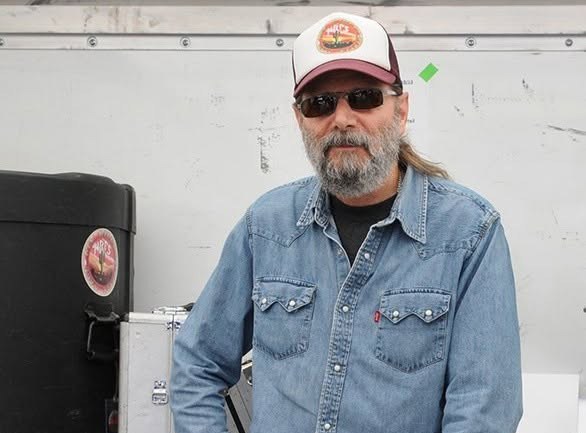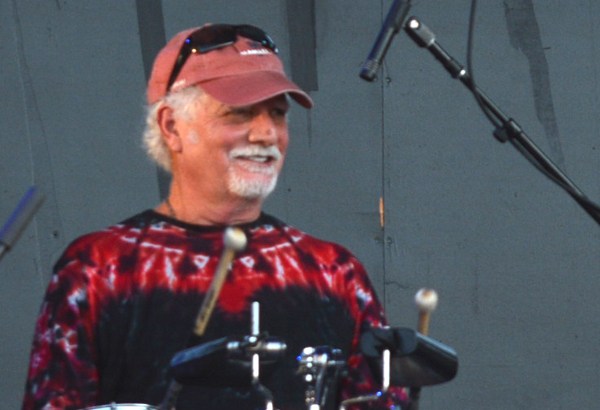

Joel Rafael started playing music in his home state of California in the midst of the folk movement of the 1960s, and although he holds an appreciation for certain elements of rock music, he remains a folk singer at heart. After several albums, including two records comprised of Woody Guthrie tunes—both covers and co-writes from Guthrie’s unfinished lyrics—Rafael has recently released his newest album, Baladista. A stripped-down and intimate affair, the record illustrates Rafael’s skill in songwriting and lyricism, elements that tie him and his music directly to the original roots and spirit of the folk genre. He recently spoke with us about the new album, but first we took a trip back to his beginnings in California, exploring the music that defined the era, and discussed his work with Woody Guthrie’s music, a catalogue that has inspired musicians for the better part of a century.
How did you get started in music? Was it something that was with you at a young age?
Well I was drawn to it at a young age, and I think a lot of kids are, because music is something that speaks to everybody. But I was lucky, because when I was a kid in elementary school, the schools that I was in out here in California had really good music programs. And so as early as the fourth grade, they were recruiting kids from the classes to be in the band program. So I signed up right away. I had already had a little bit of experience, because I had an older brother who had taken accordion lessons, and so I kind of followed in behind him and did that for maybe a year or something. But then I started playing drums in the school music program. I learned a lot of theory and I learned a lot about tempo. Then when I got to be a teenager, the ’60s folk movement was just starting to blossom. All of a sudden, my friends were getting acoustic guitars and starting to play Kingston Trio songs and Peter, Paul and Mary songs, because those were the first folk songs that were sneaking onto the radio, which was pretty restrictive, maybe even more so than it is now. So I had to get a guitar, because there was something inside of me that really wanted to sing. I was a singing drummer already on a couple of songs in the little garage band I was in. And so my parents took me down to Tijuana, and we found a very inexpensive Mexican guitar down there. That was my first guitar, and I started to learn some folk songs, playing my friends. There were a few little groups of people, little cels of kids that had gotten together playing music. It was just a really magical time, and it was my indoctrination into melody and music and singing and writing. I knew I was going to get into music, but I didn’t know exactly what direction it would take until I had an acoustic guitar in my hands.
What was the music scene like when you were growing up, and how did that change, especially during the ’60s music movements?
When I was a kid, I listened to a lot of music, because my parents had a really good record collection. But it was mostly stuff that was probably between the ’30s and the early ’50s—so lot of big band music, crooner singers, some of the great black artists like Lena Horne and Ella Fitzgerald, Louis Armstrong. Then there was stuff being played on the radio, which I’d call the early rock and roll, then there was kind of the standard radio that was still playing crooners and that kind of stuff. So that’s what I was getting exposed to. When I first started playing in the garage band, we started to have a couple of vocals, and they were kind of like the songs from the old rock and roll—The Everly Brothers stuff and Buddy Holly-era songs. But to tell you the truth, to me, as a kid, because of what I’d been exposed to through my parents’ record collection, I was more drawn to singing that was a little bit more refined than the early rock and roll singing. A little bit more like the sound of an experienced singer. I didn’t have any training, just like everybody else, but that’s what I was going after. I was actually influenced a lot by Al Jolson, because my parents had a couple of his records, and there were a couple of movies that aired on television when I was a kid, repeatedly, biography movies about him that kind of caught me up—the music part of it, and him as an entertainer and how he changed things in popular music, that kind stuff. So I moved in that direction. Then I was lucky enough, about the time I was in high school, to get my hands on a better guitar, and then started to branch out into other kinds of music besides folk music. There was a lot going on in the mid-’60s, musically. Like The Beatles was the huge phenomenon. When we started to hear their music on the radio, it was just so completely different from anything we had heard. It was related to everything we had heard, but it had an element to it, a coolness and hipness to it, that we hadn’t experienced before, you know? I think the first song I heard by The Beatles was “I Wanna Hold Your Hand,” and when they went to that high harmony, you know, like, “I wanna hold your hand.” When they went up there, it just kind of blew my mind. I hadn’t heard anything like that before. We hear it all the time now, but at that time it was brand new. So that kind of inspired my toward electricity, even though I had been kind of resisting it up till then.
How did that electric influence change the music you were playing?
When the English invasion happened, all of a sudden rock and roll music—or I should say the electric element of rock music—had more of an appeal to me. I didn’t really want to be a rock and roller so much, but I wanted to take the sounds of electric instruments and combine then with what I was doing. Whereas most of the folk groups were all acoustic—even the basses were stand-up basses—I really liked the fluid sound of an electric bass, so I thought I’d mix that in. I really moved in that direction when that folk rock thing happened, and that’s always kind of been my M.O., musically. So consequently over the years, as I’ve developed as a performer and as music has evolved, I’ve kind of found myself a little bit in between genres. Like the folk people, they’ve always kind of thought I had a little bit too much pop and electricity going on in my music, but the rock people always thought that my music was way too folk to be in their world. So, for some parts of my career, it’s been kind of a loner path, but then other times—like right now, everything’s kind of coming together in a real nice way, with this new record and stuff. I’ve done different things, but this record is actually an evolved development of that original idea when I first started playing folk music. And what I do now is very much called folk music—it almost is considered traditional, because things have changed so much. I had some influences early on, but those influences, at a certain point, if you keep at what you’re doing, they kind of distill into, you know, who you are as a person. It’s just who you become. Then after that, you’re kind of stuck with it—that’s just who you are, and so you have to make the best of it. Arlo Guthrie has actually said this before of his dad, and it’s sort of a guidepost for me—Woody Guthrie’s philosophy was it’s better to fail at yourself than to succeed at being somebody else.
When that first draw to the electric element happened, was there any resistance, maybe not from you, but from your friends or other groups?
You hear the stories, and there’s things that become like myths, down through history. One example would be when Bob Dylan went electric at Newport Folk Festival. I’ve known about Newport Folk Festival since I was a kid, because it’s been going on for so long. It’s a really vital festival, and there’s a lot of great young acts there. I actually finally got to be on it in 2012 as part of a Woody Guthrie centennial tribute. And I went there with just my acoustic guitar and harmonica. It was kind of funny, because I was maybe one of just a handful of performers who performed that was. Literally everybody else had a band. And my joke on stage was “I hope if doesn’t ruffle any feathers today—I’m going acoustic.” Because the whole myth of Bob Dylan going electric at Newport. But if you talk to people who were there, there’s a whole variety of stories of what went down. Some people say they’d been presenting an element of electric music for a few years before that happened, even. It was just the fact that Bob Dylan had gone electric. But that was a transition point, definitely. There was a divide between traditionalists and modernists at that time, and I think it’s a division that never has really gone away. It’s sort of been the catalyst for the argument, “what is folk music?” Because everybody always tries to define it, you know. “Real folk music has to have this, or has to have that.” But I don’t subscribe to any of that stuff, myself. Genres are all well and good, but they’re just for people to be able to get a handle on what we’re talking about, conversationally. But music is music. It’s an international, universal language that permeates every form of life, from the sound of the wind and the ocean, the birds and the bees, to people actually making instruments and imitating those sounds and coming up with melodies. It’s something that’s been around since the beginning of time, and it’s something that everybody understands. That’s how I see it. There are divisions, and I’ve felt that from time to time. I’ve felt like I’ve been on both sides. Not that I’ve taken the sides, but that I’ve been sort of placed on one side or the other by folks. But I don’t place myself on one side or the other. I’ve kind of come to peace about being called a folk artist, though. That’s always where I get put, in terms of definition, and I’m okay with it. They have a lot of names for things, and folk music—that’s a good thing.
It certainly puts you in good company. Speaking of that, when did you first come across Woody Guthrie’s songs?
I’ve known about Woody Guthrie for a long time, and way back when I was a young musician, some of the first songs I learned were written by Woody Guthrie. I didn’t know much about him. The name is iconic—it just sounds iconic. Woody Guthrie. So as I tried to find out more about him, as a young guy, I heard somewhere along the way that Bob Dylan was heavily influenced by Woody Guthrie—that was just part of the lore early on. And also I knew that some of the first songs I learned were by Woody, and I had some friends that were kind of into him. And so I started to try to find out about him when I was in my twenties, and there wasn’t a lot of information, quite frankly. There were a couple of books. One book I found, called Born to Win, was a compilation of a lot of his writings and songs and poetry and stuff, put together by Robert Shelton. And then there was another book called Hard Hitting Songs for Hard-Hit People, and it had been compiled by Alan Lomax, Pete Seeger and Woody Guthrie, collectively. Pete had scored all the music out, Alan Lomax had kind of found all the music, and the Woody had written notes for all of the songs. Born to Win actually had some lyrics in it that music had never been written for. One of them was “Way Over Yonder in a Minor Key,” which was later given to Billy Bragg for the Mermaid Avenue albums. And another one in there was “Dance a Little Longer,” which was one of the ones given to me. So I saw those lyrics back in the ’70s, but didn’t really know much about it or the fact that Woody had written thousands of songs.
And the Woody Guthrie albums you made in 2003 and 2005—I was curious what made you want to compile that music and put out albums at that particular time.
Well I didn’t know it would turn into two albums. In 1998, I got a postcard from my friend Ray Wylie Hubbard, and it said he was going to be playing at the Woody Guthrie festival in Okemah, Oklahoma. It was the first annual Woody Guthrie Folk Festival. And I just said, “Man, I gotta be on that.” So I had my manager call them, and as it turned out, when I told her about it, she had already gotten a letter from them already—because she also managed Jackson Browne—asking for a quote from Jackson about Woody. So she was able to send them a quote and also kind of pitch me as another artist. I’m not sure exactly how I got on the first year, but they put me in the festival, and I ended up opening up the Woody Guthrie festival the very first year in. Consequently, I’ve been invited back every year—this’ll be my eighteenth year this year. And about the second year in was when the Mermaid Avenue albums came out. I decided I’d like to see some of this material and have a chance to write some music to some of these songs. I knew about the one in the book, “Dance a Little Longer,” and that was one that I’d already thought about. So I wrote a letter to Nora Guthrie, introduced myself, and she kind of checked me out, checked up on who I was and what my credentials were, if I actually was on the Woody fest. And she got back to me and gave me that first song, along with an invite to come to the archives and look through Woody’s unfinished stuff. So I consequently ended up with five co-writes with Woody, and it stretched out into two albums of material. I have another book that was given to me by a friend who works with the Huntington’s Disease foundation in Lowell, Massachusetts. He had a book that had been left behind, I think by Marjorie Guthrie, Woody’s wife, after Woody died. Somebody was just gonna throw them away, didn’t realize what they were. But it’s a book of like 265 Woody Guthrie songs. I mean, you never see that. And it’s songs on every subject known to man. So when I did the Woody Guthrie albums, I went through that book and found a bunch of different songs, so consequently the songs on the recording, some of them are well-known, some of them are songs that were never recorded, and then some of them are co-writes that I finished.
What was it like taking on a project like the Woody albums, interpreting another person’s work—or even co-writing with someone who isn’t there—as opposed to creating your own? How did that affect your writing when you returned to doing your own albums?
With the Woody stuff, in terms of actual composition, it was pretty easy, because I’ve always been kind of a melody person. So when I sat down—depending on the song—at the piano or the guitar, I just picked a place to start and they just kind of rolled out. One of them really fast, then the other ones within a day or two. I was kind of fooling around with a certain progression and seeing how the words fit, made a few adjustments, and I was pretty much there. I didn’t really struggle over it. Because I also thought, too, in terms of like what you said about putting yourself into the persona, I think that’s kind of hard to do with someone that’s passed away that you’ve never met, but especially with somebody like Woody Guthrie. The thing I really believe about Woody is that for as many people that have tried to do what he did or be like him, nobody’s gonna ever do it, you know? He was a totally original kind of character, with a lot of different elements to his personality, from what I’ve been able to find out. I don’t profess to be an expert on him or anything, except to say that he was probably really unpredictable, had a lot of highs and lows. You know, I’ve heard people talk about how much they loved him, and I’ve heard people talk about how annoying he could be, and I’ve heard people talk about how he scared them. Ronnie Gilbert, who was in The Weavers, she was really young when she met Woody, and when she talked about meeting Woody, she said he was really scary to her. Because he was very critical, and older, and very sure of himself in a certain way, at a completely different time than now, when relationships were different than they are now, between genders even. It’s hard to really know what somebody was like, but the one thing that I could say is Woody didn’t struggle over the music that much. He came up with some great stuff, and a lot of stuff was based on traditional folk melodies that he might have heard sung to him. And when you listen to his songs, he was the guy that put the focus on the words. They say about Woody: three chords and the truth. So that’s how I tried to approach the music. You can’t get too complex about it. I think the experience of working with his stuff—the stuff that I wrote and also the stuff that I found and worked on to make my own for the recording—I won’t say it changed me, it just enhanced what I do. It made me more conscious of the whole process and what it means to me and what it means to other people.
I’ve been listening through the new album, Baladista, and one thing that hit me was that is doesn’t sound like there are any drums on the album. Is that right?
No, there’s no drums on the album at all. When I started to develop the idea of how I was going to do the record, one of the jokes was “the only thing better than a really great drummer is no drummer.” [Laughs] I’m a drummer, so there’s a lot of tempo in my music anyway, so even without the drums, there’s no speeding up or slowing down or whatever. The songs all have tempo. I called up my friend Greg Leisz to come down and play some dobro on it. He’s a pedal steel player mainly. So we put pedal steel on the other one. And it was such a fun session, I just said, let’s just do this about five more times, just electric guitar and pedal steel, and then I’ll just do what I do, guitar, harmonica and vocal. So that’s how we put the tracks together. And just as I was finishing up the tracks, I got a call from Hutch Hutchinson, who plays bass with Bonnie Raitt, and he said he heard I was making a record and wanted to know if I needed any bass parts. The other joke had been “the only thing better than a great bass player is no bass player.” But he’s a great bass player, so he came down to my studio, brought about five basses, and did all the bass work. So there’s no drums on it, which is kind of ironic, because I’m a drummer, but I really think there’s a ton of rhythm in there. I thought about putting some percussion on a couple of tracks and fooled around with some things, but it just didn’t really seem to need it in the long run. And I’m really happy with it, because, arrangement-wise, the tracks have a lot of continuity all the way through, a real continual sound or vibe from beginning to end.
It’s definitely more of a low-key affair than at least your previous couple of albums.
Yeah, and the previous couple I consciously tried to go a little bit more traditional band setup, after the Woody stuff. Because the ones before the Woody stuff had percussion, but it was all unconventional percussion. And, I don’t know, you get influenced by all kinds of things, and some of them you should get influenced by and some of them you shouldn’t. Like one of the things I remember a guy saying to me from a local radio station, back in the ’90s—“Have you ever thought of putting a snare drum on your stuff?” I remember thinking wow, I’m a drummer and you’re saying that to me. But at that point, all of my percussion was hand drums, Native American ring drums and djembe, some cymbals, stuff like that. So then when I did Thirteen Stories High, I just had access to a great band, Jimmy LaFave’s band, and they’re a very conventional rock and roll band. And I was able to use elements of Jackson Browne’s band and Crosby Still & Nash’s band for my America Come Home album. I had great drummers on both of those records. Stevie D [DiStanislao] on American Comes Home, he’s just amazing.
So this recent low-key approach was deliberate? Because the songs on Baladista really lend themselves to it. Like you said, there’s a line going through the whole album.
Yeah, it was a totally organic decision. It wasn’t like they weren’t available. After I did the first sessions with Greg, I had some shows in Oklahoma. I had about four or five tracks recorded with Greg where it was me in the middle, with harmonica and guitar, and then electric guitar on one side and pedal steel on the other. So at these gigs in Oklahoma, I was playing with the guitar player named Terry Ware, and he told me that there was another friend of his from Nashville that was in town, a guy named Jim Hoke, who would be willing to sit in with us in Oklahoma City, and he’s a pedal steel player. And that’s what I had on my record. So he sat in with us that night, and it was just so much fun. I like to say it was like driving a sports car, for me. It was just the two instruments, electric guitar and pedal steel, and I could just glide, do what I do, and those guys would completely key in on me. It just felt like the tracks I was laying down right then. And that’s when I decided this is really working. It was actually one of those guys who came up with the [drummer] joke. The thing I’m liking about this is that I can really hear everything, I can hear every note. And sometimes when you got a full band up there, you can’t hear everything. But it was really cool, because I could hear every note of the pedal steel and electric guitar, and I could hear what I was doing, too, without getting distracted. So when I came home, I was like, okay, that’s what I’m going to do. The rest of this record, I’m just gonna go the same route.
One song on the album I was particularly interested in was “El Bracero.” It seems to be more of a traditional folk/protest song. What inspired the writing of that one?
That was a song that I had written because of an experience I’d had witnessing the dedication of the Bracero Memorial Highway, that section of the California US 101 and the dedication of a headstone on the mass grave of the twenty-eight victims of Woody Guthrie’s song “Deportee (Plane Wreck at Los Gatos).” He wrote that song in 1948, about twenty-eight Mexican nationals what were killed in a plane crash on their way back to Mexico. Just a couple years ago, a couple guys up in the Fresno area, where this mass grave is, found all the names to put on the headstones. And then when I went there to go to the mass for that, I found out that they weren’t undocumented workers. Everybody always thought they were undocumented. They were part of the bracero program, working legally in the United States, during the years beginning with World War II and after, to supplement the agriculture labor force in the Central Valley and other parts of the country where we grow food. So that’s when I wrote “El Bracero.”