
Over twenty years into their career, moe.‘s members are now scattered throughout the country, but the Buffalo-bred quintet are an Upstate and Western New York band at heart. So it makes sense that the group partnered with a Utica, NY-based company, the 128-year-old Saranac Brewery to create their own Double IPA, Hoppy Hour Hero (named after the moe. classic “Happy Hour Hero” off 1998’s Tin Cans & Car Tires).
As the brewery explains, the Hoppy Hour Hero, which was released last year, combines “the intensely piney, citrusy, and tropical fruit aroma and flavor of Citra, Mosaic, and Simcoe hops, this Double IPA is a liquid jam-session serenading big hop flavor. Packed with pineapple, mango, and passion fruit hop character, this is a big beer with a full body and firm bitterness. An IPA as melodic as the music inspiring its creation.”
This weekend, moe. will return to Utica for shows at the Saranac Brewery on July 29 and 30. (Ryan Montbleau will open for the group on night one while Pigeons Playing Ping Pong will provide support duties on night two).
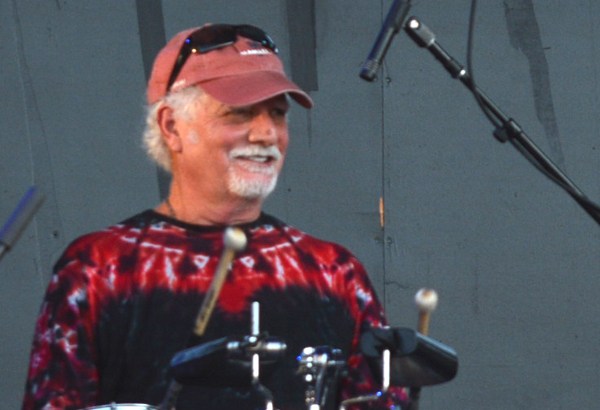
In advance of the shows, Saranac President Fred Matt, whose family started the brewery generations ago, spoke with moe. drummer Vinnie Amico, who lives nearby outside Saratoga Springs, NY, about their recent brewery collaboration. As they find, their IPA is really the result of two longstanding family organizations.
I’m going to begin, selfishly, with beer. Vinnie, as you know, we brewed a collaborative Hoppy Hour Hero Mosaic IPA with moe. and the reaction from our side has been terrific. Actually, we’ve been brewing it out in Buffalo, at the Flying Byson Brewery, and we’re moving it to Utica so we can get more volume out of it. What’s been the reaction on tour and where you’ve been?
VA: Overwhelming—it’s been amazing. Every place we go people just rave about it. The only downside I hear is that people can’t get it, and it’s probably just because there are certain places where you guys just aren’t sold yet. That’s probably out of both of our hands.
When we were at Summer Camp, I did a beer summit with the guys from Goose Island, Bent River Brewing and Kyle Hollingsworth, who’s the keyboard player for String Cheese. He also brews beer and puts together all these beer summits. I sat in on the beer panel and we were tasting mostly sours and I brought a six pack of Hoppy Hour Hero over. I poured a little for the guys on the panel and they stopped drinking all the other beers. It knocked people right out. It’s been overwhelmingly positive and I drank it a lot. The only issue I had with it is it gets me drunk and I can’t remember anything.
If you remember, we started it out at like 9.4%, and we dropped it down to 7.8%.
VA: Which was a good idea because that first night, there were some big people that are beer drinkers, and they were falling down, so it’s probably for the best. It doesn’t drink like one of the super high-alcohol beers. If I had to guess that’s because the Honey Malt on the front end just smooths the whole thing over. It’s a lot more drinkable than some of those big, 8, 9% beers.
That is true, and we had some good stories from the first one. We went through something like 16 kegs the first night and only like 5 on the second night because everybody was afraid of it. I had one woman tell me that she drank so much, she got home and couldn’t leave her car, so she just slept in her car that night.
VA: I threw my brother a surprise 50th birthday party, and we got a keg of it and I tapped the keg at like 5:30 pm and the party started at 7:00 pm. I had a couple and I don’t remember a bit of the party, so it’s crazy.
For readers who have heard about [Hoppy Hour Hero] but haven’t been able to have it, we’ve been brewing it in very small batches out in Buffalo, and we are going to move it to Utica and we’ll be brewing it here. We’ve been brewing it in 20-barrel batches but have been doing about 60 barrels at a time. So we do three brews and then blend it together. We’re going to take it up to about 250-barrel brews, so we’ll start to expand the distribution. We’re getting a lot of more chain interest and out of premise interest, so we’re going to try and make it a lot more available for both of our customers.
It just won double gold at the Denver International Beer Competition. In the imperial IPA category, it won gold, and then it goes to the next level, and it won gold again. It’s funny, we’ve been around a long time, and you get people that say, “I’ve been there and done that,” but we’re doing some really new, innovative stuff. We always have. I always say that we haven’t been in business 128 years by not giving the consumer what they want, and if you want to nail us for one thing, it’s for being modest and not showing our wares as much as we should. But we are putting out awesome beers and a lot of new stuff and it’s getting a lot of acclaim.
VA: That leads me right into the question that I wanted to ask you: How do you guys go about deciding what to release and how you come about the recipes? Do you guys just sit there and research and develop this stuff? Or do your brewers have ideas in their heads and then they make it happen and then you choose the best? How does that work?
We have a standing Friday afternoon innovative session and we talk about anything from what’s hot in the beer category to what’s hot in foods, in other beverage categories, etc, and we really come up with ideas. It is probably similar to how you guys come up with a song—we come up with ideas, we kick it around collaboratively. Then Scott Grenier, who runs our pilot brewery, goes off and brews. One of the things we do in the innovation meeting every Friday is we also do a fair amount of tasting—both of competitive products and our own, so once we get an idea we like, he goes and puts his expertise together and works on it and brews it. We come back and taste it and generally tweak it somehow, and if we like it at that point, we’ll take it out and put it into some bars and see how it goes, and if it’s well-received, we go from there.
VA: Do you find old recipes from your grandfather and stuff that are still hanging around that you’ll try and see what needs tweaking?
We’re much more into that lately. Legacy IPA is my great grandfather’s 14 IPA recipe, and what’s really cool about that is that they used lighter malts then. So what we found in re-creating it was the lighter malts really let the hops shine through more so than when the hop is a sweeter, heavier malt. The legacy has won a bunch of gold as well.
VA: That’s one of my favorites, actually, that I drink all the time.
I love that IPA, and to me, is exceedingly drinkable, and if you ask me, the only thing that I have a pause with is that it’s 6.5% alcohol, which is lower than the moe., but you can crush them so easily.
Shifting to music, if there was one band that moe. could tour with, who would it be?
VA: That’s a great question. I would go back to Led Zeppelin or something. But in terms of music today, somebody that I think we would gel well with musically, even though we’re not even in the same genre of music, is the Red Hot Chili Peppers. They’re a great band—mainstream as hell—but if you listen to a lot of our tunes, the bass lines and the drum grooves are a lot more like the Chili Peppers than a lot of the other bands that were out there. I’m not saying our songs are like that, but a lot of the bass and drums groove stuff, I think, would be a really good fit.
They keep coming out with new music. I’ve seen them a bunch of times. Even those guys in every interview, the stuff that I read about that, they’re always improvising the shows, it’s not like they play the same thing every night, the same way every night, it’s always jamming. I know that Flea and Chad Smith keep a solid groove beneath those songs.
We’ve done a lot of shows here at the brewery. What do you like about the playing at the brewery and what makes it special?
VA: It’s got a great vibe, and the concert-goers that come to the brewery know what they’re in for. They’re going to get a good rock show, they’re going to drink a lot of beer—in a very fun, and friendly, and family-oriented sort of atmosphere. I really enjoy playing there, because I’m from Utica and I have these family ties and I have some really close ties to the town. With you guys, we’ve had a relationship for, what, about 15 years now at this point? It goes back further—my grandmother even hung out with your grandfather and worked for the brewery at some point, so the relationship goes back a lot further than even me.
The fact that you’re from Utica—one of the things I always say: “All paths lead back to Utica.” One of the things people forget about—Utica gets hammered at times, but when you think of the cool things that are here, and the people that have left to do the cool things that they’ve done, there’s a lot to celebrate in this town and a lot of cool things about Utica.
VA: Absolutely. The history of Utica, for those who don’t know it, is that it used to be a pretty good sized city. Once the industry left, everybody pulled out, but it was a thriving city with great music, great culture. You guys are a testament to that. There are so few cities that have a family owned and operated brewery as big as Saranac. That’s a testament to the city itself and what it stands for and the culture of that city.
We’ve been around 128 years, and to do that you have to evolve with the times. moe. has been around for 26 years. What do you think that has been your special sauce, so to speak, that has made you guys last as a band and continuing to grow as far as audience appeal?
VA: We have evolved musically, both as musicians and as songwriters. We keep writing music that evolves with the times. We’re not innovating new things, we’re not breaking down walls, but it’s not like we need to regurgitate the same stuff. We’re writing new music that sounds new and different.
We still get along together, so we’re able to stand each other, which comes out onstage and makes us able to have fun. I think that is portrayed to the audience. We really enjoy what we do. I think it’s mostly in the music. We still play well, we write well, we still love what we do, so we go out and do it, and I think that’s really what’s needed.
We’ve also never had any drug or alcohol addiction problems. I think that’s part of what keeps us going, and we’ve been friends since we were in college. We all came from the same area—Al [Schnier] lives in Utica, Jim came from Long Island, so there’s a history and a culture that connects us. It’s part of our upbringing that keeps us together. We’re all just very similar guys, we all have similar tastes in music, We write music that goes along with those tastes, and I guess we’re still making music that our fans like. The fact that our fans still like it, it keeps us going.
One of the things that I still enjoy about moe. is that you are a family and, in a sense, working in a family business. One of the things, if you ask me, that I’m most proud of is that we are also a family business and owned by family members. We all still get along and we all pull together to do one thing—that’s make great beer and be a great place to work and also give back to the community. You guys do the same things—get together to make great music and you give back to the community and you’re also all good to each other. I think that’s really cool.
VA: We kind of keep it in the family. Even our sound guy has been with us for the whole time. We don’t have a lot of turnover—there are a lot of bands that they just go on the roadie websites, and they hire roadies to go on the road. We keep the same people, they work with us, it’s a very small, family-oriented. We only have 13 or 14 people, 15 people total, and most of them have been there for 10 years or more.
Of our 150 or 160 employees, we had a guy retire two years ago that was related to 21 people here. I’m fourth generation. We have a bunch of third generations, brothers, sisters, cousins. One of the things I like about that and the same of you guys is that people don’t stay with you if you’re not treating them well, and the family generations don’t keep coming to work for the same company unless it’s been passed down that it’s a pretty good place to work.
VA: Who started the brewery? Your great grandfather?
My great grandfather started it in 1888. He came from Germany in 1878 at the age of 18. He didn’t like the political environment in Germany. He was from a farming family. He had been an apprentice brewer at the Duke of Boden’s brewery in Bodon, Germany, which is still there today. He wanted to do more in America and started the brewery. He helped build hotels in Utica—he owned the first national bank of Utica—and was very successful in his own rank.
VA: That’s pretty awesome. I think my Dad’s parents came over in like 1906-1910 from Italy. They were a little more modest—they didn’t start a brewery or a bank. They’ve been here since the Revolutionary War. We’ll get into that another time.
What would you say is your most memorable moment onstage?
VA: That’s a hard one because God knows how many shows I’ve done. I would say, this goes back a long time, but I came from playing in a Grateful Dead tribute band in bars to moe. Within six or eight months of being in moe., we went on Furthur Festival in 1997 with the remaining members of the Grateful Dead. I played super jams every night with them that summer because I was the one drummer who knew all the songs because I just came out of the Grateful Dead band. Every night was sort of memorable but the most special may have been when we played here in Saratoga where I live now. I grew up just south of Saratoga, and I used to go see a lot of concerts up at SPAC, I saw the Grateful Dead there a couple times.
When we played there and Bob Weir did the whole set with us, that’s probably one of the most memorable things that has ever happened to me, because I went from being in a tribute band to playing up onstage with some of my idols. That was the stage that I saw so many concerts on as a fan, the dream was to be up on that stage, and there I was, with some of the people that I was idolizing. Even though that was almost 20 years ago, it’s still to this day one of the most memorable things.
We also went on tour with Robert Plant; that was pretty awesome. I was a big Led Zeppelin fan. He never played with us but just to hang with him every night—he used to come out and drink beer with us at the gigs; that was pretty awesome too.
What makes for a really great show for you at this point?
VA: We listen to our music, probably, differently than the fans do just because we’re constantly sort of critiquing ourselves, “Did I screw this up?” We hear all of these things that the fans don’t hear, so a really good night is when we’re all gelling, when everything is really easy to play and it sounds good, it feels good. It’s really easy to do, and when we’re on that same page and everybody is really grooving, you can play anything you want and it comes out good and when the crowd knows it. You’re getting this feedback from them as well, everything you do they cheer because everything is just happening.
When we’re all clicking and the fans hear it, they give it back to us by cheering us on and really responding to the things we’re doing onstage, that really makes for a good night.
What happens when a situation onstage isn’t gelling?
VA: There’s not a lot of calling out. It’s usually that if they’re making mistakes, they know it. Calling someone out doesn’t really happen. What are you going to do? Fire them? No. They know they made a mistake, and you tend to just be there for them or try to compensate by covering the mistakes as needed or just don’t worry about it—nobody noticed anyway.
The thing is that the beauty of the jamband scene and the fans is that they love the mistakes. That makes us human. The shows that we do where there’s a big, huge screw-up—we’re human, and the stuff that gets talked about in the chat rooms. People are discussing shows, they’re like, “That was the greatest jam ever. Did you see them gash the end of that song? That was awesome!” So that’s the beauty in forgiveness of these great fans that we have.