

***
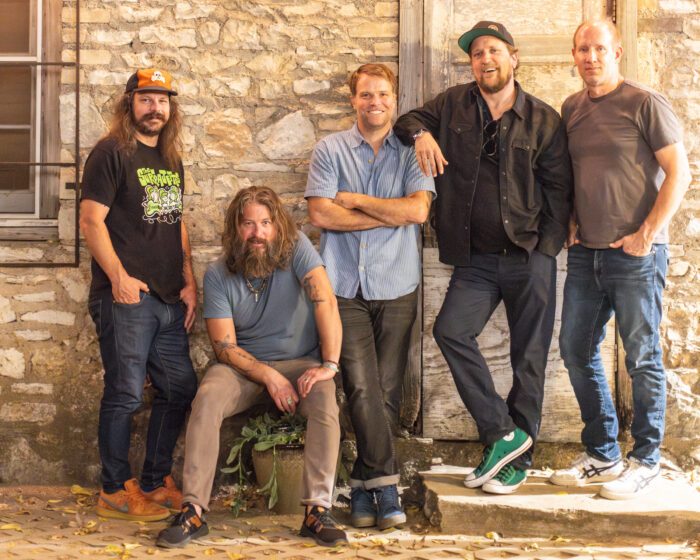
Over Halloween weekend Greensky Bluegrass returned to their point of origin and proving ground in Kalamazoo, Michigan. There the band celebrated a quarter-century of spirited sounds and sparkling songcraft. The group debuted as a trio at a house party on October 31, 2000 with Michael Arlen Bont (banjo), Dave Bruzza (guitar) and Paul Hoffman (mandolin) focusing on traditional bluegrass. The group’s musical palette expanded over time, as did its roster, with Mike Devol (upright bass) becoming a member in 2004 and Anders Beck (dobro) joining three years later.
The new Greensky Bluegrass album 25 embodies the band’s ingenuity and evolution. As Hoffman notes in a Track By Track feature that appears on Relix.com, “For our 25th anniversary, we were talking about what we were going to do, and I started making this joke that we should release a greatest hits record. Except I thought we should go in and make new recordings of all of these songs, not just compile the songs from their original recordings. But when we started to open the door to the album, we had all these additional ideas. We said, ‘What if we have guests? What if we rerecord songs with our older voices and better playing?’ Then we just started doing all of those things.”
What follows is an oral history in which the five musicians discuss their initial connections to one another, along with the dynamic reverberations.
Dave Bruzza: As I think back, we never anticipated what it would become. We did it because it was something we loved, not because we had serious ambitions for it. I mean we had no ambitions for it.
Mike Bont and I have known each other since 1997. We had a lot of mutual friends in Kalamazoo. At the time I was a drummer around town playing in bands, he played guitar, and we both got along great.
We both had an interest in bluegrass music. I really enjoyed listening to it, although I hadn’t picked up a guitar at this point. Then it kind of happened where a friend of ours, my buddy Scott, who I was in the high school band with, gave me a guitar. I was about 19, I think Mike was 21 or 22 and he got a banjo around the same time. So I literally made the joke that I'm going to play bluegrass guitar.
Michael Bont: I was originally a guitar player. I've been playing since I was 10 years old. Then when I was in college I started thinking about becoming a jazz guitar player. While I was in the process of discovering how hard that was, I heard a bluegrass band playing at Bell's Brewery in Kalamazoo and just loved the sound of the banjo.
I found bluegrass through Jerry Garcia. I was a big Deadhead and had been listening to Jerry Garcia and Old & in the Way. I was amazed by the fact that he was not just a great guitar player, songwriter and singer, but an equally great banjo player, and also pedal steel player, once you realize all the albums that Jerry played pedal steel on.
Then when I was going to turn 21, my mom asked me what I wanted for my birthday. She was thinking that she would get me the regular 20 bucks and a card but was I like, “I don’t know, get me a banjo,” not necessarily wanting a banjo per se.
So she actually called my bluff and got me a banjo. Shortly thereafter I saw the bluegrass band at Bell’s and understood what it meant to play a bluegrass banjo. I was like, “Okay, that's really, really cool,” but in starting to learn it, I realized that learning how to play a banjo is also really hard. [Laughs.]
Ultimately to get to a point where you can play a song requires so many hours of practice that most people give up because they don't have the time. Luckily for me, I was at a point in my life where I didn't have a girlfriend and I was a morning sous chef at a restaurant. So I would go to work from eight till three and then come home and play banjo until nine o'clock at night.
I just repeated that cycle for the better part of a year before the first time when it all came together. I was sitting on my front porch one morning, I had my Earl Scruggs book in front of me, and I started playing “Little Cabin Home on the Hill” the way Scruggs would play it. I remember that feeling of, “Holy crap, I'm doing it! I'm playing this how it's supposed to sound.” This was after months of figuring out how to do that, because back then there you couldn't go online and get banjo lessons from Tony Trischka or whatever. That wasn't available at the time.
I would go to this CD store and sort through the bluegrass section. I wouldn't know any of the artists, but I would look at the back of the CD to see the instrumentation. If it was guitar, banjo, fiddle, mandolin and upright bass, I’d be like, “This is probably a good one.” Then I’d flip it over, and it would be Flatt and Scruggs or Bill Monroe or something. There might be one that had autoharp, drums and a flute on one of the tracks and I’d say, “Maybe this isn't what I'm looking for.” So I would find all these bluegrass masters, having no idea who they were.
There was a series of books called Homespun Bluegrass, where you could learn bluegrass but you'd have to order them through a catalog. Nowadays it's so easy where you can just go to a website and pick some stuff up. I was really just throwing darts at a board and seeing what would hit.
Bruzza: The very core of it was that Bont and I wanted to learn how to play bluegrass. So we would learn the songs off the records we liked, then tried our best to be that thing. Then there was this spot outside of Kalamazoo called the Cooper Cafe where the Lonesome Moonlight Trio—Pete, Pat and Jimmy—would play every Wednesday and Saturday morning. We’d record them on a little tape recorder and then learn those songs.
Then there's another band around Kalamazoo called Great Lakes Brass we really looked up to that played a lot of traditional bluegrass music. We were focused on doing that, and it was fun. We were also diving into records by Flatt and Scruggs, Bill Monroe and a lot of others. The Seldom Scene was a really big one for me and Bont.
Bont: Dave and I started going to this thing called Bluegrass Breakfast at this cafe just outside of Kalamazoo, out in the country. It took place every Wednesday and Saturday morning and there'd be this three piece traditional bluegrass trio that would play from nine to noon. You could go sit and you could watch these guys play while you're getting these pancakes that were so big, they were overflowing the edge of the plate.
So we’d go watch these guys play and we'd get inspired. Then Dave and I would head back and play songs that we kind of knew. We weren’t very good bluegrass musicians at the time. We were still learning our instruments because Dave was originally a drummer—a great drummer—but he decided that he was going to learn how to play bluegrass guitar.
Dave was that same way. He was just out of high school and at the time when I met him, he was the go-to drummer in Kalamazoo. If you wanted the best drummer around Kalamazoo, you would call Dave.
At that point I was really into jazz-funk and still played guitar a lot. A lot of the musicians I knew were mad because I took the drummer in Kalamazoo and made him a bluegrass guitar player. [Laughs.]
Bruzza: I play guitar like a drummer. I played drums for years before I even picked up a guitar. Then I learned how to play guitar with an old guy named Al Bates who was in the band for a little while, who played dobro. That's how I learned how to take leads. I think about what drums add to rock-and roll-music and other types of music, sometimes to a fault. I apply it to how we approach songs. I think it's as simple as that.
Bont: Dave and I loved bluegrass music, so we were playing bluegrass standards and kind of finding our own voices on our instruments. After we had played a handful of open mics, we were like, “Okay, someone's got to sing songs.” We both decided that Dave was a stronger singer than myself, which I agree with to this day.
So we started playing these open mics and by this point people were starting to come see Dave and me, as opposed to just going to an open mic and watching whoever play. That’s when Paul came up to us and said he’d like to jam with us.
We were like, “Sure, we'll give you a chance.” As I remember it, the next day he came skipping down the street with his mandolin over his shoulder, while wearing a hemp fedora with a big peacock feather sticking out of his hat.
He was enthusiastic but he really didn't know what he was doing yet. So I gave him Bill Monroe and Flatt and Scruggs CDs and was like, “This is how you should chop on a mandolin.” He listened to it and the next time we got together, he could kind of do it.
At the time, he was a major in English lit in college. I remember we would practice in my basement and Paul would be like, “Okay, I’ve got to go because I’ve got to read this entire book before this exam tomorrow.” Then he would stay up all night long, read an entire book and take the exam. He was able to do both those things, and ultimately, I think that's what led him to be the songwriter that he is nowadays.
Paul Hoffman: As a young musician, I didn't know what bluegrass was when I bought a mandolin. I was listening to David Grisman and Garcia-Grisman kind of stuff, and that's not entirely bluegrass. The Seldom Scene was a big bluegrass band for our band as far as an influence. Then obviously—or maybe it's not obvious—the jambands were big influences.
With New Grass Revival I feel like we sort of followed in their footsteps, although not so much in that we specifically sound like them. It was more like, “We love music, including bluegrass. So here's how we approach music that's genuine and true to our taste.”
When I talk about to Sam [Bush] about New Grass Revival, he says that's what they were doing. They liked the fusion of jazz and other musical styles that they were into, including the way that they were bringing in pop music. They were trying to be poppy, especially with John Cowan singing.
They were just being sincere and genuine to what they liked and challenging the limits of bluegrass in a way that was natural for them. That's exactly what we do and it makes us kindred spirits.
Sam talks about when they were doing it that they were getting a lot of criticism. They weren't wearing their hair right and they didn't look right and all these other things that get talked about in bluegrass music a lot.
I feel so blessed to have picked up the mandolin and told myself, “Sam Bush, I need to listen to this guy.” Now we're friends and I’m like, “How lucky am I that I got to become friends with my idol and what a role model for a sustainable, amazing career.”
If you hear mandolin on a country record, it's probably Sam Bush. I’ve stood side stage with him and watched other mandolin players, like Chris Thile, who's insanely talented. Sam will sit there and embrace it. He's not judging or comparing his playing to anybody else, he's just genuinely himself.
That’s what I want in a role model. I want someone to encourage me to be myself and to be authentic and genuine, not just tell me to go practice, although that’s also important. [Laughs.]
Bruzza: Paul was always a very creative forward thinker and very fiercely wanted to do this. He was always interested in writing. So once we kind of solidified playing bluegrass in a way, we all focused on writing songs, which is something I had already started doing.
At one point after we made our first CD, I think we felt like we could do just about anything. Paul would suggest that we play “When Doves Cry” by Prince, so we would play it at Bell’s and people would love it.
I think a lot of the people who were there wouldn't think of listening to bluegrass on their own, but once they heard something familiar to them, it turned some of them on to more bluegrass. That was definitely something we realized as the years went on.
We all had so many different but also similar musical likes and dislikes. Then at one point, I don't even think we had a discussion, we were just ourselves. We were writing songs that reflected who we were and how we were feeling and the music that we liked.
Mike Devol: I have some memories of seeing the band before I joined. I don't quite remember the first time, it might've been when I went on a date to a Greensky show at this brewery in Kalamazoo. At least I thought I was on a date, I don't know if she would've called it a date. [Laughs.] Greensky was playing not on a stage or anything but just at the end of a bigger room on the floor by the windows.
This had to be 2003, and at that time I was still in music school studying classical cello. I was also into the jamband thing. I had discovered Phish and weed and whatnot. So I was going to shows and kind of dipping my feet in the scene, but I was still a music school, classical cello kid.
There was something about the string band thing that had already begun to appeal to me. Dorkily, I thought “Nellie Kane” and “Old Home Place” were Mike Gordon songs. I also remember I was listening to the Alison Krauss & Union Station Live album, which was a big first bluegrass record for me.
So I remember thinking that Greensky was a cool band. In Kalamazoo they were doing something really unique and this idea that some Phish kids, Grateful Dead-fan college-aged kids from Michigan were playing in this bluegrass band was kind of radical to me. It was very alternative to what was happening at the time.
I hung out with kids, who were into jambands like me. We were going out and seeing Umphrey’s, who were everywhere in the Midwest then, and seeing Phish because they finally came back. A lot of my friends were musicians themselves and everybody was starting some kind of funky jam rock band. I was like, “Instead of that, these guys are starting a bluegrass band.”
The first couple of times I saw them, they played traditional bluegrass songs, along with some of the songs that ended up on their first record, Less Than Supper. These were Paul, Dave and Mike's attempts to write bluegrass songs, which already showed a bit of their own unique voices.
They were a bluegrass band and as a cellist I thought it was cool. I guess I appreciated the dynamics of the string band. I could sort of make a loose parallel from what I was up to in string quartet and chamber music and stuff like that.
Reading sheet music sort of eliminates the improvisational qualities of it, but there’s the energy of listening and following. There's also no one true leader at any time, but it's this chemistry of people playing together. I saw that in its most primitive stages with Greensky.
I was kind of souring on what I viewed my life was going to look like as a classical musician. Instead of spending my life in rehearsal I wanted to get out there and play. I wanted to travel, even though I've spent plenty of my life in rehearsal, which is also something that I enjoy.
But when I had the opportunity to join, I was happy to take it. I had just become friends with these guys and I guess that they thought they could bear to spend time in a van with me.
I think my parents were like, “You're doing what?” But they were also supportive. I told them, “I'm in this band now and I'm going for it,” and they're like, “Okay…”
So thanks mom and dad for supporting me. But that's how it started. I was a fan. I thought they were doing something cool, and then I saw an opportunity for myself to maybe exist in the music business somehow via Greensky, who I just thought had the heart. [Devol originally assisted the band in a promotions capacity.] Then it turned out they needed something else from me, and it was recently the 21 year anniversary of my first gig with the band.
Anders Beck: The first time that I saw or heard the band was about 20 years ago. I was playing in the Wayword Sons at the time and I think it was when we did some co-bill shows where one night Greensky played first and one night the Wayword Sons played first. These were little bar shows where both bands were driving around in little vans.
We were sort of hanging out in the green room and there was an instant kinship. I ended up playing with them, as I always ended up doing. [Laughs.]
I was coming from the more bluegrass background with Broke Mountain Bluegrass Band, so we spoke the same language of bluegrass and were similar ages. It was like brothers in arms out there on the road kind of thing.
I remember thinking, “That’s a cool a little bluegrass band,” because that's what it was at the time. At that point, I certainly didn't know I was going to join them.
There was a period after the Wayword Sons decided that it was not going to be a full-time touring band when I had to make a decision as to whether or not I wanted to continue to pursue playing music professionally or go back to my real life. So I talked to some elder statesman in Durango, Colorado and was like, “I feel like I should try this thing. I want to keep doing this.” They all sort of said, “Well, you're young. The worst that can happen is you go play for a couple years and then stop.” This was around the time I joined Greensky. So that was always the plan, I just didn't know how farfetched of a plan it was.
Then shortly after I joined the band, things started getting bigger for us. We were going from bars to small theaters and people were showing up. One of the cool things about Greensky is that we really built it from the ground up fanbase-wise. We toured so much that we’d go back to towns and cities a couple times a year. In February, we'd go to a town like Lawrence, Kansas and there'd be 200 people there. Then we'd go back in November and there were 500 people there, so it was clear that whatever we were doing was working.
The whole premise was one fan at a time, one city at a time. We’d play a show in some dumpy bar and blow the socks off of however many people were there. Then they’d go and tell three of their friends that they had a great time. Somehow it worked. [Laughs.]
When I joined the band, we were playing relatively traditional bluegrass. We were standing around a single microphone. Then one day I showed up with a pedal board, and slowly but surely we turned into what we are.
Devol: We felt like up-and-comers for a long time. We were out on tour opening for Yonder or Railroad Earth and teaming up with other buddies of ours in the genre. We just had this energy.
We were out there scrapping and we busted ass. Our touring history is insane with how much we'd played. Our m.o. was “We’re going to claw our way to the top through relentless, aggressive touring.”
Bont: I think came down to the presentation. It reminds me that Paul used to do our booking along with a lot of other things. He carried a lot of that load, but he wouldn't have it any other way. He's a totally type A control guy, but that's been to everybody's benefit. I think Paul's ambition and drive is sort of what has continued to push us into whatever’s next.
Before we had management, he was our manager. Before he had booking, he was definitely booking us and doing all that shit. He used to call clubs and he’d have to tell them, “No, no, no, we're a bar band.”
He had to convince them that we were going to play loud, we were going to play fast and people were going to dance. Then we had to prove ourselves once we got there, but he used to have to make those calls.
I think a lot of our progression and growth has come from our ability to dial in the sound. When we're calling clubs and saying “We're a bluegrass band, but this is a rock show,” you’ve got to put your money where your mouth is on that a little bit. It’s taken a lot of time and a lot of great engineers to help us create this full, loud rocking sound.
We used to play around one microphone. I love doing that. It’s a very bluegrass thing and we're good at it, but we couldn't accomplish what we wanted to accomplish sonically, and we couldn't have that same sense of force we’re going for in that sort of arrangement. My bass is a rock bass. Sometimes I'd tell myself, “Holy shit, my bass is loud!” People would occasionally come up to me and be like, “Man, your bass was really something!” That’s when I’d realize, “Oh, we've probably crossed the line.” [Laughs.]
Beck: Yonder was probably the band that made us realize “You can do this in these big clubs.” Then as we grew, we put a lot of effort into figuring out how to make it work. We had a couple really great sound engineers who spent a lot of time on it with us.
I remember when we were out opening for Railroad Earth, telling Tim Carbone that we couldn't really afford a front of house sound guy. He said, “Listen, you can't afford not to have one.” That's because it's hard to make bluegrass sound good. You can have a ton of feedback in a big rock club and it can sound like shit. So we spent a lot of time working on that together with the premise that if we're going to go into the Fox Theatre in Boulder and the night before is a reggae show or Umphrey’s and someone goes to that show and then the next night they come to Greensky, we don't want to sound less powerful. So we put a lot of effort into that over many years.
Devol: It's hard to pinpoint a moment when it felt like we were old salts but we're one of the bands now. We're not the new thing anymore. We're one of the bands who has really defined what an era of jamgrass has looked like.
I see younger bands now who have come up and I take pride in the fact that I can see a little bit of Greensky in them. Maybe it’s the ethos or the energy or they’re modeling their sound after us or maybe just their touring schedule.
I feel like I'm talking about us in the past tense but it's very much present tense here even, though I'm approaching that critical point in the ratio where Greensky will have been half of my life. I don't know a lot of people my age who have been working on the same project since they were 23 in a way that they can continue to support themselves. We’ve worked hard and I’m grateful for that.
Hoffman: We just did a re-release of If Sorrows Swim for a record club with a big package. We did a track by track and I was sort of stunned. I've known personally for a long time that Swim is my favorite child, which you're not supposed to have, but I think with that record and with Handguns, the record before which we self-produced, that’s when we became the band we are now.
That's not to say that we haven't been evolving ever since. Hopefully my songwriting has been maturing and growing, but those were really important time pieces in our story. If Handguns is kind of when we figured out what we wanted to sound like and who we were and how to do it, Sorrows was us coming back in and making an album that was definitive.
When I listened to that record from top to bottom, it was really obvious to me. We still play all of those songs in rotation. We play different sets every night and approximately every five nights we reset the cycle. Some songs we only play in a cycle once a year, some songs we play every couple cycles. We play something from If Sorrows Swim in almost every cycle of live shows. They're just the band’s defining songs.
I think I've written better songs since, but something there is just so definitive of who we are and what we became. This was also at a moment in time where we were reaching a lot of new people. I think we switched from clubs to theaters in that era. New people were discovering the band and those songs every night, and those songs were growing.
As a musician or an artist, I want to think that we're getting better and better every time, but saying that record is important or definitive or quintessential doesn't necessarily mean better.
Sorrows Swim is when a lot of things came out, like effects, the way we sang, the way I wrote and they kind of just stayed there. It was definitive of who we are and then we just continued to be who we are.
Beck: We made a commitment to the thing, and something we decided pretty early on was that if we're going to spend all this time presenting this, let's present it really well—almost fighting above our weight class. Things just flowed from there. It was create your own reality.





