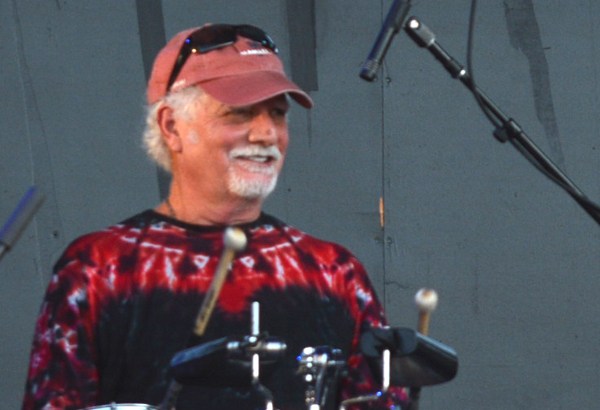

Ivan Neville’s Dumpstaphunk has just released Dirty Word, the quintet’s third collaborative studio release that came together about as organically as the band did following its first performance together at the New Orleans Jazz and Heritage Festival in 2003. While that show brought together a then-temporary lineup for Ivan Neville’s solo performance, it wasn’t until a chance jam at a late night Bonnaroo set in 2006 that Dumpstaphunk began a fulltime gig.
They’ve significantly grown following that fateful performance. Dumpstaphunk remains one of the most popular touring acts out of New Orleans, now boasting a new drummer and singer, Nikki Glaspie, and two recorded works with a third soon to be released. And this record evolved with little pressure. Dumpstaphunk gradually pieced together Dirty Word over the course of a year from some songs the band performed but never recorded, opportune collaborations with huge artists and ideas birthed out of jams, sound checks and studio work.
Have you guys been playing tunes off of Dirty Word at recent shows?
We actually started playing a couple of songs from the record a while ago, and we didn’t really know we were going to put them on the record. There was at least one song that was a cover that we started playing. A song called “If I’m in Luck.” It was a song that was done by Betty Davis, when Nikki first got in the band which was about 2 years ago. I think about after a year, she had been in the band coming up on a year maybe. We started playing that song maybe that long ago. And then it was a cool song to incorporate her — her vocal experience. And it was something she wanted to do, so we started playing that. And we ended up putting that on the record
And then there was another song called “Blueswave.” It was written by Nick Daniels who plays bass and sings in the band. He had written that song a while ago, and it was just one that we had. We started playing it on the shows and it was killing, and we ended up putting that on the record as well. Other than those two, there’s maybe one other one we had played a little bit. It was a song that was done by Larry Graham — Graham Central Station. It was a song called “Water” and we started playing that several months ago I would think. And we have that on the record as well. And just recently we played a couple of the others here and there.
You mentioned “If I’m in Luck,” whose idea was it to do that cover?
It was Nikki’s idea. We had all been fans of that stuff, of Betty Davis’ stuff. We’re fans of Sly and the Family Stone — anything they’ve ever done. And Gregg Errico, who was the original drummer of Sly and the Family Stone is a close friend of all of ours. He had a big part in the making of that record, that first album. I think one of the first records Betty Davis maybe made. I think Larry Graham was on it, with Gregg Errico — two of the original Sly & the Family Stone members and then I think Neal Schon, from Journey of all people was on that record as well. We’re a big fan of that record and recently it had resurfaced. It was some kind of obscure stuff from the ‘70s that resurfaced, and we listened to it. And you know Nikki — we listened to several songs and Nikki said, “I want to play this one song, called ‘If I’m in Luck.” So we said, “Wow let’s check it out.” So we just started playing it and started shredding. And the crowd — people love it when we play it. It’s a great way to showcase Nikki’s drumming and her vocals.
When did you guys start working on the new album, and did you plan on it being as collaborative as it turned out?
Yeah, that’s kind of what we always try to do. We were in the studio for two or three days at a time, we did that over about a year’s time, but we were probably in the studio probably only two-and-a-half weeks recording. We went in a few days here and there when all of us were in New Orleans at the same time, in between the touring. Last year we were touring pretty heavy , so we didn’t have a lot of time so we would go in whenever we had two or three days that worked out and when we were all in the same place, which was New Orleans most of the time. We’d go in the studio and there was not a lot of pre-planning about this, we just had ideas, we had some things we thought we wanted to go in and record and it kind of went like that. There were things we came up with in the studio, there were ideas that were born out of sound checks — just fooling around. We’d record it, and later on we’d listen to and say, ‘Oh this is a cool idea for a song, let’s make this into a thing.” And that’s kind of how “Dancing to The Truth” was born.
A couple of other ideas were born out of different little jams or whatever, and that’s kind of what we did, and we all kinda got in there and brainstormed, and we wrote lyrics and things of that nature, and everybody brought their ideas to the table. “Dirty Word” was an instrumental thing that really had no title to begin with. Ian just riffed, and Ian and Nick came up with a riff and beat section and made a bridge to it and then it became a new song.
How did you guys end up getting Flea on board for “If I’m in Luck?”
I know Flea and the other guys in the Chili Peppers, and I have done some stuff with them. I’ve performed with them on a couple of occasions, and those guys were in New Orleans doing a video shoot or something like that, and I found out and I actually called him and I hit him up. I said ‘What’s up, what you doing? You still in town?” And he was still in town, so me and Ian [Neville] picked him up and we went and got a po-boy sandwich at Domilise’s. He got an oyster po-boy, and we hung out, and I brought him by another friend of ours, house — Terrence Higgins. He’s a friend of ours. He plays drums, he was in the Warren Haynes Band. He was boiling crawfish, so we were over there and Flea could check out the whole crawfish thing.
We were just doing the hang, the hang in New Orleans you know? We said. “Hey you want to go over to the studio and play on something?” So we went to the studio, and he picked up a bass, and we recorded him on the song.
What was it like working with him musically on that?
He’s a great guy he’s an amazing musician, and we just kind of let him have a field day in there. We let him play all kinds of shit, and we kind of pieced it, and put it in where we thought it fit in the song. We have two other bass players in the band and we had to make it work in there musically to where it made sense. The mix was amazing to me that they made it work like that ‘cause he’s playing some stuff in there. He’s playing some other shit that’s not regular bass stuff, he’s playing some other stuff, so it’s kind of cool.
How did you guys decide who else to draw in for collaborations in that album?
Most of it was pretty much by chance. Rebirth Brass Band — Tony Hall had a song, and it was a more of a traditional New Orleans kind of second line song that we figured we had to incorporate a brass band on it. So it was pretty evident to call up the guys from Rebirth Brass Band to come over to perform on that one. We got Trombone Shorty as well. We called Troy and said, “Hey you want to come play on this stuff?” And he played on that song, and Troy’s on another song as well, and that song was called “I Wish You Would” which is pretty much an instrumental with a little chant and vocal here or there. And we had Trombone Shorty on that. We still needed something and I didn’t know what, so we called Skerik. I said, “Skerik, why don’t you come do something on this song, see what you can do with it.” And we pretty much just left him in the studio by himself, we let him do whatever he wanted to do with it, and he turned it into some monster horn shit between the stuff that Trombone Shorty had done, and Skerik threw some things on there, and it was totally mind blowing, and we loved it and that’s how that song came about.
Ani DiFranco, she’s married to Mike Napolitano. He mixed 9 of the 11 songs on the record. They have a recording studio in their house, and he was in the living room, in the studio, mixing the Dumpstaphunk stuff, and she was probably walking around the house, passing by when she heard some stuff. And we know Ani, we have performed with her before. She sat in with us before and I’ve performed with her and played on one of her records. And she took it upon herself to put some singing, some words, onto the “Dirty Word” track. And we saw that as an instrumental. We had no intention of putting words on it. But Ani, on her own time and of her own free will she went and put something on that song. Mike told me about it and said, “Check it out, Ani came in and put this on that song. Ya’ll like it?” So basically, we liked it, it was fucking killing, so we were like, “Wow.” So it’s on the record. So that was a fun, cool way for that to happen.
And then My uncle Art, who’s Ian’s father, Ian plays in the band — Art came to the studio with us one day, and we said, “Okay you’re here so go play on this song.: So he hooked a Fender Rhodes up, and he played it on that song. So the same song that Rebirth and Trombone Shorty’s on, Art Neville’s on it as well. That’s pretty much a good, New Orleans kind of thing. You’ve got every generation, you’ve got us, you’ve got Rebirth, you’ve got the new king of New Orleans on there, and then you got Art Neville — Papa Funk, you know, the old guard. I mean that’s a pretty awesome thing right there.
Aside from the collaborations, was your approach to the production for this album different from production on the past two albums with Dumpstaphunk?
It was not really that different. The different thing is that we have a different drummer on this record so that’s a different dynamic in there. That brought a different thing to this record. For the most part we did it a similar way as we’ve always done. We were in there and we kind of take turns vibing.
What was it like working with Nikki in the studio?
It was very cool, and she was very good, you know. Everybody was listening 100 percent. You’ve got to appreciate that when you’re in a band, the way that everyone listens. Everybody would bring their A game every day, it was something to look forward to every time we went in there. I was always ready to go into the studio and see what we were going to do.
How did you guys connect with Nikki ?
I really don’t know (laughs). I mean, we know her through our friends from the Royal Family, from [Eric] Krasno and Soulive and the Lettuce family — all that crew. We met Nikki through them around 2004, and we’d known her, and we’d played with her in different configurations, and she had been playing with Beyoncé which was a pretty high profile gig. We knew she could play. And when we had our situation change when Raymond Weber left the band, we only had a few people that were even in mind to play this gig, and Nikki was at the top of the list. And when we called her, she said she was down to do it. So we sent her some music and we got together a couple of times and we started to play the gig. We were like “Wow, this is cool, let’s keep doing this.
At what point do you think you started to see Dumpstaphunk as a band that was a large focus for you after you played that first performance in 2003 [at New Orleans Jazz and Heritage Festival]?
It was toward the end of 2006 that we really became a full-time band. Prior to that we were definitely a part-time side project, and then that year, ‘06 we played Bonnaroo, which was a fun time. We played a late set in a tent from about two in the morning at Bonnaroo, and that was kind of a big, major step for us as a band, I mean because Tony [Hall] and Raymond [Weber] were playing with Trey Anastasio. They flew into Bonnaroo with him. He was on the super jam that year, and myself, Nick Daniels and Ian [Neville] were playing with the Neville Brothers, and they had played Bonnaroo that year. So we all had a free ticket to get to Bonnaroo. So we worked it out where we got Dumpstaphunk a slot — a late night slot that worked out, and then we played a set, and we had Skerik guest with us that night and it became a performance that was talked about for a while, you know. And that was one of the things that kind of kicked us in the ass, and we said “Wow this is really a badass band, let’s do this.” So toward the end of ‘06 we just went with it.
After Katrina it was all leaning towards us being a band. That show at Bonnaroo and other things kind of aligning themselves — it just kind of turned out the way it did and we ended up, here we are we have Dumpstaphunk, and this is our gig now, this is our main gig, and let’s try to make the best of it.
Your new album release was delayed a few times, could you elaborate on that?
It was. I think it was something to do with the label, we got a label called Louisiana Red Hot. They’re a regional company that does well with retail and stuff and they’ve got some great reach and that’s why we went with them. We put out our prior two records on our own, and you can get them online and you can get them where we were. You could find Dumpstaphunk at a show and you could buy a record, but for the most part, our records were not available to a lot of people that maybe didn’t know about us. But now we’ve got Louisiana Red Hot on board so we may have a longer reach to get to more people so they can know about our band. They [the label] had certain reasons for when they wanted to release it, they had certain dates. It was maybe going to be released in June or late May and then finally for real at the end of July.
Were there any ideas or concepts you wanted to get in on this album since it was your first in a while?
We just wanted to make some good music. We know that we do some things that a lot of other artists out there don’t do, we play pretty nasty, but we’re influenced by a lot of different genres, so we kind of wanted to mix a lot of the things we like. We like to rock out a little bit, we like the bluesy side, we like a little bit of everything, so we wanted to mix it all in. And we also wanted to showcase our vocals — the diversity of our vocals, because we have four people in the band that all sing, and we all have somewhat of a distinctive sound in our voices. But we all work well together, and we wanted to showcase that as well. And now we got Nikki, we got the female voice, that adds another thing to it as well. So that was something we really wanted to showcase.
We’ve got the funk, we know we can funk it out, you know let’s groove but let’s show some diversity here and there but let’s show them vocals off, you know?
Do you plan on playing with the Neville Brothers again anytime soon? Do you have anything in the works with them?
You know I have been doing some work with my uncles, Art and Charles, but I don’t know if there’s plans of them getting together. I’d love to see that, but I don’t know if there are plans of them doing it.
Dumpsta’s played some shows with Art and Charles, and we incorporate what we do and what they do, and we’ve just done some old-school Neville funk tunes and stuff. We’ve done a couple of shows in that configuration, and it’s been called “The Nevilles,” and it’s got four Nevilles: Myself, Ian, Art and Charles, and the rest of Dumpstaphunk. It’s a little something to keep that name going. My uncle Art’s still around, still playing, so we try to help out in that way.
Do you have any other projects you’re working on right now or on the horizon?
I’ve got some stuff, but nothing I want to mention just yet. But we always have stuff that we’re working on on the side. Everybody in Dumpstaphunk can do all kinds of stuff, but right now we’re trying to focus on the Dumpsta’ you know?