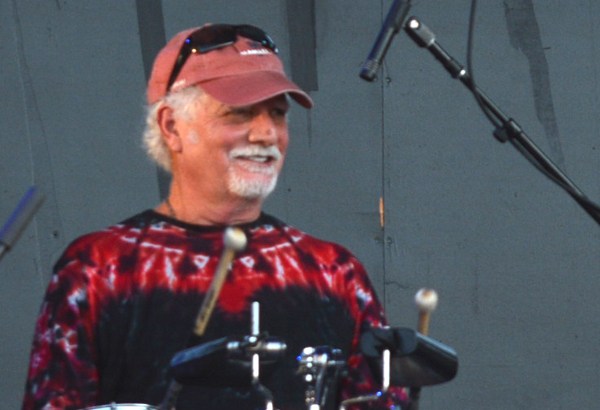

Philadelphia rockers Dr. Dog have come a long way since their self-released debut album, The Psychedelic Swamp. Formed by childhood friends Scott McMicken and Toby Leaman, the band has since been through multiple lineup changes and released seven full-length albums.
Their most recent album, Be The Void, was released Feb. 7. While stuck in a snowstorm in Colorado, Leaman discussed the new album and how the band maintains their signature sound when adding new members.
CR: What were some of your goals while working on Be The Void ?
TL: It was definitely a goal to make a more upbeat record. That was something we talked about before we even started recording the record. The songs that were working were those types of songs, so those are the ones that got put on the record. But there was kind of a purposeful thinking behind it.
CR: Are there any specific themes on the album?
TL: No, I would say that this record is sort of more like our earlier records in that it’s really just a collection of songs. There’s no real thematic thread between the whole thing. Which I’m fine with, as long as all the songs sound good. There might be something you can read into. Just because we didn’t intend it, doesn’t mean it doesn’t exist. So people that come up with something, it’s there.
CR: Can you break down some of the songs you wrote on the album? “Lonesome”?
TL: That song was a fun one to write. I was just thinking about all of the imagery that is traditionally associated with being alone and lonesome in songwriting. Things like trains, whistles and whippoorwills and the moon at night time and stuff like that. That’s been sort of the stock and trade in American songwriting, I’m so blue, I’m so sad, I’m alone, that kind of stuff. I was thinking about it in a different way. Where you’re not really embracing those things to express yourself, you’re just sort of mocking them, and you’re just sort of totally fine with being lonesome.
CR: “These Days”?
TL: I was going to a party with my buddies, and I knew I was going to see a bunch of people I didn’t really know anymore. I had a bunch of people I hadn’t seen in so long. I’m 32 years old, there’s people I’m friends with but I might not have seen them for five years. I don’t even know what’s going on with their life or anything. I feel kind of shitty about it but at the same time it’s like, “Well we don’t really hang out. I mean, I like you, it’s fun to talk to you and stuff but…” Where is your relationship with these people? Who knows? You just sort of grow apart, and that’s what that song’s about. And it’s also about how sometimes you go to a party, even though you might not be having a good time you don’t want to leave. Because it’s still a party, it’s still got that aspect to it. That’s probably the most dicky song I’ve ever written. But I mean, there’s a point in everyone’s life where they’re kind of an asshole. Most people don’t write about it, but I did.
CR: “Get Away”?
TL: When I first started writing it I was sort of writing it for Scott, because he had this girlfriend he was really into. I was just thinking about how it is when you’re into somebody and the rest of the world just sort of recedes behind it. But then as I was writing it, I decided it was best to write it from my own experiences of what that was like. When you meet somebody and you realize they’ve been around for all this time and you didn’t even know they existed, but all of a sudden they’re the most important thing in your life.
CR:: Your studio albums have a live feeling to them. Is that something you strive for?
TL: I’m a firm believer that anything that’s recorded or documented should be just that, a document. It should be a representation of the reality of what was actually happening. I feel like for a band like us, we put out records and we tour. So what should our record be? It should be what we were doing when we were making the record.
CR:: Have you ever considered making a live album?
TL: Yeah, we’re sort of picky with that stuff. It’s something we’ve obviously talked about, but I don’t know. It’s never anything anybody has actively set out to do. Nobody has really taken the reins on that one. But I imagine it will happen at some point.
CR:: It seems like a lot of pop bands are infamous for not having a good live show, but you guys have seemingly escaped that stereotype. What’s the secret?
TL: Well first of all, we really like what we’re doing, and we really want to have a good time doing it. I mean, we’re not up there to pretend we’re something that we’re not, and we’re also not up there thinking about our next move. I mean this is what we are, this is what we do. Whenever you see us as a band, there’s no pretense behind it. It might be the stupidest thing in the world, or you might love it, but it’s real. And also, not to sound cocky, but we’re better players than most bands. We’ve been playing longer, we’re older, when we practice we practice with real intent. I mean, all joking aside, we’re just better. That’s my belief.
CR:: What’s with the child’s voice at the beginning of the song “Do The Trick?”
TL: That’s Scott’s nephew. If you listen he says, “Hey, Uncle Scott.” It’s a phone message that he left for Scott on his answering machine. He just wanted to know what he liked and what he wanted for Christmas. Scott did a demo of that and that was on it, and everyone was sort of endeared to it. I mean, we all love his nephew and family and stuff. The question is so funny too, because it’s that kind of thing that little kids will say that’s actually so much more logical than what an adult would say. “I just want to know what you like, and also what you want for Christmas.” Those are two separate questions. That’s sort of kind of what the song is about too.
CR:: You recently added multi-instrumentalist Dmitri Manos and drummer Eric Slick to the band. How has that impacted your sound?
TL: I don’t think it can be overstated how much they’ve changed the band. Our drummer is better than pretty much anyone in the band, and he makes everyone better. He plays harder. He’s really fast in the studio. He doesn’t really mess up. That definitely would have a huge influence on making the record, because a lot of the songs are really visceral songs that work right off the bat. And that was because of his ability to sort of get in the pocket and drive it home. And then Dmitri, he’s got a really good sense of things that are great. It’s just a really positive force in the band. He works as hard as anybody, and he comes up with great ideas pretty much all the time. The addition of those two guys has made a huge difference, and it’s made the band really fun.
CR:: How do you maintain a signature Dr. Dog sound while changing band members?
TL: I think it’s a couple of things. We’ve always sort of written songs, we’ve never really tried to be the band of the moment. There was never a time when we said, “We need to sound like this because this is what people sound like nowadays.” We’ve sort of always just written and recorded, and been drawn to sounds that have stayed pretty consistent over time. There’s internal aspects of anything in music. If it’s truly good and it’s truly quality, then in my mind it’s not all that subjective. It’s just good, it’s inherently good on its own. And so far, changing up productions and doing things that, to me, just doesn’t sound real. This is what sounds good to us, and we’re not going to stop doing it just because maybe it’s not the most popular thing to do at the time. There’s that, and there’s that we’ve always had the same approach to songwriting. I mean, I think we’re better songwriters now, but I think the approach has always been the same. Which is to have a song that you can sit down with an acoustic guitar or on a piano and play by yourself, and it’s going to hold up on its own as a song. It doesn’t need a bunch of whistles and bells or heavy production to stand on its own. There’s a lot of great songs where you really can’t do that, but in our band, ideally I think a good song is one that other people can play without relying on a certain keyboard sound or vocal effect or drum loop.
CR:: [Dmitri Manos] is the only person in your band without a nickname. Why is that?
TL: Yeah, I don’t know, we’re sort of shying away from that. It seems kind of tired. We started doing that probably 10 or 12 years ago at this point. It’s just sort of gotten old to us.
CR:: [Eric] Slick is up for Best New Drummer in Modern Drummer Magazine. How did you hook up with him?
TL: He’s been a fan of the band for a long time, he’s out of Philly too. We were friends with him, and when we needed to get a new drummer he was the only guy we called. He came over and he knew every single song, better than us. He and I have fit together, as a bass player, from really that first practice on. He’s just awesome.
CR:: How does the band feel about a member being recognized for individual instrumentation like that?
TL: I don‘t know, those lists are kind of bullshit. I mean, I feel like Eric is way, way entitled to whatever accolades he gets, but I feel like in general they’re really not… You know what I mean, it doesn’t really mean that much… I think it would mean something to him. I don’t know, it’s great! I’m going to change my answer. Because he definitely is the best drummer out there, so he deserves it. But as far as the rest of us, I mean, I feel like Scott is the best guitar player around. And he doesn’t really get any accolades.
CR:: You guys get compared to The Beach Boys and The Beatles a lot. Does that ever get tiresome or annoying?
TL: It definitely gets tiresome for us. I mean, we definitely listen to those bands, but we’ve been our own band for a long time. I guess it’s helpful as a reference, but I feel like people saying that is not really putting much effort into actually coming up with adjectives that describe what we sound like.
CR:: Who are some of your less obvious influences?
TL: I know everyone in the band is a big Clash fan, and I think that sort of comes through a little more on this record. Pretty much anything you can name, we listen to. We like a bunch of Motown stuff. Everybody loves pop music in the band, and so every era has definitely been given a once-over in the band.
CR:: Jim James from My Morning Jacket invited you guys to tour with the band in 2004, after hearing your album Toothbrush. What sort of relationship does the band have with MMJ?
TL: We have a good one. We’re still really good buddies. Obviously we don’t see them as much because we haven’t toured together in awhile, but we see them when we’re in Nashville or Louisville or wherever they’re living at the time. Every once in awhile we’ll see them at a festival. But I love those guys. Doing that first tour with them, it was really good for that to really be our first experience on the road with some guys who were passionate and worked hard. They didn’t really mess around, and they treated what they were doing with respect. They know what they’re doing is good, and they also know that they’re privileged to be doing it. That’s a really good attitude to see when you have no idea what touring is like at all, and you see that they’ve got it together. That’s definitely been a big influence on us.
CR:: Your older records are known for being lo-fi. Do you ever plan to return to that recording style now that you have the money to afford nice studio equipment?
TL: I think we get that bug out when we’re doing demos and stuff. There’s sort of always a certain charm to that aspect, it’s just a person in a room doing their own thing. But as a band I don’t think we would want to put something out there that would sound intentionally lo-fi. I don’t think that is appealing to us. This idea of hi-fi and lo-fi is kind of a sticky wicket, because it doesn‘t really exist. You can make stuff sound shitty on amazing equipment and you can make stuff sound great on cheaper stuff, to a degree. Really what it comes down to is whatever sound your ear is gravitating to, that’s what you’re going to do. So it doesn’t really matter what the equipment is, you‘re just going to do that because that’s what you want to hear. I just don‘t imagine us intentionally doing something that sounds like it was recorded on a boom box.
CR:: Is it ever tough having two lead singers?
TL: No, it’s great. I love it. It makes it so we always have plenty of material. And it’s also great because playing live, you don’t have to sing every single song. I mean, we do harmonies on the songs, but you don’t have to sing lead. But yeah, it’s never really been an issue to us. I think we’ve always been pretty honest with each other when it comes to whether or not we feel like something is working. And I don’t think there’s ever been a time when either one of us has felt like a song of ours is getting pushed off a record because of another song of somebody else’s. I feel like he and I have a really good understanding of what our songs are. And then when the song enters the band, it sort of stops being your song. It becomes the band’s song.