

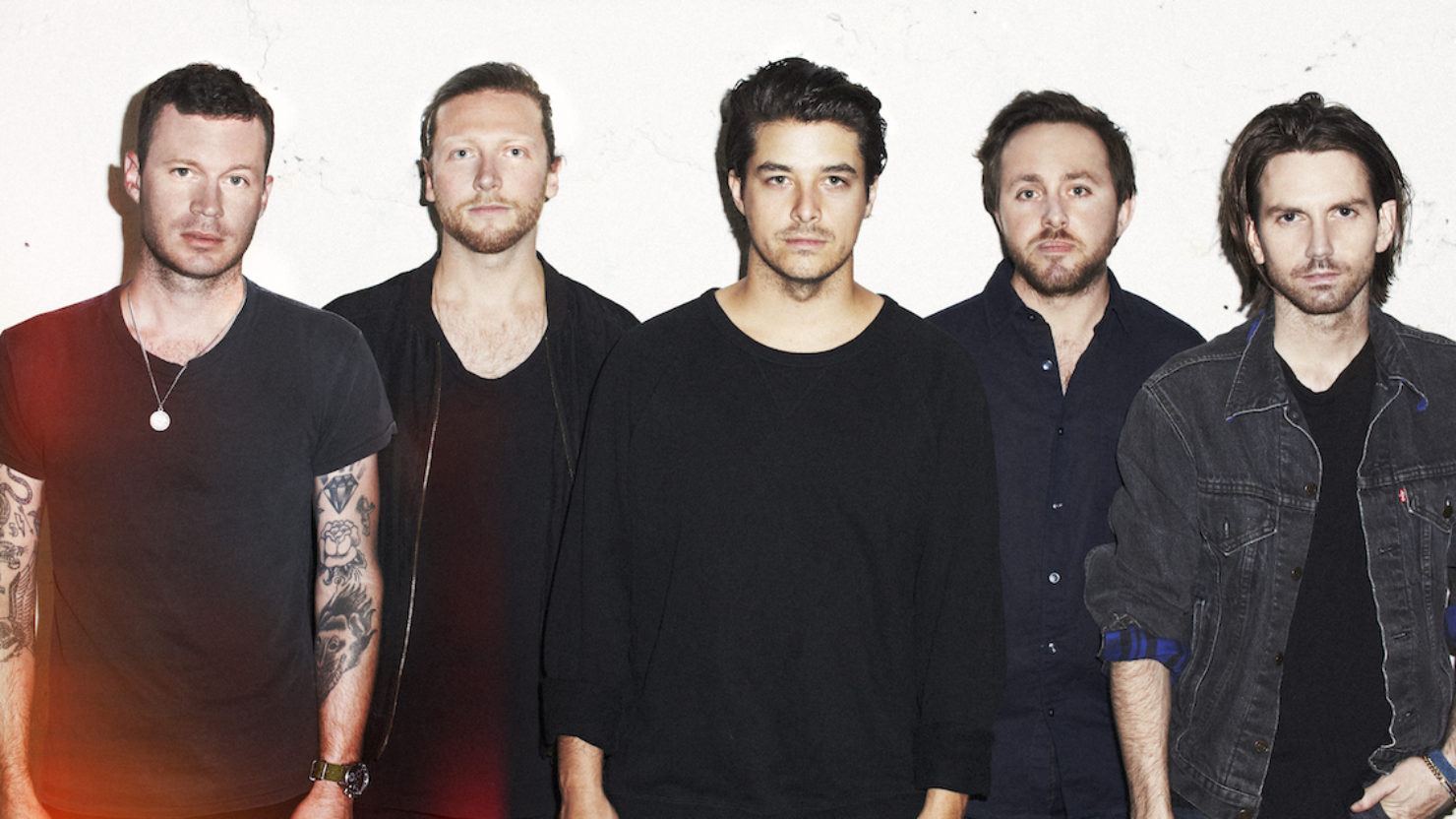
With each new release the members of Delta Spirit felt that they were on the cusp of taking their career to another level. Instead, incremental advancement led to unbearable frustration.
“A decade-plus spent in close proximity can take a toll on any relationship, especially if it’s in the creative sphere,” frontman Matthew Logan Vasquez explained to Billboard.
Despite a small, devoted following and radio hits such as “California” and "From Now On," the band went on recess to their respective hometowns – Austin, Manhattan, Brooklyn, Los Angeles and Montreal-- scattered in order to refresh.
“We hit pause, and thankfully saved our friendship. Our lives needed to grow independently in order to return to a more collaborative place," he said.
Vasquez released and toured behind three solo albums as well as recorded as a member of Middle Brother and Glorietta. Multi-instrumentalist Kelly Winrich launched a career as producer, while bassist Jonathan Jameson, guitarist Will McLaren, and drummer Brandon Young collaborated and toured with Sam Outlaw, Mikky Ekko and Muna.
The quintet finally got together for a jam session in Brooklyn in 2018. Reigniting their musical connection encouraged the longtime bandmates to record what has become its fifth album, What Is There.
For a band trying to resurrect during a time when rock ‘n’ roll artists already struggle to get a foothold in the public's consciousness and marketplace, a global pandemic cutting short its 2020 tour didn't help. But Delta Spirit remains undeterred and released multiple music videos to promote the new album and has performed several livestream sessions to remind fans -- old and new -- the power of the group in a live situation.
Vasquez discusses the reunion, band dynamics, songs off the new album, his return from Norway back to his home just outside of Austin and life as a constantly creating musician.
JPG: I read that you're always writing? Is it sketches of songs or full-blown demos with lyrics like what Pete Townshend does?
MLV: I take things as far as I can get them but, sometimes, I get stuck with...I have this one that's this really sweet mix of early Sigur Ros and Beck’s "Sea Change" record. Been really into those early 2000 atmosphere simple, simple, simple, simple records.
And I have the best fucking verse and chorus hook. One of the best things I've written in a long time and I can't get past the verse and the chorus 'cause that one idea is so great. There's so much production built around it (laughs) and I have to stop.
I make them and then they sit on the shelf. Sometimes, they come back around. There was a song I just finished that was when we were doing the Delta Spirit fourth session and I was in New York and I had my little UAD Apollo mobile thing. I was holed up at Will McLaren's, our guitar player's, apartment and I wrote this really cool melody. Built a Matthew Logan Vasquez choir (laughs) around this acoustic fingerpicking thing and then I didn't write the lyrics to that for months. I post things in big Dropbox folders and listen back to them, and then I go, "Ah, I really like that.”
JPG: Maybe that other thing just wants to have the verse and the chorus repeated and that's all.
MLV: Yeah, maybe. It doesn't matter. The creativity begets creativity even if the idea sits, like what you're saying. It might inspire another thing that makes its way to being a fully made concept. Speaking of Pete Townsend, he's the master of the concept album. He actually completes the idea all the way through to Broadway.
JPG: I love listening to his demo albums.
MLV: I continue to be impressed by them and was never like super-insane about The Who until I saw their performance on “Rock and Roll Circus,” and I was like, “Oh, that's why that didn’t come out. They mopped the floor with everybody." Oh my God! The power of that band, like everybody is a pillar in that band. The amount of passion when they're all in it together. That is the punk aesthetic, where everybody means it as much as the singer.
JPG: We talked several times in the past. Back in 2019, we discussed your last solo album, Light'n Up, and as usual I asked about Delta Spirit.
MLV: Didn’t I cop that we were talking about making a record. Did I tell you about that?
JPG: No, that's what I was going to say. You were kind of evasive. You just said…Let me find the quote. You said, “We haven't broken up. It's just one of those things where everybody's doing their life. It's certainly not lack of trying, not broken up, not over, just very dormant and hopefully not dormant anymore. As soon as we can be, we will reemerge."
MLV: After every one of my little projects, my solo records I was making and the Glorietta project, all of which is really fun, and I needed to exert that or flex in that right to feel the security of being able to know that I could take things to completion. After each one of those projects, I would pop my head out, see where everybody else was at. This is the time.
Fall of 2018 was the first time that we got together and there were six months of planning before, like the first jam. It was awesome. We had five days together and got into this room. We had all been tight for sometime in terms of our friendship blossoming to a new dynamic. We were communicating really well and it was just basically, “Is this cool?” It was like being in a relationship with somebody for a really long time and then not, and then coming back to that but that person got counseling. (laughs) You're not codependent.
JPG: Delta Spirit is the opposite of the entire VH1 “Behind the Music” series because just about every one of those bands featured, it was always the same thing. They toured too much, quickly got back in the studio, never took a break, then hated each other and broke up.
MLV: Yeah. “Whatever happened to those guys? I really did like them.” And then it's like they're in their 60s by the time they're able to work it out. I'm glad it took five years. A lot of it's our age and what we've accomplished and what we haven't accomplished as a band together. The feeling for us from our perspective, from the get-go, it always felt like it was on the cusp of some sort of next level. It continued to do that until it didn’t. Then, you turn outwardly to blame and you turn inwardly to blame. You look at yourself and just go, “Ultimately, we didn't make the right record."
I'm really proud of the record we made, the last one, “Into the Wide,” I think it's really good. But, in terms of the band's health and ego and vibe about how we were carrying on, there was something missing from that moment. Our creative chi was off. We needed to grow and to see if that electricity was still there after a period of time. And, it was.
“Well, where do we start when we're sitting in this room together?" And we just start playing "Strange Vine" and then start playing “California" and a bunch of our older songs and not playing them terribly. There's these communications that happen between people that have been doing something. It's like muscle memory or psychic connection. Those were still there and that was cool, not the same way that they would be after like a week of tour. It was like one of those things where, "If there's a week of tour behind this, it would be incredible again,” and that felt relieving.
JPG: You spoke in the past how it's like dealing with five contrarians.
MLV: Oh, yeah.
JPG: Is it still like that, five contrarians working for the common good because I was thinking about The Who and how the members said tension helped fuel the band, but at the same time I could see how exhausting that could be?
MLV: That's where we were after a decade in a lot of ways. Certain of those communications where you stop talking to each other because on tour you're used to doing that and everything is egalitarian and everything is everybody's equally. Then, when it stops feeling equal, you start building these resentments. You're not talking and everybody's making different friends and having different spheres of influence in their life, falling in love and having different priorities. Those things are healthy in life. We weren't using our words for awhile. Once we learned how to communicate, and for me, I was in a good spiritual spot, so to speak, and we all were coming back. We'd all done our growing up.
Also, Kelly put it best, "Give ourselves some grace of what we have done as a band.” I've had this fucking awesome career and life, just in general. My life is so charmed, to be able to do what I've done without the headache of fame, which is something I don't really want anymore. I just want to have fun with my friends again, and continue to do that. And that's what I've been doing. I got back from doing the solo stuff but there is something really, really special about doing that with people that you've been doing it for exactly half of your life. That's my relationship with Kelly Winrich and Jon [Jameson], Brandon [Young] and Will [McLaren] is not that far behind that.
JPG: You addressed one question because I was going to ask what you learned as a solo artist that you brought back to the band. With the separation then the reunion, what have you found to be the greatest strengths of Delta Spirit for you or in general?
MLV: The band’s love for each other. There’s something unique about a group of people with a common goal that is never accomplished by a solo project, the type of collaboration that's involved even if somebody is doing a lot of the heavy lifting and the creative point. We do that but then the other guys come around in the same way and the way that they carry themselves onstage, like talking about The Who, and how it's the way Jon plays bass and the way that Brandon plays drums and Will plays guitar and Kelly…the amount that they mean it when they play it and ownership personally that they put into the music is an experience from stage that is just flat out different.
We only got to play twice [pre-pandemic in 2020] (laughs) but those two experiences were fucking incredible. Playing San Francisco, we did like the Great American [Music Hall] the last night you're allowed to play in California. It was so much fun but it's also like, “Okay, well, we're going to have to wait.” It was relieving that people were that excited still, that we could hang this on the shelf as long as we needed to and it doesn't feel so stressful that I know that that's what I have to look forward to when we're allowed to go do this again.
JPG: I guess it's better in some slight way to know before you go onstage that you’re getting shutdown tomorrow rather than waking up the next day and, "Guess what? We got shut down.” At least you can let it all out.
MLV: The latter actually is what happened. We were on the way down from San Francisco when everything canceled and then we were all flying to our respective homes within hours. We were all like, “This show isn't happening. This is not going to happen.”
JPG: It’s so crazy.
MLV: It’s all so insane. Here in Austin, Texas there's some motivated people and it is the “Live Music Capital of the World." Hopefully, the drive-in thing is gonna help subsidize a little bit of that need for live shows.
JPG: Could you elaborate on the album title and title track, “What Is There?" Again, back to The Who, like that band’s album, "Who Are You," it's a question and a declaration.
MLV: Exactly. That's the idea. The song is obviously this love letter to the band. It's actually an acrostic (the first letter, syllable or word of each line spells out a word or message) that spells out the name of each member of the band that the verse is about. So, Brandon, Kelly, Will and Jonathan. It was written at the very beginning of the idea that we were going to get back together and just feeling all of the sentimental feelings about them and how much we've been through, how much we love each other and finding the meaning in this odyssey we’ve been on. It’s been incredible.
What's the value of it? Again, capturing some expectation or enjoying the whole ride, which was so incredible and has been and still is; our life's journey and that we get to do that together is pretty amazing.
JPG: Delta Spirit has put out a consistent track record of strong music. Earlier you spoke about the frustrations of getting to another level and how that just hasn't happened…yet.
MLV: (laughs) Yeah. Doing this and again, there are those feelings of if any band would ever succeed or project that I've ever been involved with, it would be this one.
JPG: But it's also a difficult time being a rock band right now. I've read Delta Spirit referred to as Americana and I don't think of the band's music in that way but if it helps you out in some way, sure…
MLV: Not at any point I've ever felt that that was the case out of our band. What people understand as rock and roll now on the radio are bands that existed 15 years ago and it's basically classic rock radio now or extremely heavy, which is also cool. White Zombie and Nirvana were my two favorite bands when I was a kid (laughs) but that's not our thing.
JPG: If someone asked me what is Delta Spirit like, I’d use the old CMJ magazine approach it used for album reviews –if you like this band then you may like this artist and this other artist. So, for you it would be if you like Tom Petty and the Heartbreakers then you'd probably be into Delta Spirit. I see the band more as a descendant of that.
MLV: We definitely are. The center of our Venn diagram is very much the song. There's nothing new here. There came our Four Horsemen – John, Paul, George and Ringo -- and (laughs) we prayed to them. Them and Dylan wrote all the good songs. What was left over Tom Petty wrote and then started a buddy band with two of them. (laughs) And then got Jeff Lynne, who also might as well be a Beatle, to produce it.
That's our archetype, basically all the forms of songwriting and the craft of writing a song that has the core that grows in meaning as you listen to the lyrics of the verse. It's something that's got a little bit more than a Buddy Holly lyric…though I like Buddy Holly.
Buddy, he is the man. He is the one. But then Roy [Orbison] came along and he just wrote better lyrics, him and Chuck Berry. Those two, are really like the poets of the form on that stuff. I love Buddy. Buddy was like, “This is what a band should be.”
JPG: Because you can't tour you’ve done livestream performances and there are all these videos that Michael Parks Randa directed. It looks like they're all taken from the same footage.
MLV: We had 30 different filmmakers from around the country participate in making the "How Bout It” music video. He was facetiming the whole time with the cinematographer in getting the shots and doing all that stuff, which was so cool. What he put together is nothing short of a miracle. We had all this extra footage and so we could expand on that story. That's a nice way to wrap it altogether in the pre-album promo.
JPG: It's obviously a good tool to do that while you can, and he had all that footage. So, you got better bang for your buck with four videos instead of one.
MLV: He had been doing Matthew Logan Vasquez videos and then he did Glorietta. He's my favorite. After he made that video, he started working with that production house that did “This Is America" with Childish Gambino. They called him after he had finished that and they're like, “Hey, you're hired.” And we were really happy that that happened. Making band music videos is such a thankless task and any time you can get somebody to create art out of it is awesome.
JPG: You didn't have to do much anyway, just sit on a chair in your backyard and play with your son.
MLV: Yeah. That's all I did. We’ve definitely been on that since the “California" video, which is also a really great, well-done music video that we had nothing to do with. Finding a talented director and have them shoot it because it's fine that we performed in the music video but us doing that is such an afterthought to capturing real humans. So much of our music and aesthetics of a band are really not so much about us but like that Pink Floyd similarity of we're all the same person. All of us are just these cogs in the machine working along.





