

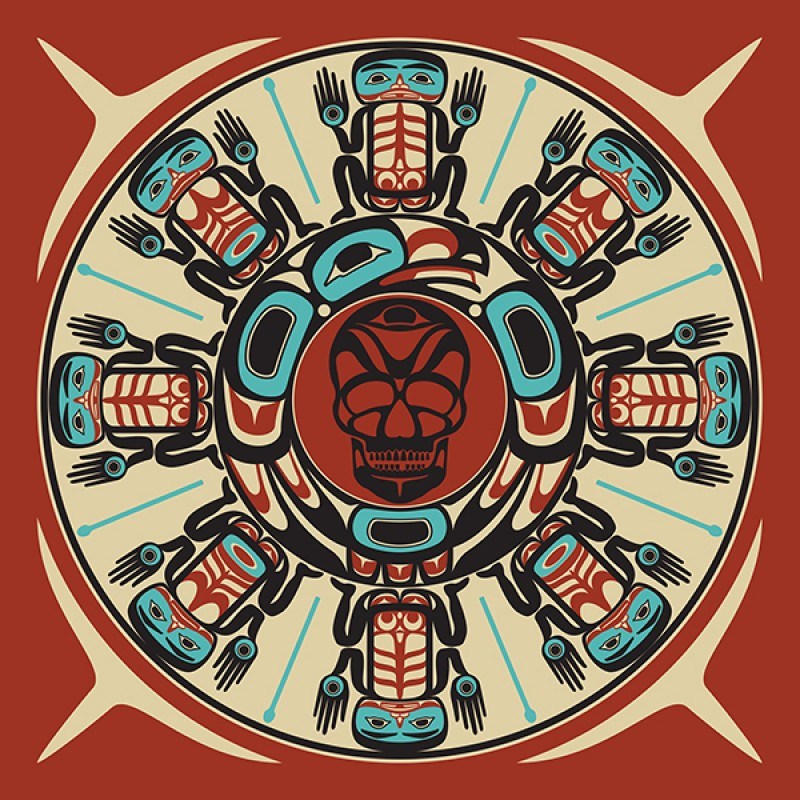
Deadheads can usually look forward to one or more major box sets to be released annually from the legendary Grateful Dead Vault. This year’s entry, the 19-disc Pacific Northwest ’73-’74: The Complete Recordings, features six previously unreleased concerts played in that region. The limited edition release includes Vancouver, B.C., Canada (6/22/73 and 5/17/74), Portland, Oregon (6/24/73 and 5/19/74) and Seattle, Washington (6/26/73 and 5/21/74). Each was mastered in HDCD from the original master tapes with artwork and packaging design that reflects the First Nations people located in that area. There’s also a 3 CD compilation of the shows, Pacific Northwest ’73-’74: Believe It If You Need It, while the complete Portland Memorial Coliseum show, 5/19/74, comes out as a six-LP limited run on 180-gram vinyl. Besides live staples at that time of "Jack Straw," "Sugaree" and "Brown-Eyed Women," the band previewed numbers that would appear four months later on “Wake of the Flood”("Eyes Of The World," "Row Jimmy," "Here Comes Sunshine," "Stella Blue," and "Mississippi Half-Step Uptown Toodeloo"). Grateful Dead archivist and producer David Lemieux discussed this particular era of the band as well as what went into the creation of the box set and other matters Dead-related. “It’s been a very busy summer,” he said. “It’s been a really busy time the last couple of years, which is great. As I’ve mentioned before one of my favorite things about working with the Dead and with Rhino is the variety of stuff that we do. At any given time we can be doing a Dave’s Picks or a box set or a Record Store Day thing, whether it’s merchandise, whatever it is, there is always something different.” He added, “I get asked quite a bit, “What is a typical day look like for you?” and I honestly don’t have an answer for it because I’ve never had two days the same. No routine. It’s just constantly working on different projects, both long-term things like the box set, which can take up to a year to get rolling and make happen to something that’s more of an immediate and pressing concern like a movie wants to license some Grateful Dead music so we have to check out the script. As usual, the excitement by Lemieux about the latest release is palpable. Listening to Pacific Northwest, it’s warranted. During his time working with the Dead and the team at Rhino Records, he’s been the consummate professional and meticulous in the details of each project yet remains a ‘Head looking for magic in the connection of musical notes and finding unending joy when he hears it. “I’m doing well, very busy, and enjoying it as much as ever after almost 20 years. It just keeps getting to be more and more of an enjoyable job.” JPG: Okay David, knowing you long enough I think this whole Pacific Northwest ’73-’74: The Complete Recordings box set is just an excuse for you to release the longest "Playing in the Band" the Grateful Dead ever did (from 5/21/74, Hec Edmundson Pavilion, University Of Washington, Seattle, Washington). DL: Well, that’s a byproduct of such a great release. I totally get what you say because, as you and your readers probably know, I’m a big fan of “Playing in the Band,” but that is one of those happy bonuses. I go through my mind, sometimes, of what box sets we’ve released in the last 15 years, starting with the Fillmore West box set from 1969. Then, we had the two Winterland box sets, the two Spring ’90 box sets, Hampton, Virginia and on and on. I could keep going for another five, six, seven box sets. Every one that I’ve worked on, every one that I’ve proposed or pitched or produced, I’m incredibly familiar with it and incredibly happy with how it turns out. It’s something that I do go back and listen to all the time – Europe ’72 , 30 Trips Around the Sun, on and on – but this one, there’s something very special about it. I think it’s because the music is exceptional and from an era that’s exceptional and it’s a very unique era. When you add to that all of the other things that make something very special in the Grateful Dead world – the sound quality of the music then you add the artwork, which we can get to in a bit, and the actual package design and we get Nicholas G. Meriwether’s liner notes and Richie Pechner’s photos and the archival items that were located. Add all those together and you end up with…this is what we always aim for when I go into a project. I want to make sure that every aspect of it is as good as it can be. Is this the very best package design we can produce for this specific release? In this case it’s a bentwood box, which is an indigenous Canadian First Nations as part of the potlatch ceremony. The music quality? Without a doubt. The sound quality? Without a doubt. Jeffrey Norman [who mastered in HDCD from the original master tapes] spent months on this project. The artwork of Roy Henry Vickers…could anything be more appropriate to define this era, this region? And the answer is “No. It’s absolutely perfect.” It was one of these box sets where everything came together in a perfect symbiosis of…perfection. It’s the kind of thing where I have, and I’m sure you do and everybody who’s into these Dead releases, has an area in their home, whether it’s a shelf or closet or wherever it is, where they have these easily accessible. They’re not in a box underneath the bed. All of that is in my studio space or in my office. I’ve got a studio space for primary loud listening and recording my radio show and then I’ve got an office where if I have to do scanning or printing. That’s where I keep all of my Grateful Dead releases, and it’s well-organized and easily accessible. This box set, I have a place in my home that is not in one of those two places, it’s in my living room area where I don’t have anything Grateful Dead on display. It’s just a regular living room but I’ve got a place where this box set will live. It’s right in the middle of this table that I have. It’s always been missing something. I don’t have any nice sculptures for it or anything like that. This is going there. Separate from the Grateful Dead, it is a beautiful piece of art. The fact that inside that box is some of the greatest Grateful Dead music ever performed makes it so incredibly special. And, on top of it, we get a 47-minute version of “Playing in the Band,” among many other great things. It is really some wonderful music. When the Dead took those chances and played a 47-minute “Playing in the Band” it indicates they were in a pretty “on” space. They wouldn’t have attempted something like that if they weren’t feeling it. They would have done a more standard thing, a more straightforward jam. And after the incredible jam that came out of “Truckin’” two nights before in Portland (5/19/74 Memorial Coliseum) I think they were feeling this momentum. They realized that 1974 -- kind of the culmination of all the excellence of ’73 -- then add to that the Wall of Sound and the freshness of it, and they were doing shorter tours. The Wall of Sound ultimately wore them out but in the beginning of that era…remember this is the very first Wall of Sound tour. The first show was in March and it was a one-off at the Cow Palace in San Francisco. Then, this tour only started on May 12…14, 17, 19, 21…the “Playing in the Band” is only the fifth show of the touring Wall of Sound. It was still fresh and exciting enough that it had not yet burned them out. JPG: I was watching your video discussing Pacific Northwest and your use of the word “personality” stuck out because it’s appropriate for this box set as well as the previous ones to describe the music, the band and the approach. DL: Personality is such an important word for Grateful Dead music. Since I’ve become a more critical listener in the last 20 years since I started working with the Dead, I can really envision every show as having its own personality. I can hear a show that’s, let’s say, ferocious and it is driving, and it just feels like a Saturday night show. Then, I’ll check what day of the week that show took place and, sure enough, it was a Saturday night and it was in New York City or San Francisco. Then, I’ll listen to a show, and I’m using days of the week as a minor example but it’s not always this way, and it’s much mellower but equally beautiful vibe that is a Sunday show. Last night, I went to a show in a 500 or 600 person club. It was a Friday night. In Canada school goes back right after Labor Day. The energy felt like a Friday night show. It was packed. It was hot. It was sweaty. The band was on fire. If this had been a Tuesday night in the middle of the school semester, it’s a university city, it would not have had that same energy. So, I do very much see every show having a distinct personality in it. A show that opens up with an introspective, beautiful “Cold Rain & Snow” might be quite different than a show that opens with a really rockin’ “Casey Jones.” I’m not going to say they tailor their setlist to what they were feeling but would they have played a 47-minute “Playing in the Band” had they not been feeling they could pull it off, meaning they were in a space that they were extremely confident. I really do feel that every show has its own personality and every box set does, too. The interesting thing about this box set, aside from the 30 Trips Around the Sun, which was obviously 30 years of Dead, it’s the first time we’ve ever done anything that wasn’t a tour or a run of shows from the same city or in the case of “Spring ‘90” half tour and then half a tour. It’s the first time we spent two years where we did, in a way, a geographical consideration -- Vancouver, Portland and Seattle – but we wouldn’t have done it this way if the music hadn’t warranted it. If the first tour had been Vancouver, Portland, Seattle and then the next year they played a little differently and it was Victoria B.C., Takoma and Eugene, we probably still would have done the same box set if the music quality had matched what we have in here. It just so happened that it was three shows in the same three cities in almost the same venues with the exception of Seattle. It just happened that these shows were extremely complementary to one another, and that’s something that we always take into consideration. When we choose a run of shows for a box set, the first thing, obviously, are all the shows that are in this box set great or are we just choosing them because it makes a complete run? Well, we wouldn’t do that if the music wasn’t great. And, do they complement one another? Are the setlists exactly the same? In this case they’re clearly not. Going back to “personality,” I can tell you the main theme of each of the six shows in here that make them each stand out from one another, and they’re all just very very different. So, I do feel that the box set clearly has its big personality and each of the shows within are stand alone units; each of them on their own can be these incredible releases but you put them altogether it tells the story of the Dead’s growth between ’73 and ’74 but at the same time maintaining a lot of the same elements. Then, you add the change in the sound system and how much that changed the sound of the band. It’s really a remarkable time and a remarkable box set in terms of the story it tells, and that’s something that we always like to see. I think it’s fascinating. JPG: You spoke about that May 19, 1974 Portland show and being on the list of releases due in part to that “Truckin’”>“Jam”>“Not Fade Away”>“Going Down the Road” section. How did it grow from that being a possible Dave’s Picks or some other separate release to eventually becoming part of a six show box set? DL: There are some shows in the Vault that are certainly warranted to be released on their own as a Dave’s Picks or a Dick’s Picks previous to that but then there are some shows that warrant that we don’t release because in the back of our minds we’re thinking we can do something bigger with this; not to say that there’s anything small about the Dave’s Picks series. We print, I think, 18,000 of those. People seem to dig them…but there are times when we say, “Well, let’s just hold on to this one.” For instance, Cornell. Granted, we hadn’t had Cornell for many years but when we did reacquire the Cornell tapes a few years ago there was never any consideration to put that out as a Dave’s Picks. It had never even been considered to be separated from the other three shows that became that box set, while, at the same time, also releasing that Cornell show [separately]. The way it worked out with Portland. There were two shows in this box that have long been considered possible stand alone releases – Vancouver ’73, which we didn’t have a complete recording of it. We were missing an entire reel plus the material we did have had some pretty chopped up bits in it. If you’ve been listening to the Vancouver ’73 show since your tape trading days, you were probably listening to something that was patched with a few other audience sources and missing bits. When we reacquired all these tapes, one of the shows that came back was an alternate recording of the Vancouver show in its complete form. Likewise, the Portland ’73 show – a show that we always had in pretty good quality – we got a much better recording. What happened was we put out the two “Spring 1990” boxes. Then, last year we did two, I don’t want to say smaller box sets, but we did the Cornell (“Get Shown the Light”) box, which came in at 11 CDs. We did a much smaller box with the six CD RFK 1989 box. For any other band that’s a career retrospective but for the Dead, because of the quality and quantity of material that’s in the Vault, that’s kind of a smaller thing. Towards the end of 2017, as we started having meetings, it’s usually around August or September, about next year’s releases, we wanted to do something that was a little bigger but not huge. We didn’t want a 30 to 40 CD box set. They’re very expensive for people to buy. They’re expensive to produce. They take an extremely long time. We can’t do one of those every year…maybe we could but we can’t do a Europe ‘72 every year or 30 Trips Around the Sun. So, we thought we’d do something in the 15 to 20 CD range. That’s kind of where it starts. The next thing that I do is I look through what are the last few box sets that we have released. We’ve got an ’89, a ’77. We did July 1978 before that. We look at what haven’t we done in awhile. We did the Spring ’90 sets before that. So, we kinda hit the Brent [Mydland] era quite a bit. We’ve hit ’77, ’78, the classic recordings that sounds so good. One era that we haven’t done anything big but we have done them as Dave’s Picks is from ’73 and ’74. From those two years, which are one and the same in terms of era and yet they’re very different, which is why I use “complement.” They complement each other very well. I started thinking about the Pacific Northwest runs, and I always had this feeling that if we do a Pacific Northwest run, which is the one we should do first, knowing full well that we would do both of those runs someday. I wasn’t going to say which is a better run because I don’t think either is better. They’re both exceptional but different. I’d go through a long list of pros and cons while at the same time listening to those ’73 shows relentlessly. Likewise, I’d do the same thing with 1974. Then, it just hit me to put them altogether and make the definitive Pacific Northwest ’73, ’74 box set. To add to that, in the back of my mind, my best friend is an author who has been writing books with Roy Henry Vickers for almost 10 years now. They’ve written many extremely successful, well-received and critically-acclaimed books. Some of them are children’s books. They’re all First Nations stories, Indigenous Canadian stories, with Roy who is Canada’s preeminent First Nations artist. It’s Roy’s artwork and traditional stories generally. So, I always thought, going way back when my friend started working with Roy, that if we ever released anything from the Pacific Northwest we would ask Roy to do the artwork for it. His artwork is so definable as the Pacific Northwest in terms of every aspect of it, and Roy is such a talented artist. I just felt he’d really be able to capture the Grateful Dead sensibility with his own sensibility and create this ultimate Grateful Dead piece of art that is completely regionally defined but is also incredibly authentic. You really couldn’t find somebody who was more in tune with this region. He knows British Columbia. He knows this area. He knows the First Nations. He is a member of First Nations. As soon as we set in stone in September or October of last year that this was going to be the box; all the folks at Rhino, as I pitched it, got really excited about it. Once we decide what we’re going to do, the next question is the logistics of how are we going to package this? What is the art going to be like? We had a meeting and I said, “I know this artist up here and I think he’d be perfect. I don’t know if he’ll be interested but I have a good feeling he will be.” My best friend, Lucky [Budd], who’s the co-author on these books, set up a meeting, I think, in December. We brought along a few of the Grateful Dead’s box sets of the last four or five years. We let him know that we don’t have a format. It’s always completely wide open but this is the quality of work. The Dead have been nominated for three of the last five Grammys in Best Package Design for our box sets. The Dead have a recent legacy on the box sets on the work Rhino’s been doing; a couple people in particular at Rhino who have been doing an exceptional job, overseen by Doran Tyson and her whole team of artists and package designers and layout people. They just do an exceptional job as proven by the Grammy nominations. So, we had the meeting with Roy and he just lit up. His eyes, his smile, he was so into this. He started throwing out ideas immediately. They were so inspiring, and he was so inspired by the Dead’s imagery but also the regional imagery. I introduced him to the folks at Rhino. Everybody loved Roy and his artwork and loved working with him. He is a dream to work with. He’s a collaborator is the best way to describe it but at the same time he directed a lot of the aspects of this in terms of how this box set would come about. You asked about how the Portland ’74 or Vancouver ’73 became this six-show box, that’s kind of how our box sets work. There’s an overall concept. Nothing is done arbitrarily. Everything is well thought out. When we have these visions – in the case of the six shows and Roy’s artwork -- we generally pull them off. JPG: Now, when you go to Rhino for meetings are you pitching one specific thing and they have enough trust in you that if you took the time to listen and put the project’s concept together they’re on board or do you have a back up idea or two ready in case the original one fails to garner any enthusiasm? DL: That’s a good question. Generally, I always do have backups, which is, for me, tough sometimes to pull the trigger on a project because it means that now we’ve got to wait another year for that other one to come out. It’s the same thing with the Dave’s Picks. By the time I go to Rhino with these pitches I have put an incredible amount of work into them. Everything is extremely, methodically planned out, all the way down to if we did an 80 CD box set, would we do another? Absolutely not. So, I know not to do that. If we did a ’77 last year and a ’78 the year before would we do another ’77, ’78 this year? No. I know that there are certain things that they look for too, which is variety of music and variety of styles of box sets. What could be more different than a six-CD RFK ‘89 box set and a 19 CD set of 1973/1974; two incredibly different eras of Grateful Dead music, two incredibly different box set styles, sound quality, where the RFK ’89 was multi-tracked, this is from the two-track tapes? By the time I’m pitching, I’m extremely confident this is the right time for that release. That’s an important thing to note that everything we do, it’s the right thing for that time. That’s why I say, would we follow up an 80 CD box set that was $600 or $700 with another one the next year? Definitely not. We would go smaller. We’d go with something that people can manage, both in terms of the amount of listening it would take and the cost. Also, for us a box set like that could take us 12 to 14 months. Do we have 12 to 14 months to put into that at the cost of all other things? And the answer is probably not. If for some reason it’s rejected. And if it is, they generally have an extremely good reason for rejecting it, I will have a very good back up. I always thought RFK ’89 was a really good pair of shows that should come out but I didn’t know how to do that. Is it a bigger box? Is it a smaller one? Then, as we were finishing production on the Cornell box a year-and-a-half ago in early 2017 and that came out around the 40th anniversary, that’s when Rhino decided that later in the year they wanted to do a smaller box, it was an easy thing. I always had those RFK shows in mind. From that became the Fathom Events screening, when we did in theaters last year was one of the RFK shows. Everything is incredibly planned out. This is what I do. I spend a lot of time thinking about what are the next couple of Dave’s Picks going to be but I also spend a lot of time on other cool projects. Even Record Store Day, when we always do something neat on Record Store Day in April and we also do something cool for Record Store Day in November on Black Friday, that’s not necessarily going to be a complete show. It can sometimes be a re-issue like we did with the Fillmore West 2/27/69 on vinyl but, generally, we try to find some cool unreleased material. So, we’re just putting in a lot of work on Record Store Day in April and we’ve got a terrific idea that totally falls out of the scope of a box set for a Dave’s Picks but it’s incredibly cool music. I pitched that to Rhino recently and they got so excited about it, as did I. It’s fun. I spend a lot of time before I get on that phone and pitch an idea. When we do the Dave’s Picks we need to know quite a bit ahead of time because of artwork and production time. I have a call every week with Rhino about scheduling and what we’re working on. They always have a deadline date of when a show needs to be picked. I go right up until that last day because I spend every waking minute either doing something related to that release we’re working on or another release. By the time it gets to the pitch level, there’s nothing arbitrary left. It’s completely methodically planned out. If Rhino rejects something, I almost put that on myself for not listening to the parameters. Last summer is when the parameters came out for Pacific Northwest, that it would be a 15 to 20 box. “We’re not going to do an 80 CD box set and we’re not going to an eight.” If I hadn’t been listening, and I clearly pay attention to what we’ve released in the last five or six years, I know it’s time to do a ’73, ’74 arrangement of the Dead. So, if I pitch something that’s identical to the last release but different shows, I’m not really doing my job in terms of collaborating with Rhino and listening to them. JPG: Listening to this box set reminds me of getting shows from ’73 during my trading days and thinking how people talked so much about ’72, well, what about ’73? I know you’ve released other shows from that year but it’s nice to see it highlighted in a major way through this box set. DL: I totally agree about ’73. My first contract with the Dead was in early 1999, and it was a three-month contract. At the very end of it Dick [Latvala] came up to me and said, “You’ve been here three months and you never asked me for anything. Is there a particular show you want?” He was probably expecting me to choose a classic show that other people have been talking about but there’s no good tape of it. This is when a lot of material still did not circulate in any kind of quality, certainly not good quality, maybe audience tapes. I’ll never forget this. I was coming back to California five weeks later and I told Dick that and I gave him a handwritten piece of yellow legal pad with a list of 10 shows from 1973 that did not circulate, primarily September through November. I didn’t think anything would come of it because it’s the Vault and Dick’s a busy guy…I thought maybe if he made me one set of those 10 shows I would be in heaven. So, five weeks later I’m in California working for Phil [Lesh] at the Warfield Theatre. He was doing the Phil & Friends shows with, I think, Jorma, maybe Prairie Prince and Steve Kimock, really good band. I was in the recording truck outside the Warfield and Dick came up to me and said, “That list of tapes you gave me…No worries” and he hands me two boxes of DATs, 20 DAT tapes, all 10 shows, both sets of all of them. These are shows that didn’t circulate. He then pulls his glasses down, looks me in the eye and said, “Don’t let these out.” “Dick, I wouldn’t do that.” Then, he looks at me deeper in the eye, “But if you do, don’t tell them where you got them,” and he gives me a wink. Even then, in 1999 I really appreciated 1973. To get all these great shows it really opened my eyes. Back then, I had all the classic ones that we already knew like Kezar Stadium, 2/15 and 2/9/73, RFK, of course, some of the Winterland. So there wasn’t a lot. Right around then was when Dick’s Picks 14 came out which was the two shows from Boston (11/30/73 and 12/2/73), which straddles in the middle of our box set here, halfway between the Vancouver ’73 and Vancouver ’74. So, I’ve been a big fan of this is my point for a long time. I really love this era. I listen to Grateful Dead music from all eras, even when I’m working on stuff. We just released the ’83 Boise, Idaho (“Dave’s Picks Volume 27”) and I’ll be listening to a ton of ’83 for a few months, and I’ll listen to some early ‘90s and some late ‘60s. I can’t really think of anything in particular that at this moment that I really want to hear because I want to hear so much. I can’t decide between a ’69 and a ’70 and a ’77 and an’83, ’89 and a ’92. When I can’t decide what to listen to and I’ve got a couple hours to listen to a show, I generally go to this era, ’73, ’74. I find very, very pure listening out of it. The Dead really could do no wrong in this era. It’s a really fun time for me to hear it. JPG: That brings me back to something I wanted to bring up earlier that made an impression on me in your video introducing Pacific Northwest. You used the word “precision” as in the precision in the jams, particularly that “Truckin’”> “Jam”>“Not Fade Away,” and I’ll even include “Goin’ Down The Road Feeling Bad” when it went to that transition as well yet, at the same time, there’s also the precision in the playing of a lot of shorter songs, too, like “Beat It On Down the Line,” which clocks in at less than four minutes. I don’t know if each version did that but I made a note of one that did. It’s interesting to hear it played in such a compact manner and to hear the changes of shorter numbers during the first set to the expansiveness of the second. DL: Exactly. Like you say, you’ve got these precision songs like “Beat On the Line.” It’s incredibly tight and they nail the changes perfectly. It’s like a song like “Big River.” All these little songs are played incredibly well and yet they could still then pull off a jam like…that “Truckin’”>“Jam” is…I mean, I can’t think of…in music, period…I’m left speechless by that “Truckin’”> “Jam” from Portland because it’s that unbelievable and the kind of stuff they’re doing during it. Likewise, the long 47 minute “Playing in the Band” from Seattle ’74, they hit virtually every theme they could possibly hit in their entirety. So, you might have a “Playing in the Band” from ’74 that has this incredible X Jam or this incredible Y Jam. The Seattle one hits all of those jams that they might have hit through at ’74 and they don’t just tease at them. It’s not like, “Let’s try 30 seconds of this…” They do a full blown X Jam and then they move on and they kind of go spacey for a bit and they come back and do another completely 1974-defined jam and they do it in its entirety. I’ve known this “Playing in the Band” for many years. As we were working on the box, I was listening to it many many times. I really couldn’t believe how good it was because it gets a rap, “Well, it’s long, but is it good?” The answer is, “Yeah, it is good. It really is that good.” JPG: It was funny that in your video announcing the box set you defended it as the longest “uninterrupted” Grateful Dead song because you know someone’s going to hassle you about the version of “Dark Star” from 5/11/72. DL: Yeah, but there was a drum break. It was where the other guys got to take a three or four-minute break, and yes, I do see it that way. And yes, you can see it as a standalone “Dark Star” that was the same length, not longer, but the same length but this is uninterrupted, where all five guys and Donna singing, too, but all five guys were working their butts off for 47 minutes. It’s interesting because it’s a show where they didn’t do a “Truckin’>“Jam”> “Other One.” They didn’t do “Dark Star.” They didn’t do any massive jam that would be the typical jam of the time. You think of 1974, they didn’t play “Dark Star” very often, so their jams were a little bit different then. “Weather Report Suite” was often used as a launching pad for a jam. JPG: Also, in ’73 they only did “Looks Like Rain” and then in ’74 they did the full “Weather Report Suite.” DL: They didn’t start playing “Weather Report Suite” until September of ‘73. It was the rare song in the Grateful Dead repertoire that was recorded in the studio before they ever performed it live. It’s the time when “Loose Lucy” went from being the slower version to the faster version, the three versions of “Money Money” they played at the three shows from ’74 here, and then they dropped it. So, they were really, I think, having a bit of fun with the setlist. “Scarlet Begonias” is a brand new song in ’74 and it shows. It doesn’t have the expansive jam. Later in 1974, “Scarlet Begonias” would stretch on to nine or 10 minutes with a really nice jam. These are five or six minutes. The “China”>“Rider”s from the ’73 shows are terrific. I think the ones in the ’74 shows, particularly Portland, although the Vancouver one is pretty darn special...the Portland ’74 “China”>“Rider” is, and I think in a lot of people’s opinion and, certainly, I would tend to agree, one of the top versions they ever played, which is why we did a compilation of this box set and the “China”>“Rider” from Portland opens the compilation. It’s that good. JPG: What’s also interesting about the setlists is that there may be a number of the same songs played but it’s not like a codified setlist. Here, you see “Scarlet Begonias” followed by “Beat It On Down the Line” and “Tennessee Jed” or you see “China”>“Rider” followed by “Promised Land” as a set two opener. You don’t know what to expect. DL: Exactly. You can have an “Eyes of the World”>“Whart Rat.” That is just another great piece of music from the Portland ’74. They play with the setlist a little bit. There was still a format, for sure, but “Playing in the Band” would have been a first set closer in this era but at the Seattle show they decided to make it the centerpiece of the second set rather than a “Truckin’”>“Other One” or “Truckin’>“Jam” or “Dark Star.” The jam of Seattle ’74 was “Playing in the Band,” which they’d done a couple of times in 1972; these 30-minute “Playing in the Band”s that were exceptional but they’d never done anything like this where they jammed consistently and constantly for three-quarters of an hour on the same song. I can only imagine that the people at the show and who were “Playing in the Band” fans from either Skull & Roses or from Bobby’s Ace album…the Ace one is interesting because it does have a nice little jam two-minutes on it that would show where that song would go later in ’72 and onward in ’73 and ’74. But I can only imagine in Seattle and seeing them play the beginning of the song, “Great! One of my favorite songs.” Then, it just goes on and on and it comes back to it. “Holy cow! They’re still on “Playing in the Band!” Fortunate people must have attended this show. I don’t envy the shows I missed very often but I do envy this one. There are some great shows from this era that I wish I had been at. JPG: After looking over the setlists, one of the only consistent things as far as placement is that “Johnny B. Goode” was the encore at three shows…I just noticed that after that lengthy “Playing” it’s “U.S. Blues” which is different... DL: …Exactly. Later on, it would almost exclusively be an encore. JPG: The tapes that were used for these shows, are they Betty Boards? DL: They are something else. The bulk of the six shows were recorded by Kidd Candelario and two of them by Rex Jackson. JPG: Now, on some of the songs I can hear that there are vocal mic problems. Was there consideration or the technology to boost the vocals in those situations or did you want to leaving it historically accurate to when it was performed and recorded? DL: It’s two-track. So, what we have is what we have. There’s a couple songs from Portland ’74 where the vocal mics didn’t work. There’s no way to fix that. There’s a way to cheat it, and you can use a version of the verses from another show. In the case when we have a complete show, even if there’s a minor technical flaw or anomaly we don’t resort to fixing it in those ways. Now, if there’s a missing piece of music, I don’t think we did it on this box set but there’s been times where we’ve used small pieces of music from another show to fix something on a release. When I say that I mean 12 or 15 seconds of an intro to a song but even that’s extremely rare and I can’t even think of any examples right now. In this case there’s certainly nothing we could do to the tapes. Those are the kind of decisions you make. Let’s say an entire show was missing its vocals. No matter how great the show was played the vocals did not make it to tape. That would be a pretty easy consideration to simply not release that show. Often times in this era, whether it was Kidd recording or Rex, when a crew member who had many many other jobs to do – keeping an eye on the piano or Jerry’s guitar, the drums, whatever – recording was a secondary task. So, when the show opened and you’ve got to fix all these things onstage that need to be fixed immediately, the secondary thing you’re going to do is keep an eye on the tape. That’s why so many tapes from this era – the first half of the first song will have serious sound problems where Weir’s guitar will come and go until it gets dialed in, then all of a sudden it’ll only be drums and then one-by-one the instruments come in. That’s fine. When you have 166 songs [on Pacific Northwest] and when 10 or 12 of those have in the big picture minor sonic anomalies. None of them are missing. None of them are egregious. When the music that is there is that good, honestly, I don’t even notice that stuff anymore. I’ll hear it. I’ll notice it because I’m making very detailed notes but in terms of my enjoyment of the overall show and a listening experience on the box set itself it doesn’t faze us at all. We all recognize that these tapes are 44, 45 years old and this is the way that a lot of two-track recordings are. When we have a complete show that’s perfect start to finish – let’s say a Betty Board from 1977 or 1978 – that’s something that’s a nice gift to work with. We have something that is flawlessly recorded throughout but it’s becoming more and more rare as we’re 200 and some shows into releases out of the Vault. We work with what we have and generally that’s pretty darn spectacular recordings. If there’s minor sonic anomalies, Jeffrey does everything he can to fix them. If there’s low bass, Jeffrey can bring some of the bass up but it’s two-track so you’re not remixing, you’re enhancing through EQ. When something is flat out missing then we can’t do anything about it. If the problems are somewhere it’s usually on the first song of the show. Not always, as we see in the case of Portland. It’s a phrase I don’t like but it falls into “It is what it is.” When you have so much other great music you really can’t do much about it. JPG: I recall all the stories about the Vault being digitized from the original tapes for safety sake but then I notice for this release, “Masters transferred and restored by Plangent Processes.” So, what do they do? Are they dealing with the original tapes? DL: They are absolutely dealing with the tapes. Everything we do, even if something had been hi-res digitized 10 years ago, we always go back to the master tape. Always. When we do a production, and a lot of our tapes, particularly of the studio albums and a lot of the shows, have had high resolution digital copies made. Those are safeties. Those are backups so that in 10 years we produce a release from Vancouver ’73. We go back to the master tape, which 10 years ago when we made our digital transfer and it played beautifully and sounded great. So, we put that tape on and it’s dead, which has not – knock wood – happened yet. We’ve not encountered any tapes where we had to go back and use the digital backup. Any mastering engineer will always want to go back to that original analog tape for any new use they’re doing on a project. When you see anything we do from an analog source – everything we do is from an analog source – everything is coming from the master tapes. So, Plangent does transfers and they do them in a way that restores them to be as close to the day they were recorded. They really are exceptional. The first time I heard what Plangent could do was about 10 years ago. We were doing the Winterland 1973: The Complete Recordings box set. Those were shows I knew extremely well. I knew them from the master reels. Dick had made DATs and they sounded great. Jeffrey said, “There’s this new system that I’ve been doing a lot of research into and it’s called Plangent. I’ve heard some tests. It’s really remarkable. Let’s see if we can do it.” We talked with Rhino and they said, “If it’ll make it sound better, do it.” We sent the tapes off to Jamie Howarth at Plangent. He did his work, his Plangent processing, and sent them to Jeffrey who did his mastering from the Plangent transfers. I called Jeffrey. I was giddy with joy, almost in tears at what I was hearing. To me it sounded like I was hearing the original analog reels played on the best quality analog reel-to-reel player through a $20,000 stereo system. I wasn’t doing any of that. I was listening to the digital transfer on a decent stereo system. It sounded like I never heard digital music before, as in a CD or a download. It was identical to the analog recording, and I had heard the analog master in the studio. Jeffrey had put it up and we listened to it on the Dead studio, which is a great system. You listen to the Winterland ’73 box. As good as the circulating tapes have sounded over the years, particularly the third night, November 11th, it sounds remarkably better. It’s dramatic. So, what Plangent does…it’s not appropriate for every project but for projects that it will benefit we generally do try to find the budget to get it done. We’ve done the studio records that way. They definitely help. The best way for me, not an engineer but as a listener, to describe what Plangent does, the digital file that’s made for production purposes from which the CDs are made, it makes it sound as close to or identical to the analog tapes that it came from. It really is remarkable.






Subscribe to skip adsAdvertisement