
I recently had the pleasure of spending a relaxing Saturday evening with the David Grisman Quintet on a quaint farm on the outskirts of beautiful Santa Barbara, California. My excitement for this event had been growing steadily for almost two months due to my expanding interest in bluegrass music and my increasing respect for the legendary David Grisman. Playing over and over my long-loved acoustic recording of Jerry Garcia and David Grisman, which hosts Garcia on banjo and Grisman on mandolin playing such favorites as “The Thrill is Gone” and “Grateful Dawg,” I prepared for my first experience seeing the David Grisman Quintet live. Not only was I about to hear “Dawg” music firsthand, but I was to behold the man who has influenced the playing style of many of my favorite musicians.
David Grisman’s musical trip began with an affection for the folk music of the 1960s. With a couple of friends, he started a folk music club at his high school and had the luck of being introduced to mandolinist-folklorist Ralph Rinzler. Grisman quickly fell in love with the fast and light picking style of the mandolin and was determined to learn from one of the greats. In 1963, he journeyed to Washington, DC to seek out the virtuoso talents of the zany mandolin player and songwriter Frank Wakefield, who bombarded Grisman with everything he knew about bluegrass and the techniques of Bill Monroe. Wakefield’s progressive style of playing bluegrass opened Grisman’s mind to the freedom of musical experimentation.
In 1973, Grisman (on mandolin) and Jerry Garcia (on banjo) formed the legendary band Old and In The Way. Other members included Peter Rowan on guitar and vocals, John Kahn on bass, and a variety of fiddle players. The group existed for only nine months, about 30 gigs, and one album, but had an indisputable impact on bluegrass music. While giving many their first exposure to bluegrass, the band also gave Grisman the opportunity to experiment with the music’s traditional sound, combining traditional bluegrass material with rock & roll. This crossover reached a wider audience with variations on old bluegrass standards, traditional Monroe tunes, originals concerning contemporary issues, and a couple of rock songs.
Grisman’s next foray was the Great American String Band, formed the following year. Grisman used the group to further explore the malleability of bluegrass, this time adding the element of jazz. Complex folk and bluegrass tunes heavy on instrumental improvisation colored the repertoire of this loose aggregation of musicians, which regularly included Richard Greene on violin and Jerry Garcia on banjo. Unfortunately there are no official recordings available, but a couple of tapes do exist for those in the trading scene.
When the group broke up, the David Grisman Quintet was formed, giving the stylings of this innovative mandolin player their true outlet. Grisman took the idea of mixing bluegrass with other musical genres even further, writing compositions for DGQ that fused the high energy of bluegrass with blues, swing, gypsy, flamenco, klezmer, pop, and jazz. Grisman devised the term “Dawg” music to describe the sound he was creating. “That’s the nickname Jerry gave me back in the days when we were playing in Old and in the Way. So I decided to call what I was doing Dawg music because I didn’t want to mislead people into thinking my new group was playing bluegrass.”
At its inception in 1975, the quintet included Grisman and Todd Phillips on mandolin, Darol Anger on fiddle, Joe Carroll on bass, and the amazing flatpicking skills of Tony Rice on guitar. Since then, DGQ’s members and sound have continued to evolve. Drums were added when Grisman asked drummer Ed Shaughnessy to play on the title track of the 1982 project, Dawg Jazz/Dawg Grass. Grisman liked what this instrument brought to the band’s sound and asked Hal Blaine to play drums on the entirety of the 1984 recording Acousticity. This addition gave a lot to the calypso, swing, Latin, funk, and rock tunes. The quintet became even more immersed in jazz in 1985 when Grisman began jamming regularly with three musicians from the San Francisco jazz scene, bassist Jim Kerwin, guitarist Dimitri Vandellos, and drummer/percussionist George Marsh. Fiddle and mandolin player Joe Craven gave Grisman the notion to bring percussion into his sound when he started drumming on his violin case one day. The current DGQ line-up includes Joe Craven, Matt Eakle on flute, Jim Kerwin on upright bass, and Enrique Coria from Cordoba, Argentina on the acoustic guitar giving new life to Grisman’s Latin compositions. “I’ve always had this passion for Latin music,” Grisman told Dan Ouellette in a 1996 interview. “Enrique more or less authenticated it-here’ this guy who immediately played the right parts.’
Grisman has recorded numerous albums that showcase his genre exploration. Songs of Our Fathers, recorded with Andy Statman, reflects the influences of the Jewish instrumental folk music of Eastern Europe known as Klezmer; Not For Kids Only, recorded with Jerry Garcia, shows Grisman’s love for traditional folk tunes; Dawgonova, recorded with DGQ, is infused with Latin rhythms and melodies; and Tone Poems Vol. II is a jazz oriented project which Grisman produced with guitarist Martin Taylor. The hot new release from Grisman’s recording label, Acoustic Disc, is entitled the Pizza Tapes. It’s a high quality official release of the historic two-night jam session between Grisman and guitar greats Jerry Garcia and Tony Rice. The Pizza Tapes capture several folk/country classics, a jazz-infused version of “So What,” several free-form extended trio improvisations, and Jerry singing “House of the Rising Sun.” The recording even includes some relaxed conversation between the musicians, recorded between tunes.
Over the years, Grisman’s influence has radiated throughout the acoustic music world. His playing has inspired a new generation of mandolin players and his bands have trained some of most creative instrumentalists in acoustic music today. Grisman’s unique and innovative sound also furthered the arrival of newgrass music (the blending of bluegrass music with various genres). Jerry Garcia summed it up in his 1991 interview with John Carlini for Guitar Extra: “I think he’s spawned a whole generation, and even a second generation of amazing mandolin players, who are thinking on their feet and playing music that’s not bluegrass music, it’s something else, the whole Dawg music phenomena. I think that’s been a major contribution to the richness and detail of music. That’s an enviable thing to have done.”
Here is what several other notable newgrass musicians had to say when asked about the influence of David Grisman on bluegrass music and their style of playing. They also took the time to mention their favorite Grisman recordings. Check them out to experience some “Dawg” music.
BELA FLECK
banjo player formerly with the New Grass Revival,
currently with Bela Fleck and the Flecktones
I am a big Dawg fan. His music inspired me in many ways as he found a way to make a place in jazz for a bluegrass instrumentalist. David is one of the bright lights of the bluegrass music world in that he knows and loves the traditional styles, but has built on them, expanding the stylist range and introducing the music to many new fans. He also has nurtured so many young musicians, including myself, and so becomes a musical father figure, setting a great example.
Favorite recordings- The David Grisman Rounder Compact Disc (Rounder, 1976), The David Grisman Quintet (Kaleidoscope, 1977), Hot Dawg (A&M, 1977/1987) I loved the David Grisman Rounder Album for its modern bluegrass stylings, Tony Rice, Bill Keith and Vassar Clements all knocked me out at the time on that album. Later the first DGQ album changed the way I looked at a lot of things, and gave me a vision of things I might try and even expand on. Hot Dawg is pretty special too.
DAROL ANGER
violinist/fiddle player currently playing with
Psychograss and Newgrange
David was really my graduate school for music. He has that enormous record collection, and is interested in every kind of music, and we would listen to everything. He steered me into Indian music [among other kinds] which has such an emphasis on intonation. It was good for me to hear that stuff. And we listened to jazz, and tried to play jazz. We were all kind of at sea with that, you know, just puzzling it out. We would go through a fake book or a chart of a jazz tune and we’d just go chord by chord, “Okay that’s a D demolished 13th, what is that? How would you voice that? What is a thirteenth? Okay, one, two…” We’d just count up the scale to a 13th. It was great, because we were learning together, and everybody had certain skills to bring in. David really was my higher musical education, and advocate, in much the same way as Ralph Rinzler was a mentor to him. I’ll be forever grateful. Favorite recordings- The David Grisman Quintet (Kaleidoscope, 1977), Dawg Jazz/Dawg Grass (1982) I would say that my favorite record was that first one, with the close runner-up being Dawg Jazz/Grass.
TONY FURTADO
banjo player/guitarist with the Tony Furtado band,
National Banjo Champion
When I first heard David Grisman I was a very impressionable teenage banjo player who loved bluegrass, jazz, Celtic music etc. Anyway, after hearing the David Grisman Quintet, I realized it was possible to play an instrument normally associated with bluegrass and branch off. In David’s music I heard a melding of influences done so well as to create his own style of music…and he did a very smart thing, he gave it a name: “dawg” music. This has had a lasting impact on me, especially now that I have my own band that tries to meld its influences.
Favorite recording- The David Grisman Quintet (Kaleidoscope, 1977) It has the first recording of “EMD.” It’s just the classic, quintessential Dawg album. I kinda grew up hearing that album. It’s Grisman and ‘those guys’[Darol Anger, Tony Rice, Todd Phillips] when they were just really getting going in their careers and their styles, exploring and experimenting.
JEFF AUSTIN
mandolin player with the Yonder Mountain String Band
I must say that now, more than any other time in my playing mandolin, I’ve been turning more and more to Grisman for lessons about music. The biggest part of my playing I’m trying to work on right now is the melodic aspect, and I really don’t think there’s anybody right now that is a better melodic mandolin player than Grisman. His touch, his sense of tone, and as I said, close attention to the melody, are all great influences on me. But I think more so than any of that, his pure love for playing the instrument is the biggest influence he’s had on my playing. Just watching him on stage is watching someone who is in a pure moment of bliss in life. When the crowd really gets going, the band is cooking, when his eyes close and that head starts to wobble, one of the true great inspirational musical moments out there.
Grisman’s playing technique, songwriting style, and approach to traditional style bluegrass definitely influenced bluegrass. His playing, his drive and attack of the music was something that had not been heard before, especially his playing style….driving, melodic, full of attack. As far as his role in the creation of newgrass, Grisman was one of the first, someone driven by tradition, but having a clear vision of the future…letting all of the other musical influences in his life become part of his music, instead of ignoring it.
Favorite recordings: DGQ-20 (Acoustic Disc, 1996), Songs of Our Fathers (Acoustic Disc, 1995), Not For Kids Only (Acoustic Disc, 1993) DGQ-20 – Amazing live recordings from way way early in the Quintets history…shows that basically, his band was the greatest thing on earth in the seventies… and the eighties… and the nineties. Songs of Our Fathers – Traditional jewish music recorded with Andy Statman (another mandolin player everybody should know about). Amazing tone to the whole album…you put it on and are transported… to a different time and space. Amazing material. Not For Kids Only – If you have to chose just one for my choice, this is it… probably my favorite album ever. When I first got it, it never left my CD player, ever, for about a year. The music is so true, so heartfelt… it’s almost hard to describe. You can feel what Garcia and Grisman had between each other on this recording so well… two men together, making this music for the pure love of it, straight from the heart to the tape… from laughter to tears in one recording… hat to me makes it the best.
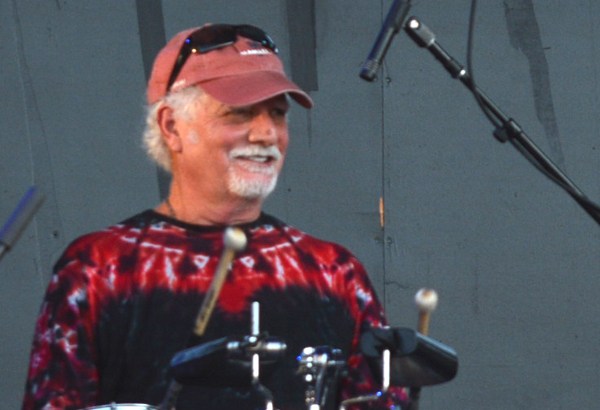
Oh, and to give you my reaction to my first time seeing David Grisman and his quintet, I was blown away. The band took the stage one by one, producing some of the liveliest, technically precise, and experimental music I’ve yet to witness. While drenched in traditional bluegrass, the music took me on a journey around the world with its variety of musical influences. The setlist included old favorites such as Grisman’s first composition “Cedar Hill,” “Dawg Nation,” a new arrangement for twin mandolins of the old American fiddle tune “The 8th of January,” and one that went way off the boards to no man’s land, kind of in the vein of GD’s “Space.” Man, that was a freaky sound Matt Eakle got on his flute. And I will never forget the crazy looks Grisman gave the crowd front start to finish—turning his head back and forth, eyes wide—allowing all of these wonderful ideas that have developed over the years to escape through his fingers on the mandolin.