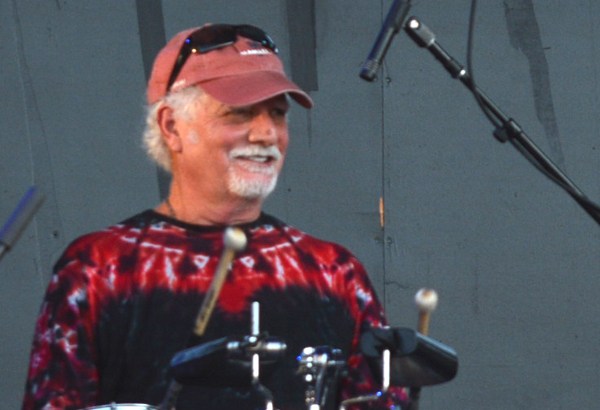

At 20 years old, Doug Martsch began writing the first Built To Spill record, Ultimate Alternative Wavers, launching the career of one of the finest bands to ever grace this earth. The songs were initially intended for his at-the-time band Treepeople, but when the group disbanded, the orphan material found a home in Doug’s newest venture. He enlisted some friends to play on the magnum opus and slapped on the moniker Built To Spill – a band name that would serve as a revolving door of hand-picked friends, tailored to help actualize Doug’s sound in the recording studio. UAW was Released in 1993 and despite its claim to ultimacy, (and a dorky cover shot of the band that doesn’t quite align with its title) the album did not necessarily set the world ablaze Still, the release managed to garner a devout local following.
It wasn’t until 94’s There’s Nothing Wrong With Love that the world noticed the singular voice of Doug Martsch. His intricate song structures work in conjunction with lyrics so brilliantly basic (at times) that one marvels at the sheer brevity. These elements are brought home with a guitar sound that mirrors Doug’s delayed, sustained vocal expressions to perfection. While there are certainly influences to speak of, Martsch is a genius in his own right. His work oozes with character, be it through his voice or picking style or the note-economy of his guitar parts. He has the ability to shred up and down the neck but knows far better. All these factors contribute to an impressive twenty-year body of work fueled by wisdom and lucid perspective.
With Pavement also in mind, it seems to me that there is only so much the truly significant bands can penetrate the mainstream music industry. Both BTS and Pavement, though dressed for success, never reached the mega-stardom of grunge’s gate-openers. But they’re appreciated all the more for it. To their devout, long-time appreciators, they are as personally significant as the bands that inspired Doug to pick up a guitar in the first place.
BTS’s hometown of Boise, Idaho recently held its second annual Treefort Music Fest. The weekend, jam packed with bands playing around the small downtown’s various kickass venues, was initially set to be curated by Doug, but when a Built To Spill line-up change saw a switch-up in the drum and bass section, the band decided to take the opportunity to flex their new wings in a colorful three-night run. Friday they played UAW in full. Normally at a BTS show, to hear any track off this debut is a small blessing, so to hear the album in its entirety, to use a familiar word, was just perfect. Saturday was a typically epic BTS show, featuring songs from their remaining catalog. Then the weekend came to a bittersweet close on Sunday in a rare covers night where the band performed a variety of shout outs to influences and peers. The set-list – which featured Dylan, New Order, Beefheart, Pavement, Dinosaur, and Smiths, to name a few – was just wonderful. With these three hometown shows, venturing into more personal territory, fraught with joyful respects paid to predecessors, beginnings (new & old) seemed very much in mind. At one point, Doug’s former band Treepeople even reunited for their first show in over 20 years during a performance by The Hand.
Leading up to the fest I wasn’t sure if I’d ever been so excited. When Built To Spill kicked off the weekend with their career’s track 1, “The First Song,” in Boise’s El Korah Shrine – yes, a real shrine – I found myself in BTS heaven. It was a casual affair, as late nights saw Doug and others of the family band doing Karaoke with Portland’s Karaoke From Hell. On Friday night, barely 20 minutes after the BTS show, Doug and his wife did a duet on “Heaven” by The Talking Heads. When they sang the lyrics, “The band in heaven plays my favorite song”, I pinched myself, thinking I’d never thought I’d know it to be true.
How did the notion to do Ultimate Alternative Wavers come about?
Doug Martsch: Well when we started jamming with the new dudes, we kind of were like “Well, what should we do? How about we start with the first song on the first record?” So it was kind of a joke but then we were sort of like, “Well, it’s coming up on the 20 year anniversary of it . . .” We kind of thought of doing There’s Nothing Wrong with Love actually. Just cause that’s kind of a popular record. And we thought maybe we could do that whole record. It would be kind of fun. And then we thought we’d do (UAW) instead since it’s got an anniversary coming up. It becomes 20 years. And you know, There’s Nothing Wrong With Love – maybe it will get rereleased on vinyl next year.
So how’s the process of relearning the songs?
A few of them we had been playing pretty regularly so we knew them pretty well – the guitar chords – and then some of it was pretty easy. The only thing that was tough was “Built Too Long,” the instrumental. And that’s something that when we recorded it the bass and drums were kind of improvised and then I went home and messed with it a long time by myself. And it was back before you could go home with files, y’know? It was listening to a cassette of everything. Trying to figure out what to do. So it was kind of like you know this song has like a structure and it has some kind of – what’s the word I’m looking for – composition or whatever and so we kind of jammed a little bit and we don’t want to do a fuckin’ long free jam on these chords – we gotta kind of learn it. We kept putting it off and we started learning it the last time we had a rehearsal a couple weeks ago. We kind of started at the beginning and we learned a couple of minutes of it and tried to match it as closely as possible, and just over time we figured it out. We played this thing 50 times at least, and worked on little parts we missed. So that was the big challenge – but it was also super fun. I love doing that – I love just playing all day – running over the same thing over and over again till I can do it.
Let’s go back even earlier. Before people even find their taste in music there are the embarrassing/confused years and there’s music that you prefer not to admit that you one time loved. What kind of bands in your early years were you arbitrarily into?
Well I grew up with the radio in the ‘70’s and the radio was pretty good back then – early ‘80’s – and it was like, everything was there. The top 40 had soul music and rock music, country music.
You didn’t have to find stuff necessarily…
No. You couldn’t even. I mean in a way it was probably horrible. You listen to the radio all day and it’s shit and then you finally hear something good. All day, everyday. But yeah, I was just always into music. At the end of the year it would be Casey Kasem’s top 100 of the year and I’d listen to that all day long, recording it on my little tape recorder.
Is there a band that you had your first epiphany with?
Well, yeah, the first record that I bought. When I was growing up there was a handful of records in our house. Like there was a Queen record which I loved – News of the World – and there was like a Kansas record and Peter Frampton. So, I listened to those. And then my brother and sister, they became part of Young Lives, which is like a Christian thing for teenagers. So they got into some Christian music. And that was like- There’s a guy Larry Norman that I loved! And I still love to this day. He died a few years ago but I still listen to him.
So this isn’t gospel or something, this is Christian music…
This is Christian Rock! He sounds like The Stones and Bob Dylan and stuff… but it’s Christian and it’s killer.
Well, Dylan’s Slow Train Coming is a great record.
Oh, well yeah! And that’s what it was. And they got into that too. My brother was into those Bob Dylan Christian records. And then the first record I bought was in junior high school. I bought some Billy Squier, which I love to this day too.
In the song “Twin Falls” you allude to your mom being ‘good’ by getting you out of Twin Falls, Idaho (before you got too old). What were the circumstances around that?
It was my mother and my older brother and sister. My parents divorced when I was zero and so my brother and sister – they’re 6 and 8 years older than me – they went off to school and then my mom decided that she wanted to go to school so when I was 13 or 14 or something she decided she was gonna get us out of the Falls and move to Boise and go back to school. It was the summer. It was right before I became a high-schooler.
When did you decide to move to Seattle?
That was a year and a half or something after I graduated. And there was a great punk rock band here in town, Scott Smalljohn the guy from The Hand, his band State of Confusion – great hardcore band – a couple of the guys were like 3 years older than me and the lead singer was my brother’s age, like 6 years older than me. And I was just a huge fan of theirs and I’d go to their shows and I became friends with them and I’d go watch them practice, y’know, hang out with them whenever I could. When I graduated, their drummer kinda dropped out and I joined their band for a moment and then we decided let’s try something new. Everyone kinda switched instruments and we became Treepeople, did it for maybe a year, in Boise and then Wayne, one of the members, was like, I wanna move to Seattle, so we’re like yeah, let’s do it. That was like ‘89.
What filmmakers were you into?
I liked David Lynch a lot. I’m trying to think what I was watching in the early ‘90s. It seems like most of the great films I watched were after that. But that was kind of an exciting time for television. The Simpsons came on Get A Life came on, Chris Elliot, I’m a big fan of his. Twin Peaks. All these cool things started happening on TV. Really neat. And I remember seeing that Spike Lee movie around the time I moved to Seattle [Do The Right Thing].
Did you ever watch the other Lynch/Mark Frost collaboration On The Air?
Oh yeah, I saw that! It was after or at the very end of Twin Peaks. It was a great show. It’s like they’re making this show and they show everything, how it’s gonna go, and it’s live and everything fucks up. And I love that guy, the engineer, and when it cuts to how he sees the world. There’s also a great show that came out around that time called Bakersfield P.D.. That was just a great half-hour comedy show. Brian Doyle Murray was in it.
When you tour around on the bus, do you have a few staple VHS tapes kicking around that are always getting thrown on?
Yeah, the last tour we did we liked this Elvis concert where he’s opening in Vegas. That was on non-stop all the time.
While we’re still on the topic of things visual, I’d like to ask you about the “Hindsight” music video, which is really one of my favorite videos of the last decade, how did you come to be involved with Bob Odenkirk?
Well, we were lucky enough to meet him 10 years ago. Mr. Show was done but we didn’t know about it. When it was on I didn’t know about it. I saw something about it and it looked stupid to me. I totally avoided it. But then I caught a bunch of them in a marathon in a hotel one day. And we all kinda did. So we were obsessed. We were quoting them all the time. And then he showed up at one of our shows and I met him and through him we met Tim and Eric. Y’know, we never really cared about videos. We made a couple of them and got talked into it a bit. We made another one that I love that we sorta got talked into because the treatment was so beautiful and it turned out great, “Conventional Wisdom.”
The medieval one.
Exactly and I was like, I don’t wanna do it but it was such a great idea and it was as great as it looked on paper. It was about James and not about us and it was all played really straight, it was beautiful. So anyway, for that record we weren’t gonna make a video but the European label asked us about a video and I was like, “Oh yeah, we could get Tim & Eric to do it or someone cool.” And I was gonna ask them but I thought maybe I’ll see if Bob will do it.
He’s a fan?
Yeah, he’s like a really cool fan. When we put out our live album he wrote me this really long email about what a great record it was. And when our last record came out he sent me a long email about it. I was just blown away.
That’s so great. I guess those worlds have collided before with things like David Cross in that Superchunk video or Bob Odenkirk dressed like KISS in the School of Rock precursor video for Yo La Tengo’s “Sugarcube”…
Exactly. So it’s all the same kinda… just people doing stuff to entertain each other and ourselves.
So if the ‘90s are sort of considered the heyday and now its twenty years later, what’s it been like watching new generations of fans stumble onto your music?
Well, I think around 2000ish, we made the record Ancient Melodies and we kind of took a break when we made that record and I remember at that time sort of thinking, alright this is about over. And then we’d go do some shows and young kids are coming out to see us. That’s when it really hit me that there might be another bunch of people who find something in this. I mean, I was surprised that the first bunch of people found something in this. So yeah, it’s amazing.
At this point in your career is there anyone left who still humbles you?
Oh, Absolutely. Like on the last record we had Paul Leary play on it of The Butthole Surfers. I mean, yeah of course. Someone told me today that the guy who runs this place has been emailing Paul Weller. And Paul Weller’s like, “Boise, Idaho? Isn’t Built To Spill from there?”.Yeah that kills me! I mean what the fuck ?!
Wow, that’s awesome. How do you feel about those who label you as a jamband?
(Laughing) I feel better about it as the years go by.
At first not so much?
Yeah, at first, I think there’s certain connotations… but that’s just the way the world is. It never upset me. But I don’t think we’re like that. Anyone who knows anything about us knows that we’re not of that. But then I think, well probably a lot of those other jambands aren’t either. They’re probably getting the same shit we are. They’re getting lumped into- even the big ones are more than what that word sounds like. To me it sounds like all you care about is The Dead if you’re a jam band. And of course not. People in jambands listen to punk and metal, everything.
Do you care about The Dead?
I… um- I like The Dead. Not a big fan but I grew up in a time when it was annoying. Not them. More the fans. More like jocks turning into Deadheads. That kinda thing. But I never held them responsible. But I also had my own thing going. But we cover a Dead song [“Ripple”].
And I guess while we’re on the topic, and in the spirit of your covers set on Sunday night, how do you go about selecting covers?
Just the way, you probably would, y’know? “Ripple” is an example of something to just get through a sound check. Y’know, something to sing besides my own shit. It’s just fun to sing at sound check. And then the band starts playing along, and it’s like “oh, yeah! Maybe we could do something with that. We did a bunch of stuff with that song too, we didn’t want to play it straight, we did like a punk version of it, did all this stuff and then finally we thought we’ll just do our version straight. Just strum the chords out. And just turn it into straight BTS Dead song.
It’s really interesting when you do covers like MIA’s “Paper Planes,” because not that it is not a phenomenal song but it’s fascinating to see what it might’ve sounded like if it were written by a different voice.
Well, I’m really excited about our covers show because those guys are good – our band is good. The rhythm section is good, the guitar players are good, it’s gonna be really fun. Our main objective is to do the songs pretty true. Like we don’t wanna put our spin on it. For one thing I don’t even know what our spin is. Other than via my voice. Otherwise we don’t really have a sound I think. We just delve into different things and I don’t use the same amp all the time. I don’t have a vision. So we try to do those covers pretty straight. Cause it’s fun. We want to hear all that shit. We wanna hear what we love about it. Every little nuance.
But even playing it straight is still Built To Spill playing these covers, so…
Exactly. And live it’s a whole thing. I would never record it. If we were doing shit real straight I would never record it. I’d be like, hey check this out! Why even bother? (Considering) Except a fan might appreciate it. But at a show, live, it’s a whole other thing. You can play it super straight and it’s killer I think.
Is that how “Cortez The Killer” wound up on the live album?
Exactly. I felt like with Cortez, I felt like we did do something with it a little bit. Whatever, just cause it was us doing it… And noodling over it.
But that’s the whole nature of the song. Exploration.
Yeah, that’s what the song’s about. Totally.
In the ‘90’s did you expect you ‘d one day wind up with this cult status?
Oh, no, never. I didn’t expect to do anything. Our dream, like everyone else’s at that time, was to have someone else pay for us to record. That was the goal. So we wouldn’t have to pay out of our own pocket for the record. And now everyone can record on their computers and stuff so it’s a different sort of feeling and stuff. But, no, never ever in my wildest dreams imagined I’d make any kind of living for even a moment, let alone a career.
If you didn’t make it as a band what could have made you happy professionally?
Nothing. I just would’ve had a shit job, y’know, try to work as little as possible.
But not necessarily have been happy?
Yeah, I mean I would’ve been like everyone else… (laughter) I mean I wouldn’t say that I’m any happier than anyone else as is, but I do appreciate my unique position. But no, I would just work like everyone else and deal with it. And I’m not gonna say this isn’t work but I’m not gonna say it’s work either. (Laughter) I mean, people say that, like, “oh, you work!” and it’s like no. I’m not gonna go that far with it.
Do you ever lose sight of the fact that what you do is special?
Yeah, I mean you do a little bit. Especially if you’re on the road a long time. We don’t go out for very long. We go for a month or whatever. Yeah, by the end of it you do feel like… but also, you can look at people y’know? I mean, this person just showed up. This person’s never seen us. These records mean something to this person. And you get that every night and run with it and it totally charges you every night. That’s another thing, I was thinking when I was 30 or so, I’m thinking, oh, not only are people not gonna wanna come but am I even gonna wanna play these fucking songs? Play a song I wrote when I was 20 years old when I’m 40?! It just seems retarded. But I love it.
It’s fun! I can play those songs over and over again. Part of it is I’m not super confident about my abilities so I feel like I could still play them better. I haven’t played them right yet. It’s always like a new challenge trying to get it right and sing it right, y’know the acoustics are different every night. A lot of times it’s just a battle all night long. And you can enjoy it still, but you’re up there just like, everything you’re doing is just trying to project. Like half the time I can’t even hear my voice. And it’s not the sound guy’s fault or even the room’s fault, it’s our loud amps. We’ve tried smaller amps and it didn’t seem rocking enough to us. It was hard to get into it.
I know that it’s different out there, I know that you can hear my voice out there. I can’t hear it on stage right in front of the live audience but I know that they can hear it so I’m just struggling to keep the notes sounding good and all that stuff. So a lot of the times it’s just that but at the same time it’s also really fun, you can still, y’know… you learn to do it, singing without hearing yourself. But yeah, I mean, playing live is the funnest. I like recording okay and writing the songs and stuff. Playing live is the greatest cause all your work’s done.
*Can you talk about how the songwriting process evolves? *
Well, they’re all totally different but I think for the most part its goofing around on the guitar, coming up with a couple of notes that sound cool together, maybe hit record on a little tape recorder and then put that away until later. You get a bunch of those and you go back and listen to them and go, “oh, that one’s cool” and you figure it out and then you take all those little pieces and start trying them out with each other. Change their tempos or time signatures or keys in order to fit them together.
Lyrics are the very last and very hardest thing for me, and my wife helps out a lot. She writes lyrics or she’ll give me phrases or sometimes she’ll give me a sheet of stuff and I’ll kinda find things here and there. Yeah, that’s the toughest part for me. If I could write lyrics more seriously, (laughing) I could make a lot more records.
Is there any chance of a Halo Benders thing in the foreseeable future [his side project with Calvin Johnson]?
Um, I don’t think so but you never know. We tried to get together a couple times to do stuff and we did it a long time ago, Calvin and I, and we ended up splitting up and each making solo records. It didn’t seem like what we were doing together was really doing much. I felt like we weren’t informing each other’s stuff so we just made our own records. And then maybe like 4-5 years ago we did like a reunion show in Boise, I can’t remember why, we did a couple of shows. Calvin was like, “I don’t wanna do anything unless we make a new record. So, we tried to make a record. We got together and wrote some songs and stuff and Brett Netson, our guitar player, played bass. Steve Gear, our drummer, played keyboards, but that was years before he was our drummer. And we jammed for a few days, maybe a week and recorded a bunch of stuff and it was like, “Well, this isn’t really going anywhere.” And I since listened to it, like half a year ago or something, I listened to some of it. A couple of things turned into Built To Spill things. And I was actually kind of impressed by it. I thought we should’ve kept going and done it. There’s some really cool stuff. But at the time I didn’t feel that it was very cool. I think I might over-think music too much. I don’t do it as much as some people. I hope I don’t kill my stuff by over-thinking it. But I think I do over-think more than I should.
How would you say that your aesthetic drive to make music and art has evolved over the last 20 years?
I don’t even know. I think the moment that I signed a record deal things changed and I did everything I could to not have them change, but that’s just the nature of it. Once you’re doing something, and you’re doing it for a living instead of doing it for yourself, something changes. And I struggle to not let that interfere with my mind at all because I think that the best stuff is done…
Raw.
Yeah, exactly.
*So, it loses a bit of its purity when you’re doing it for commerce? *
Yeah, I mean it doesn’t have to, but yeah it gets into your head. You know that there’s an audience. And even knowing there’s an audience, I try to make stuff that I think is good or close. It’s a real subtle thing. I don’t know how it plays on- I mean, it plays on everyone differently. It plays on me more than I’d like it to or understand.
Do you have a favorite city?
I don’t think I do have a favorite city. I love a lot of cities but… nope, I don’t.
Do you have a favorite myth of a city? Or favorite music scene to spring from somewhere?
Growing up I was really into Minneapolis. Husker Du and Replacements and that scene. That was when I was in high school. Soul Asylum were really great when they started. Actually, Slam Dunk reminds me a lot of Soul Asylum’s early stuff. And they’re a band that I think are, y’know, the worst band ever… but at a time they were really good.
Did you ever see The Replacements?
(Sighs) No… Did you?! (Laughter)
No Doug, we both know I did not. I am, however, grateful as hell to have found myself here…