

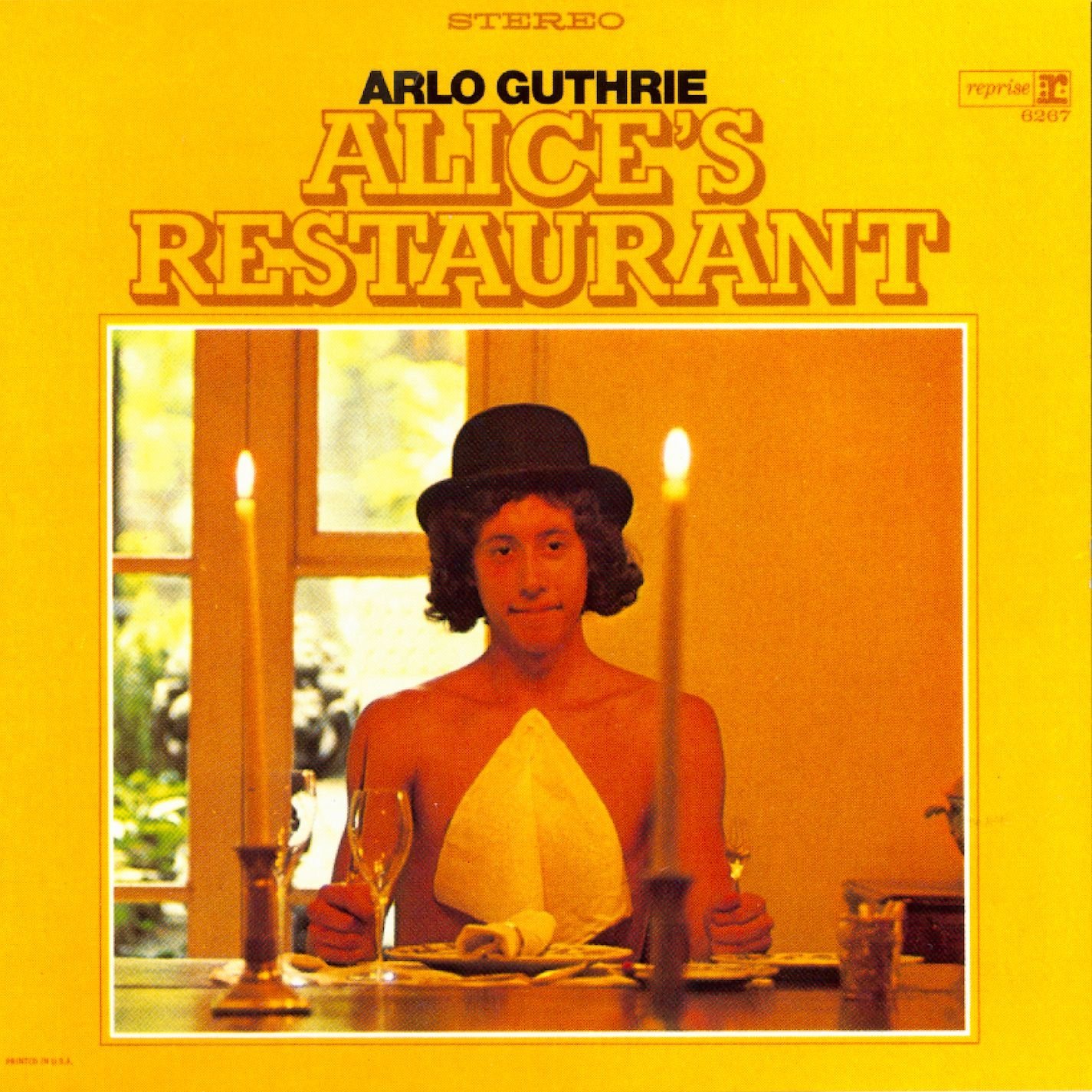
Since he released his classic storysong “Alice’s Restaurant Massacree” in 1967, Arlo Guthrie been considered bysome to be a Thanksgiving mainstay on par with turkey and pumpkin pie.
That almost 20-mintueautobiographical tale—which set the hypocrisy-ridden realities of the draftagainst the backdrop of Thanksgiving 1965—has not only aged into one of themost enduring Vietnam-era protest songs anthems, but also blossomed a storiedholiday tradition in its own right.
The son of Woody Guthrie of MarthaGraham dancer Marjorie Greenblatt (and grandson of acclaimed Yiddish poet AlizaGreenblatt), the 72-year-old singer-guitarist grew up in the folk world and hasstayed true to that storied tradition’s traveling minstrel approach throughouthis 50-plus year career. (Arlo has described folk music as “the original socialmedia.”) In addition to his own revered works, many of which—including “TheAlice’s Restaurant Massacree”—were workshopped live, he’s helped keep hisfather’s work relevant, recently celebrating the elder Guthrie’s centennialwith a retrospective tour focused on his extensive catalog.
For over five decades, Arlo has alsonurtured a deep connection with one of his family’s closest friends, PeteSeeger. This past summer, he honored Seeger with a special concert in Albany,N.Y., just north of his longtime Hudson Valley home. And while the always wryGutrhie quips, “I don’t remember what I did there, but, I just showed up to celebratePete’s contribution with others who were also inspired by him,” he has lovinglycarried his mentor’s work into the modern Americana era.
For many years, Arlo and Seegermarked Thanksgiving weekend with a special concert at New York’s Carnegie Hall,a tradition that always felt well timed with “Alice’s Restaurant.” Seegerpassed away in 2014, but Guthrie has kept the tradition alive since then,weaving in members of his family like his daughter Sarah Lee, son and bandmateAbe and, last year, The Band associates The Weight Band.
This year, after a half century of annual gatherings, Arlo has decided toretire the Carnegie Hall series, in order to focus on touring more intimatemarkets, hosting events at the converted church where the actual “The Alice’sRestaurant Massacree” story took place and working on his “rock farm.”
“You just wait until spring and pickup more rocks,” he says with a laugh of the later project.
Shortly before his finalThanksgiving at Carnegie Hall, Arlo discussed his lifelong friendship withSeeger, his unconventional bar mitzvah and why he’ll finally be able to enjoyleftovers next November.
Pete Seeger was a huge part of yourCarnegie Hall shows for many years. He was also very close with your father.What role did he play in your development as a young musician? Do you rememberthe first time you met?
I first met Pete and his wife, Toshi, when I was a little kid. We’d go up totheir home in Beacon, NY just to visit. It wasn’t like I was personallyvisiting them, it was really my mom and us kids just going along. We were toldto “go play outside,” while they had a chance to visit. As I grew up, I’d seePete in the office of Harold Leventhal, who was my father’s manager. He wasPete’s manager as well, and he eventually became mine. So, I was familiar withPete and had attended many of his shows. We found ourselves together at themany demonstrations and protests taking place during the late-1960s.Eventually, it bloomed into a collaboration that lasted over 40 years. I lovedworking with him—no set list, no preparation, no rehearsals. We’d just step out on stage and play it byear.
We played together [at Carnegie Hall around Thanksgiving for years]. I did myfirst show at Carnegie Hall back in November of 1967, but it wasn’t tied to theholidays. It was a coincidence. In fact, until the early 1980s our shows atCarnegie Hall were scattered throughout the year. It started to be a traditionin the early 1980s when Pete and I returned year after year on the same daysfollowing the Thanksgiving holiday.
Pete never really became ill—he justbecame quite old which made his public efforts more difficult. He called me inhis 80s suggesting that he’d be doing less and less big shows. He said, “Arlo,I can’t sing like I used to sing. I can’t play like I used to play.” I said,“Pete! Look at our audience—they can’t hear like they used to hear. It mightnot be a problem.” He laughed and said, “Well, maybe you’re right.” And wecontinued to perform together for many years.
Thisyear’s performance is being billed as “the last annual” Thanksgiving CarnegieHall show. What made you retire the series and is it something you plan torevive for “bigger anniversaries” tied to the Alice’s Restaurant LP in the future?
There are a lot of reasons to exit the annual shows. The audience I inheritedfrom Pete, as well as my own, is getting older—many have already left. Andwhile most people of my generation would at least be familiar with my name,most people under 50 have no idea who I am. I was never a Top-40 artist,although we’ve broken into it accidentally a couple of times, so there isn’tthe excitement surrounding my concerts that there would have been decades ago.The size and prestige of the venue isn’t warranted nowadays. There’s plenty of venuesaround the country and the world that are more suitable, and I’ll be coming tothose places as usual.
[Next year], we’llprobably do what we always do with the notable exception of not having to go toNew York City after Thanksgiving. For the first time in over 50 years we'll getto munch on leftovers.
Donald Trump’s father, Fred, was yourfather’s landlord for a time and he even wrote the very first well knownanti-Trump song, “I Ain’t Got No Home – The Ballad of Old Man Trump.” Do youhave any vivid memories of your families interaction with the Trump family atthat time?
Fred Trump was indeed our landlord. My dad didn’t like the idea of terrestriallords in general, especially landlords. More importantly, he didn’t like theidea of forced segregation by landlords. I have no memory however of thoseyears as I was about 4 or 5 years old.
You have famously only performed yoursignature song, “Alice’s Restaurant Massacree” on special occasions, but itseems you have pulled it out more in recent years. Do you feel the song hastaken on new importance in our current political climate?
I’ve put it on the setlist for the occasional 10-year anniversaries. Beginningin 2015, we celebrated the 50th anniversary of the actual eventsthat were the basis for the album, which came out in 1967. The movie came outin November of 1969. So, it’s been on the setlist for a few years now. That’llconclude next year, in May of 2020.
This year marks the anniversary of the Alice’s Restaurant film, which was aprecursor to the era of music videos. Do you have any funny memories of tryingto “play yourself” in front of the camera?
Generally, it was an awful experience, because the song was based on realevents, and took 20 minutes to tell. Being a full-length feature film they hadto add 70 minutes of fiction to meet the running standards of the times. So Iwas less than a third real, and more than two thirds fiction in the movie. Thesame was true for everyone whose real names were used in the film.
Yourmusic has long been associated with Thanksgiving and the holiday season ingeneral. Your family is also a blend of religions. Are there certain elementsof the traditional wintertime holidays your family has embraced—from carolingto lighting the menorah—over the years?
Our family loves getting together for the holidays. We celebrate in our ownways, but generally have a private Thanksgiving dinner at the house the daybefore the actual holiday. Then, we’ll go over to the church [The GuthrieCenter] and help out with our annual free Thanksgiving dinner. [Guthrie alsoperformed a special show at the church on Nov. 23.]
Your bar mitzvah has been historicallydescribed as a hootenanny that blended tradition and modern music in a way thatfeels inline with your career. What is your most vivid memory from that earlymilestone?
The only thing I remember is the wonderful feeling I had when my fatherarrived. All the attention in the room left me and focused on him. I wasrelieved because the pressure was finally off.
You recently performed at the site ofthe original Woodstock on the anniversary of the festival and covered BobDylan’s “The Times They Are a-Changin’.” Can you talk about that song choiceand the anniversary celebration?
The owners of Bethel Woods promised to build me a stage for a free concert onthe original site. They did not follow through and there was nothing at theoriginal site—no sound system or other promised infrastructure. It was quitedisappointing. I took a guitar and stood where the stage had been built 50years earlier, and sang Dylan’s “The Times They Are a-Changin’,” as it wassomething I could sing with an acoustic guitar and no microphone. Later, we dida show [held on the anniversary of the original Woodstock festival and timedwith a screening of the classic Woodstockfilm].
Yourecently expanded your backing band, including members of your old friendsShenandoah. What brought them back into the fold?
We’re doing the last show of the tour with that band tonight [Nov. 22, 2019].Beginning in February 2020 we’ll have a new tour, completely different in someways, with some songs carrying through from the Alice’s Restaurant tour, “Alice” for one. The band will be smallerwith just my son Abe Guthrie [keyboards and vocals], Terry A La Berry [drumsand vocals] and me. We’ll be joined by my daughter, Cathy Guthrie and hersinging partner, Amy Nelson, Willie’s daughter. Together, they are known asFolk Uke. That tour will run until May 2020.
Youhave spent the past few years actively paying tribute to your father’s music.He had so many songs that touched on so many different sonic styles. Are therecertain songs or periods of his songbook that you hoped to bring to life atthis point in time?
I’ve actually spent my life furthering my fathers philosophies through hissongs and stories. He was an incredibly motivated writer on almost everysubject one can imagine. So when it seems appropriate I’ve included his work inmy shows.





