

“It'sbeen busy. It's been an extremely exciting year in Grateful Dead world,"offers Grateful Dead archivist and producer David Lemieux. "The variety ofthings we do is, it's so broad in terms of whether it's the Dave's Picks or thebox set or for Record Store Day or working on a movie or two. All those kindsof things make my job, my day-to-day so exciting.
“It'sbeen an incredible year and, in typical fashion, as soon as we wrap up a majorproject or even, I don't want to say smaller projects, we're immediately on tothe next one. Everybody's super-excited, as am I, about Giants Stadium, and yethere we are in the fall of 2019 already putting a lot of thought into 2020until all the way up tothinking up for 2021.”
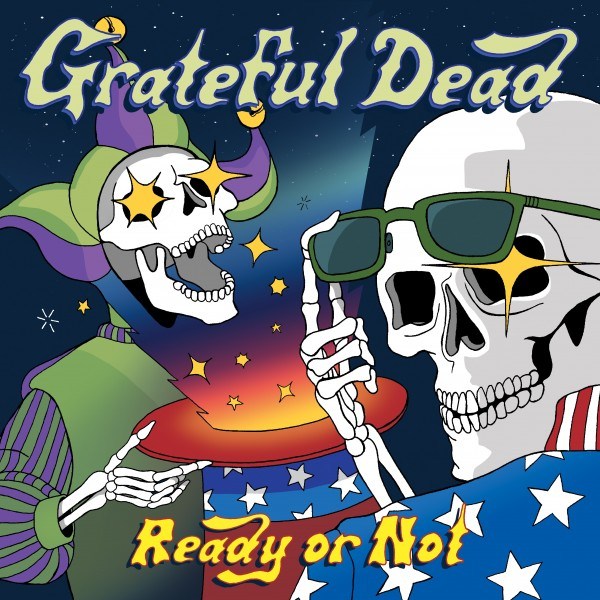
Altogether,it makes the output a particularly good time to occupy the ears and eyes ofDeadheads. Here, I discuss with Lemieux on two of 2019’s fall releases – the“final" Dead album, Ready Or Notand the box set, Giants Stadium 1987,1989, 1991.
“I,obviously, love what I do. It's always different and that’s the mostfascinating part of it all.”
JPG: In your videoannouncing the release you said the origins for Ready Or Not date back to discussions 15 years ago. The So Many Roads box set that came out in1999 included some of the same tunes that on here. I see this as a closing of achapter but, as I noticed when I checked out a forum page on this, it's also acontroversial period. Let’s start off by discussing the thought process behindcreating this album.
DL: Yeah, you're right. It goes back to about 2004 when we started thinkingabout doing something with...it's not all of the newer songs, some of them.There's a lot more music to be released, I'm sure. It went back to somediscussions I had with Vince Welnick actually where he was eager to be involvedin putting together an album similar to this where it would have been liveversions…around 1994 and very early ‘95 the Dead went into the studio andrecorded many of the songs and they didn't complete any of them. So, there areno finished takes that you could do a mix into it. It's a project that I don'tthink anybody wants to revisit.
What we decided to do because when any of these songs are generally played, Ithink the Dead played most of them in the range of about 40 or 50 times, thereare certainly some very, very good versions of all of them. That's thenature of the later Grateful Dead, ‘92 to '95, that while the consistency thatyou would find in let's say ‘89 or spring ‘90 or ‘77 or Europe ’72, theconsistency night-to-night, start-to-finish, every show of excellence, theymight not have quite been there in the later years but there certainly were moments,songs, entire sets and occasionally entire shows that for my earsare spectacular.
WhatI always look for is something that you could hold up and say, "This is agreat show for the mid-'90s” and not have to ever add a qualifier. Either it’sa great show or it's not, and it’s made with great songs.
Whatwe ended up doing for all of these songs, we talked to a lot of people andwe've been making notes, I've been making notes for over 15 years if you startin 2004 when we really started looking at something like this. Then, I havespreadsheets, both hard copies and notebooks and computer files where I'mconstantly adding things, where if I hear something particularly good, whetherit's a whole show, I'll revisit this maybe for a “Dave’s Picks" or itmight be a great version of a song.
Every time I hear a version of one of these songs that was particularly good,I'd write it down. When it came time to put the album together, for the mostpart, we didn't listen to all 40 or 50 or 55 versions of the songs. We didlisten to 10 or 15, and many of them upon an immediate listen you’d say,"Ehhhh, not quite.” You’d know it immediately. That's the nature of anycompilation. It was pretty quick to get it down to five or six versions of eachof these songs. From there, it's always a challenge to really bring it down totwo or three, and then bring it down to that one where you're just veryconfident, put it into a sequence with the other eight songs on the album andlisten to it and say, “Yep. This is the one!" Then, maybe you want to switchit over to that other great version of the song just in case that one was it.So, it's a pretty interesting project to do an album like this.
It's really not the usual kind of project we work on when we usually do a boxset or a “Dave's Picks" or something like that. It's more akin to rootingthrough each of the songs and finding that -- I'm not gonna say perfect – mostinteresting version. I don't even want to say best version but I do want to saymost interesting and maybe definitive would be another good word for what wewere looking for; something that you could stand up and say, “This is what thissong sounded like at its peak.”
JPG: Since this is a compilation, wasthere a consideration to edit the songs, take sections of one version fromanother? For instance on “Lazy River Road,” while it’s a nice version, you canhear Jerry mumble the lyrics.
DL: Not really. First of all, the tempo, if we'd taken a piece from anothershow, the tempos were wildly different. That's one thing we noticed. Let's saywe have three versions of a particular song that were the three maincandidates, it was remarkable how different the tempos were of those things.Even though, I think in the later years they would play with a bit of a clicktrack sometimes to keep it but there was some definite fluctuating tempos, notfluctuating within the song, but, sometimes, it was played a little faster orslower.
Also,as much as it is a representation of those nine songs, we definitely wanted itto be an archival, live Grateful Dead record. We didn't feel it was a placewhere the So Many Roads box set,which was done as something for the hardcore fans and also an introduction topeople who might not know the Dead. That version of [the song] So Many Roads did have an edit in it andthat was a producer's choice, which I very much respect.
It'sa different philosophy on this one. We really did want it to be a live GratefulDead archival release and that's why one of the songs clocks in at nearly 19minutes. That's because we included the jam that came out of it, not just thebody of the song, which would have been really hot. We decided to include thejam because we wanted it to really represent that Grateful Dead of themid-‘90s were playing all these incredible songs but they could also improviseright there on the spot on any given night. They could be the Grateful Dead ofold and create something new that was an interesting and exciting. There wasn'teven a thought of fading that out and cutting it to just the end of “Corrina.”
The bottom line is we just felt the versions were good enough and if there wasa little bit of a vocal thing, that's just part of the show.
JPG: Being a single disc on CD and 2 LPBlue/Red vinyl, there’s only so much you can put on there. I noticed that thereare no Phil Lesh tunes from this period. Is there an explanation for theirabsence?
DL:I don't think there's any real explanation aside from that I think that there'san album similar to this down the road, hopefully. There's three full songs andthen there are a fair amount of really interesting cover songs that the Deadwere doing at this time. If people dig this album, I wouldn't be surprised ifwe do a volume two someday including the songs that didn't make it on here ofthe newer ones and hopefully some of the cover songs too. They also did somesongs that hadn't been in the repertoire for quite some time, whether that's“Casey Jones” or “Here Comes Sunshine" or “Unbroken Chain," there'squite a few songs that came back.
OurCD comes in at a full 80 minutes and our two LPs come in at a full 20 minutes
. There really wasn't any room to include anything else. It reallycomes down to that and making choices on what can go on this record and thenwhat will be going on the next one. Reminded me a little bit of “China Doll,”which was a song the Dead started playing in very early 1973 and yet they hadto save it for a whole year-and-a-half until Mars Hotel came out because Wakeof the Flood was already full. It's just the way it is.
JPG: You mentioned about cover tunesthat were done by the Dead. I was wondering if it might be nice in the futureto have a compilation or box set featuring covers throughout the years.
DL: Throughout the years will be tough because there's literally hundreds butif we did them by eras or we've done the Dead do Dylan (Postcards of the Hanging). There's always been an idea of maybe theDead do some of the country songs – “Big River, "Mama Tried," “Me andMy Uncle,” songs like that. For something like this, it might be more eraspecific, where from about ‘92 to ‘95 there was a certain batch of covers thatwere unique for that era. I think that would be an interesting concept to dosomething that would be eras because if we really started reaching…there aretimes when almost half of a setlist could be cover songs. So, I don't know howthat would work. There is like literally dozens and dozens and possibly ahundred. I think by eras or by genres, maybe, there could be something there.With Chuck Berry, we could do a two LP, one side country songs and one sideChuck Berry songs. That would be kinda cool.
JPG: Moving on to the boxset Giants Stadium 1987, 1989, 1991…
DL: The way I work is the project that we've finished, aside from, obviously,talking with you about it, my involvement kind of ended two or three months agoand we've already moved on to the next one. So, I love talking about this stuffwith you because we're talking about the current project, which for me, is alittle bit in the past.
JPG: I noticed that some of the recentbox sets focused on specific places -- Red Rocks, RFK, Pacific Northwest, well,that's more a region, but you know what I mean. Do you see future releasesbeing like that or dealing with a specific venue such as Giants Stadium?
DL: That's a great question because to bring up the first part of that questionis do I foresee in the future? And from there comes the question. I honestlydon't know. And I say that because it's not like we ever had a grand designthree years ago to say, “Hey, let's do some venue specific things,” like yousaid Pacific Northwest where we span two years, same venues or at least samecities in Seattle's case. Likewise, Giants Stadium same venue spanned over fouryears. We never went into it with anything like that. It was more a case of, Icertainly don't like to use the word “spitball" because we are verymethodical in the things we do. We think very hard about the things we do, andwe spend a lot of time, months if not years, coming up with a release concept.It was never like, “Oh, we should do a Greek Theatre box or a Red Rocks…” whichmight happen, but there’s no grand plan for anything.
That'sthe thing. We have very good ideas of what are possible releases, let's say, inthe next five to seven years. There's no master list that list out what thenext five to seven years looks like or seven to 15 years but there are ideas. Europe ‘72 was a good example of that.That was something that had been sitting on the Dead’s Vault shelves foralmost, at the time, 40 years, and it was time to do something cool with it. Weended up doing as cool as you could do, which was the box set.
Giants Stadium, the new box set, there was no grand scheme three years ago todo a Giants box. What happened with this one in particular is about 18 monthsago, maybe two years ago, we were thinking of the Meet Up at the Movies for2018. I started thinking about the Giants Stadium shows, three in particular,the two from ’89 and then the second night from the 1991. We don't have videofrom ‘87. I think the first night in ‘91 is very good but it's not to the levelof the second night. So, we talked to Rhino about it and I said, “We've gotthis Giant Stadium but I'm really a little torn because we've also got theseincredible shows from ‘89 from Giants Stadium too. I would love to see one ofthose become our video for 2018 Meet Up at the Movies.” Then, we startedtalking and somebody said, “What about the ’87? Do we have that?” “We don'thave the video for that, unfortunately but we do have multi-track audio, whichis great. Someday, maybe, we could release it.” I've always loved that Giants‘87 show, performance-wise. I always thought that could be released. In themeeting somebody said as we were talking with Giants Stadium, ‘89 and ‘91,“What if we package those two years, ‘89 and ’91, as an audio release someday?”And I said, “That’s a great idea but maybe we'll also put in the 87 show.”
Thereason we limited it to these five shows and didn't go into the later ‘90s,didn't go into the 1978 show is these five shows we had multi-track audio. Theyrecorded ‘87, of course, for Dylan &the Dead, ‘89 because they were building up material for what eventuallybecame Without a Net and ’91, very fortuitous because ABC television,they had the TV show ABC In Concert, theyinsisted that it be recorded to multi-track because they wanted it to sound asgood as possible for television. So, we very luckily have these, what Ioriginally thought were 24-track audiotapes in the Vault but they turned out tobe 48-track -- two 24-track machines synced up.
So,that's how we ended up coming up with the concept. We wanted it to soundsonically unified, which means if we had a PA DAT from1993 -- very goodshows in ‘93 that maybe someday would be released -- but they just sonicallywouldn't quite hold up to the same level of the ‘87, ‘89 and ’91. And also abox set, you do have to put a limit somewhere on it. If you look at Europe ‘72 or 30 Trips Around the Sun maybe you don't, but we do like to put alimit. “Let's make this a 14 CD box. Nice and concise. It's got the story of itbeing the late Brent [Mydland] era. You're at the beginning of the Vince[Welnick] era with Bruce [Hornsby] also.” Plus, it's got the multi-track thatgives us a sonic unification that all sounds good; similar to the way the Pacific Northwest sounded very similarbecause the recordings were made by the same recordists with the sametechniques and the same equipment. Now, if we put in some Pacific Northwest,let's say ‘77, into that box it wouldn't have sounded at all the same becausewe would have also had Betty [Cantor] recordings in there, too. That was kindof how that ended up going.
Inthe meeting we brought up what about putting in the ‘91 show, the second night,6/17, as a video as well, which then added another level, which is mixing it inSurround Sound, which is incredibly exciting.
And as part of that whole process, that's when it was decided that Meet Up atthe Movies 2019 would end up being the ‘91 show. So, that's the process. It'svery methodical but at the same time we have a lot of flexibility. Herewe are in September and about three months ago as we wrapped up the bulk of theproduction work on Giants, that's when we started putting a lot of thought intothe 2020 box set. And that's kind of how we end up on that. We look at whathave we done in the last few years. We did a ‘73, ‘74, an ‘87, ‘89, ‘91.Recently, we did the Cornell box from ’77. We did a ‘78 box the year before that.We did the RFK ‘89. So, we look at what we've done in the last few years andsay, “Okay, what's right for this time? What's right in terms of content?What's right as the size of it? Do we want a 40 CD box? Do we want to keep itanother 10 or 15?”
It'sthose kinds of decisions that start happening really around July, August everyyear, so that by September and October we can go into production and be done byJanuary, February and get it out early in 2020 or whenever they put it out inthe summer. That's the process of how these things happen.
JPG: Why was the '91 show done in48-track?
DL: It might have been ABC saying, “Here's your budget.”I don’t knowhow that budget things works for “ABC InConcert.” My guess is there wassome cost splitting when it was offered to do as a 48-track...it's obviously aheck of a lot of work. You're basically syncing up to 24-track machines,running with time code, locking them together. What it allows you to dois…let's say a 24-track, you have two of Mickey's drums on one track and thentwo more on one track. Out of24 tracks, the drummers might share seveneight, nine, let's say 10 of them, and 10 tracks sounds like a lot when youthink a vocal track would be one. So, Bob's vocal track would be one track ofthe 24 as well as Jerry’s. When you're talking about the drummers, maybe havingeight to 10 tracks combined for the two of them, the 24 track, it givesyou a lot more flexibility of what you're going to do. Likewise, it gives you alittle more flexibility to have maybe a couple of extra audience tracks so youcan really create that live feeling.
Thisis what they did in 1980 with the Radio City [Music Hall] and Warfield[Theatre], they recorded to 32-track, not 48, but they had two 16-track machinesynced up, which allowed them to have extra audience tracks. That's whysomething like “Reckoning" and “DeadSet” sound so alive. You really get the feeling for the audience of theroom and it's because they were able to put those extra microphones around theroom to get more of a live feeling to blend into the final mix with theinstruments.
JPG: Well, you nicely segued to what Iwas about to bring up. What’s interesting is that I noticed while listening tothe new box set that Jeffrey Norman really caught the ambience of those shows.From attending stadium shows, it really felt like I was there yet it’s donewith sonic clarity.
DL: I totally agree. That is a credit to a lot of things. It's Jeffery's mixingfor certain and he mixed at Bobby's TRI studios in San Rafael. It's a studiothat's, first of all, it’s an outstanding studio, but it's also a studio thatJeffrey knows very well now. John Cutler, who recorded these shows, all five ofthem, John had been working with the Dead for many years. He'd recorded somuch material with the Dead -- live setting, studio -- that he knew how tocapture the band's sound as good as possible and the recording equipment thatthey were using,the Le Mobile recording truck for three of the fiveshows and another truck for the other.So, you've got all that and thenyou’ve got Dave Glasser, who's been working with us very closely for manyyears. He did the audio mastering. Plangent Processesdo the audiorestoration, which is essentially bringing the tapes back to life, bringingthem back to as good as they can possibly sound and as close to what theyoriginally were recorded as. Plus, you've got Dan Healey's live sound, whichwas outstanding. And then you've got the Dead's equipment onstage, which wasalso excellent. So, there was a confluence of many, many things that allowedthese recordings to sound as good as they do. And they sound unmistakably like excellentGrateful Dead recordings.
I lovethe sound, and Jeffrey really was able to get an unbelievablelive soundout of thesein terms of the ambience of the room. And this is astadium, which is about as un-intimate as you can get in the concertsetting. Any band will tell you that they would certainly prefer to playtheaters. Barring that, they would love to play arenas. But do they are in theGiants Stadium.I saw three of these five shows and I remember as a16-year-old thinking, “How is this possible? How are the Dead making this 66,00seat venue feel so intimate?” Clearly, you look around and you're in a stadium,you're not in a beautiful little theater, but, boy, did it ever sound and lookand feel good.
JPG: The clarity makes you feel thehumidity that was in the air at that time. The other thing about it is the bandsounded like they had a take-no-prisoners attitude with these shows. They arevery forceful. They met the challenge of playing in a stadium.
DL: I think you're right. The nuances of a theater or a smaller arena it mightbe a little lost. I also think that we're getting the Dead at three verydistinct peaks. In ’87 they were flying incredibly high because of In the Dark,and they wereplaying well and Jerry was back from his illness. In ’89, some of my favoritestuff, and I know from talking to band members, they feel the same way about’89. Then ’91, you've got this resurgence of energy, largely I think owing toBruce Hornsby being there and also Vince. It's certainly not to say anythinghas grown even remotely stale with Brent there. It wasn't that at all but Brentwas certainly by the very end, his last few shows, you can sensesomething was up. Just like Jerry maybe in '86 and Jerry again in summer ‘92,musically there was some good stuff happening but you could just sense thatthey needed a rest. In Brent's case, unfortunately, it was the ultimate restfor him.
Ido feel that these are three very, very distinct periods of GratefulDead peaking. It's interesting. I talked to Cutler about this once,. The Deadhad an uncanny ability, I thought, to record when they knew they were playingwell. It's just like the Jerry Band. When they recorded those two live JerryBand shows, the How Sweet It Is albumand then the double album that came before that, the double CD in 1990.It's the same thing where Jerry Band played well for decades but they were at areally good peak and that's when Cutler said or maybe Jerry did, I don't know,"We're peaking right now. Let's record six shows.” Thankfully, those sixshows became those two live albums.
So,the Dead similarly in ‘89, they knew they were playing incredibly well. It wastime to record a live album, which ultimately became Without a Net. They recorded a lot. They recorded three entiretours for Without a Net.
Iagree. It's very forceful playing. I don't want to say aggressive but it'scertainly very focused and that's not easy when you've got 60,000 peoplelooking at you and some of these shows began at daylight hours which is…I'malways a fan of darker shows, meaning indoor shows with the lights focused onthe band. I find, as a fan, when it's an outdoor show and it's still light out,I'm a little distracted. You can look around. You can look at the sky. You canlook at the people. So, I totally agree with you that the band was incredibly focusedand assertive, maybe aggressive, maybe forceful, but theywere playing incredibly well too.
JPG: The ‘87 show was with Bob Dylan. Ilooked at a setlist and they ended up doing an encore after the Dylan portionof “Touch of Grey” and “Knockin’ On Heaven's Door.” Was Dylan on those andthat’s why they’re not included?
DL:Those were with Dylan and we would have included them otherwise. So, those werenonstarters. I’ve been with the Dead for a little while now and we have lookedinto -- certainly not a conversation I had -- but we have looked into puttingout something of Dylan and the Dead. It's just really more of a nonstarterwhere it's just never been really discussed too seriously because I don't thinkit's going to happen; certainly not any time soon. So, the Dylan stuff was nota possibility on this, which is in a way it's very fine. If ever the Dylan andthe Dead stuff does come out, it should be a little more separate rather thanto be part of this 14 CD thing of the Dead from three different years and thena 15th CD of the Dead with Dylan. This isn't the right project for that. Idon't even know if it's possible and I would think it's probably not.
JPG: I imagine part of the hang-up is whether Rhino releases it as part of theDead catalog or Columbia does as part of the Dylan Bootleg Series. I'm alwayshopeful for that to happen someday because I listened to the rehearsals for theDylan and the Dead tour and they sounded good together. It would be interestingat some point if there's a more expanded version of the Dylan and the Dead release.
DL:I hope so too. I know that when David Gans produced Postcards of the Hanging in 2002 and that was the Dead’s livecovers of all of the Bob Dylan material. Also, David was fortunate to be ableto get the Dylan management and Dylan to agree to include one song from thoserehearsal sessions. I remember going through those rehearsals. We made mixdownsof everything or at least two-track. I remember hearing quite a bit of it withDavid and it was a little overwhelming in terms of how good it was. It was avery tough choice to find the one song that David was able to put on that albumbecause there was definitely a lot of rehearsal stuff, half-attempts of songsand things like that but there was some really good material in therehearsals.
I'veheard all of the Dylan and the Dead sets from the ‘87 shows and, while I don'tknow about complete sets, but there is certainly some very good materialthroughout those six shows. There's a good amount of material from theshows that maybesomething else could be done. I hope so. I'm a huge Dylanfan. I love the Dead in that era and Jerry plays pedal steel a little bit.That's kinda cool, too.
JPG: The other thing about ‘87 that Ithought was interesting. They ended the second set in ’87, the first nights of’89 and ’91 with the same two songs --“Throwing Stones” and “Not Fade Away.”
DL: It is. It was a pretty common set closer at the time, the "ThrowingStones">"Not Fade Away." It's interesting when I look atGrateful Dead setlists I'm always amazed that some things happen in the same citya year apart. There's this weird confluence sometimes of a song...it happensmore often than not where let's say a song like “Shakedown Street” is playedvery rarely in a certain year, like four times and four times the next year,but it happens to be the same city thatthey play it or they play “Comesa Time,” another very rare song, and they play it again or “Morning Dew.”
I've noticed a lot of those little things. I certainly know the Dead weren'tlooking at setlists before a show saying, “What did we play here two years agowhen we were here? Let's do something like that.” It's not like that at all.There weren't that many closers in this era. There was “Sugar Mag,” “Around andAround," "Good Lovin’" "Turn On Your Lovelight, occasionally“Morning Dew." Then, “Throwing Stones”>“Not Fade Away" would beone of the primary five or six main closers. These are incredibly powerfulversions. The “Throwing Stones”>“Not Fade Away" from the ‘87 show isone of my favorites. I really really love it.
JPG: I just found it as a weirdcoincidence. Back to sound clarity, is that Mickey playing triangle during“West L.A. Fadeaway” in ’87?
DL: It could be a sample, too. “West L.A. in particular and "Hell in aBucket” were two songs from In the Darkthat there were a lot of samples on. I saw some versions in ‘87 of “Hell in aBucket” where you have the whip cracking and the motorcycle revving. So, itcould be a sample or it could be Brent or it could be Mickey doing somethingpercussive, but I know what you mean.
With the multi-track if something is a very appropriate part of the song, whichthis one was, Jeffrey can accentuate it and make it sound where it should be.That's the one thing that Jeffrey Norman is always conscious of is to notput things anywhere that don't belong at that level. He's very good at that.
Generally,Jeffrey would do a mix a day, a song a day, and he would send me the song atnight when he leaves the studio, and then I would listen to it. Dave Glasserwould listen to it too. Dave was an incredible resource on this, both as amastering engineer and a Deadhead and an audio guy. So, we could listen back,Dave and I and overnight send Jeffrey our notes. Could you please turn the bassup a little bit or, like you're saying, the triangle? Can you make those alittle louder or less loud? Then, Jeffrey would come in in the morning and themix would already be set up the way he left it the previous night. He wouldjust be able to very easily tweak those things that we sent notes on and thenhe has an hour of work to do to do that, lays down the mix and then goes intothe next song. Spends eight or 10 hours working on it and the same thing wherethat night he would send us that song.
It'sa pretty amazing system. I loved working on this. I love working on allmulti-track projects with Jeffrey because it's a lot of communicationand that's what it really comes down to is communication. Having faith thatJeffery's first mix is going to be generally 95% there, if not even a 100%.There’s oftentimes, the mix will come back and I'll be listening, I'll belooking to critique something and there's nothing to add to it. Thathappens quite a bit where we get to that point.
JPG: Is he sending it to youin FLAC or something else?
DL: Usually a wav file, which is, basically, we're talking about CD quality,which is good enough for me to really hear everything. I always give everythingtwo primary listens. My firstlisten is very loud on the speakers. Thatway I get a good sense of “Okay, how is this feeling? Am I getting the stereoof picture that I want? Am I getting the low end that I want?” All those kindsof things. Then, I give it a headphone listen and that's where the realcritiquing comes in. The nuances of saying, “Could you turn this up, thisdown?” Basically, it's a headphone listen for the micro stuff and the macrolevel is the big speaker listen. I really love the process, for sure.
JPG: The 6/17/91 show, ithas "Dark Star" weaving throughout both sets. I noticed that someplaces list it and some don’t. Since the song or a verse was never played, whatwas the reasoning behind listing it and did you ever find out why they did whatthey did?
DL:If it’s the distinct theme, for instance, the big one that occurs in the firstset is very distinctly a “Dark Star” thematic thing. The few in the second setthat are distinctly…and there's a big one in the second set where they don't dothe vocals but it's clearly a "Dark Star" jam.
Itcertainly isn’t arbitrary but it’s to break up between the songs where there isa distinct “Dark Star” thematic jam, whether it's a minute-and-a-half or thebigger one that’s several minutes long. It’s to break it up so that it'sclearly not "Uncle John’s Band” or "New Speedway Boogie"or "Truckin'." It’s the jam that comes before or after those. So,it’s really more about if it’s distinctly not the song preceding it thenwe would give it a “Dark Star.”
“DarkStar” is a very clear chord progression. When it happens it’s not just a littlebit of spacey segue music. It’s clearly something "Dark Star" relatedand we figure that this would be the show to do it.
Iheard it a lot with Phil Lesh & Friends in the early 2000s where a lot ofthe songs were joined by very distinct, very unique jams but they didn’t have athematic unity like the way the "Dark Star” does. So, it’s very differentthan something Phil would be doing where he would be joining a lot of songs,particularly second set songs with very distinct jams. They were not by anymeans just the song ending and then the next song beginning. It was definitelya case of jamming with something but something that was created and was uniqueat the time that I would not venture to label whereas these are very distinctly“Dark Star.”
Theone thing that really blew me away about the “Dark Star.” I knew this show.John, you were listening to tapes in '91. You know this show. Once we got intolistening to the nuances of it -- and this is something I might have noticedback when I used to listened to this show a lot – but I really picked up on itis that there’s a number of times throughout the show in the middle of songswhere Bruce in particular drops in the “Dark Star” riff. And it's the mostamazing thing because if you listen to a song that’s got its structure and allof a sudden out of nowhere Bruce will drop in the "Dark Star" riff.So, it was clearly on the mind whether they walked onstage and said, “Hey,let's do a bunch of “Dark Star” themes tonight." I don't know. I don'tknow if there was that much thought into it.
Onething I've noticed with Grateful Dead videos and watching them up close nowthat we’ve released a lot and we’ve done a lot of Meet Up At The Movies, I’msure a lot of people have seen these…there’s a lot of eye contact. A lot of theGrateful Dead is based on eye contact and, I think, a lot of it would besomething like that where the riff would be played, whether it’s by Bruce orBobby going into it, and then somebody looks at another and they just pick upon it.
Ireally don’t know. I get asked that a lot. “Do they plan this?” I really haveno idea. I wish I did but I don’t know what the Dead planned or did not plan,especially when it’s something this unique. It’s one thing “Did they plan“Scarlet”> “Touch” > “Fire” in 1984 when they played it a couple of times.I don’t know. Possibly. Probably. But in this case when it’s this unique anddifferent, I really don’t know.
JPG: Speaking of eyecontact, when I was watching the 6/17/91 film, it was interesting to seeBruce’s facial expression and interactions with Jerry early on in the firstset. He almost looked tentative or even shy but Garcia would just smile andstare at him in an encouraging manner and Bruce would eventually let loose witha solo that got more and more assertive.
DL:I know the look you’re talking about. Bruce by this point had been, I won’t sayin the Dead, I don’t know if he ever was officially in the Dead but hecertainly was with the Dead for about a year at this point, almost. So,he’s certainly grown comfortable. But remember Bruce is coming from a placewhere the last seven or eight years he’s led his own band and has done it verysuccessfully. Now, he’s sitting in with an ensemble that has been playingtogether at this point for over 25 years.
Iknow the look you’re talking about but I’ve always seen it as Bruce…how do Iput this? The Dead are clearly professional but Bruce is the consummateprofessional. Let’s put it that way. I think that look on his face is one ofintense focus. Bruce is intensely focused on what’s going on onstage and hewants to make sure that every note he plays matters.
Iremember being in the studio once with Jeffrey and he was tuning the speakers,which means basically getting the EQ up to a level he wants for general stereoplayback. I guess you could call it tuning the room. Sometimes, he would playSteely Dan. Sometimes he would play Paul McCartney. I’d say, “Why did youspecifically choose these?” And he said, “Because literally every single soundon these albums was put there for a reason.” There were no wasted things, noarbitrary “Lets put this sound in or note.” I’d like to think this is true forevery album that anybody puts out. I find that with Bruce too. He is incrediblyconscious that everything he plays matters.
So,the look you’re talking about, maybe it is shy or maybe it’s him not quitestepping up the way Jerry would want him to do but I also look at it as veryvery focused, and he really was focused. It was incredible how focused hewas.
JPG: What was touching wasseeing Jerry’s smiling encouragement and Bruce rewarding that.
DL:It reminds me a lot of the Jerry/Brent intimacy. If you look at the Buffalo ’89show, just before the Giants Stadium ’89 shows, there’s a version of “Not FadeAway” on the Truckin’ Up to Buffalovideo and I’m sure it's online somewhere. That’s the one where you can veryclearly -- and there’s dozens of examples like this -- but the rapport betweenJerry and Brent is so tight. These are two people who loved listening toeach other. I think that’s what’s happening too with a lot of the Bruce eraGrateful Dead where Bruce is so intently listening to Jerry and theband. I love it. Watching that interaction…that’s what I love about the videos.
TheDead certainly aren’t theatrical the way that some bands are. They’re nothopping around the stage. They're not doing too much. Yeah, Bobby does some funstuff. Otherwise, what I’m watching are the nuances of the interaction.Watching how these six guys, seven in this case, created this music that is soperfectly unified and, for the most part, precise while at the same beingsomething that was not overly rehearsed by any means except for 26 years ofrehearsing live onstage. It’s amazing. I love Grateful Deadinteractions.
JPG: Well, thanks for yourwork and getting the music out in the right way so it sounds good.
DL:Thank you. I really do appreciate that, really, kudos to Jeffrey and DaveGlasser and John Cutler for recording it. This goes back to all of the workthat we do. While some things may not sound quite the same because they’re notfrom a multi-track, everything we do is as good as it could possibly be, andthat's something that is really a credit to Jeffrey and how much he cares aboutthe audio and Rhino for allowing us to spend so much time on audio.
Amulti-track mix when you’re doing a song a day...and how many songs are inthis? Probably close to 100, maybe even more. So, you’re talking four months ofmixing plus surround sound for the DVD/Blu-ray of the final show. Studios arenot cheap, even though it's Bob's studio (TRI Studios), it’s certainly acommercial venture for him. The record company pays for this stuff. We’re invery good hands with Rhino because they understand and they care as much as wedo. And I mean that. Rhino knows that if we’re coming to them with a certainbudget as it relates to the audio that we’ve done our due diligence and this isin order to make it sound as good as possible.
MarkPinkus, Doran Tyson and Yvette Ramos, this is an incredible crew of people whounderstand that with the Dead, performance quality is number one, sound qualityis very very close behind and treating the fans well is right up therewith all of that. As Deadheads, I’m very grateful of the situation that we havewith Rhino. I really am. Every day I get to work with these guys is a giftbecause they trust us, they respect us and they respect the process.





