

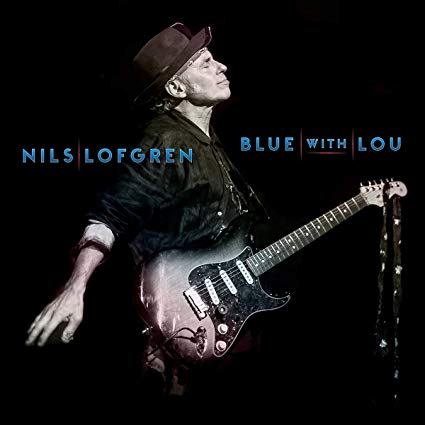
Nils Lofgren admits that he thrive when he’splaying in bands without being the leader.
That ability to offer what is needed for someone else's creative vision is what got him a gig early in his career with Neil Young, resulted in a return with Young last year as a member of Crazy Horse, invited as one of the original members of Ringo Starr’s All-Starr Band and inducted into the Rock and Roll Hall of Fame as an integral part of the tight, indefatigable E Street Band that backs up Bruce Springsteen.
Of course, Lofgren has never sat around andwaited for another high profile opportunity to come around. He's had along-running solo career that began in 1975 and resulted in 26 releases and countlesstours.
At the moment he’s combining his solo and collaborative worlds with Blue With Lou. The album keeps the rock and roll flame alive with an even split of six new originals and six songs he wrote in the late ‘70s with the late Lou Reed. The writing partnership led to 13 songs -- three landed on Reed’s album, "The Bells" while Lofgren used tracks on the albums “Nils," "Damaged Goods" and “Breakaway Angel.”
Affected by the passing of the legendary New York musician, Lofgren worked onthe five unrecorded songs that remained. Thatactivity energized him to pen new material that includes the title track, whichhonors his former songwriting partner, “Remember You” (a reminiscence about thefamily’s beloved dog Groucho), and “Dear Heartbreaker” (a tribute to hislongtime friend Tom Petty).
Lofgrenrecorded “Blue With Lou” at his home studio in Arizona with longtime musicalassociates Andy Newmark (drums) and Kevin McCormick (bass) and guestappearances by saxophonist Branford Marsalis and vocalist Cindy Mizelle (EStreet Band). All but Marsalis (and with his brother Tom on keyboards) touredwith him to support the album.
We talk themorning after one of his concerts about the Lou Reed collaboration, playingwith some of rock’s biggest artists, working on the new Crazy Horse album, hisguitar style and more.
“I’m delirious after a great show lastnight," he said. “Feeling great about playing with the band again,especially the band that made this record.”
I mention that I saw him perform at the Kent Stage and was surprised butpleased about the no cellphone policy. “Yeah, I know. Phones have changed thewhole dynamic at concerts.
“I know some people have taken cellphones at the door. Comedians have donethat. To each his own. However, you want to focus on what we’re doing. I’mhoping you just hook into it and listen and that it touches you in some way,and you can take a little bit of musical inspiration out of there that lingersin your life and helps it. At best that’s what happens to me.”
JPG: I thought it was a nice touch toopen the concert with a brief instrumental take on the Crosby, Stills Nash& Young song "Ohio” (the venue is located near the site of the May 4,1970 campus shootings).
NL: My wife, Amy, suggested that. We were talking and she said, “Where are yougoing to be?” I said, "Kent, Ohio.” She said, "Rather than sing thesong, just open with the guitar riff.” Some people got it. I thought it was abeautiful idea.
JPG: I met you after the concert. Mysister told you the story of meeting Lou Reed after his concert and telling thescore of the New York Rangers game that night. She mentioned that she didn’tknow if he'd care about the result, which he replied with, “What makes youthink I wouldn't care?"
NL: It was interesting to find he was such a sports fan, which a lot of peopleare. You wouldn’t be surprised if Lou wasn't into it but he was, and that’scool.
JPG: For someone who doesn’t know him itwould seem that following sports would be of no interest to him. That bringsthis up. Lou Reed had a prickly public persona, someone who could be easilypissed off. I know that producer Bob Ezrin connected the two of you but how wasit dealing with him? Did you see a softer side of Lou?
NL: Thanks to Bob Ezrin. He proffered anidea that Lou was open to. If Lou had been like, "Bob, I'm glad that youand Nils are doing your thing. I'm just not interested in this. Have a goodalbum," and send us on our way without having to go into that personalitything. I wasn't looking for a job in his band. We were asking for help as aco-writer. The fact that he was open to it at whatever moment in time that wecaught him felt like it might benefit him too because there was so much musicand his forte is lyrics. It was just a natural chapter that worked out...andafterwards, too.
We'd go see him play, whether it was in DCor wherever he was and he'd be friendly. I'd come back for a quick"Hello" and we'd fondly remember this chapter together that wasbeneficial for both of us. We mixed "Life" off the "DamagedGoods" record in New York City, and I called him and he happened to bethere. He said, "Give me half an hour. I want to hear this." Had himsit down to hear the final mix just when we were happy with it. Gave us athumbs up. It did feel great. It was very unusual, beautiful song. BranfordMarsalis played a haunting sax on it.
So, these little vignettes we both owed toBob Ezrin who put us together. It was a mutually beneficial and inspiring thingwithout the standard renting a loft, have an upright piano and a couple guitarsand going six to eight hours a day and just plowing through ideas, which can bevery productive. This was an easier way to go about it where he happened toreally love the tape I sent, and without me there weighing in I gave him carteblanche to change anything including all music or any of it. As a potentialco-author, he got into it and had a real writing jag for three days and nightsand knocked off 13 lyrics, which is beautiful.
JPG:Did you have a friendly relationship after that or was it more one and done asfar as the collaboration?
NL: Well, it was more just calling andsaying, "You're playing in DC. I'd love to come to the show.""Great. It would be good to see you. Come back before, we'll say,"Hi." That kind of thing, or if I’m in New York. "Hey, I'mrecording one of our songs. Got a beautiful sax by Branford Marsalis. Before wemove on, are you in town?" He said, "Yeah." "Would you liketo hear it?" "Yeah. Leave it alone. I'll be there in half anhour."
Other than these brief liaisons like thatand seeing him at shows, having a chuckle about a very productive time togetheras co-writers thanks to Bob Ezrin suggestion, that was it. Always thought he'dwant to call and revisit the five songs left behind. I always wanted to do myown version of "City Lights," which is one of my choruses he kept.Keeping the chorus and I'm writing a story about Charlie Chaplin.
So, to have half of the album based on thisand then write a song "Blue With Lou," which was what I thought was acool little bottleneck riff and came up with the title one day on the road withE Street. Knew it was going to be my way of paying homage to Lou as this wholerecord is based around those songs left behind.
JPG:You did a number of songs that weren't recorded, what was it about "CityLights" that made you want to re-record it because Lou's version isvery different than what you did?
NL: When I heard Lou's version, which Iloved, he referred to my melodies in the music in kind of a carnival-esque,vaudevillian feel but he chose to narrate the lyrics. I always thought it was acool melody. I really liked the melody. The narration worked for Lou but Icould never do that and I just felt like I'd love to hear this sung. This iswell years before I ever thought I'd ever visit everything, but I wanted tosing it with its original melody because there was a lilt to it that was kindof whimsical and reminded me of Charlie Chaplin, which is where he took thestory.
Originally, after Lou and I shared threesongs each, we got six of the 13 out, I put two more out. One of them was asong called, "Life" that's on "Damaged Goods" whereBranford played the sax. When I revisited "City Lights" we got a livetrack that was so great with this groove that really took me a long time tofind. We got the track and I thought to myself that it needs some color and Ihad no interest and didn't have the heart for exploring a lead guitar overdub.Sometimes, I know it needs more color and I'll find a guitar part but I justdidn't want to do it. My heart wasn't in it. I thought who better than Branfordif he's willing to go after this because the whole whimsical thing with CharlieChaplin, and there's a bit of mood and darkness that Branford brings so wellwith such great instincts, not unlike what we're going through today.
Here's this beautiful soul, Chaplin, whocame to America right after the depression when no one was doing well andeveryone was struggling and everyone had a darkness in their home and in theircountry to live through and he brings us this wonderful soulful humor thatmakes us laugh and get out of ourselves and find some hope. He presents that tous as a country and we turn around and throw him out. Really? Is that whatwe're about? That's not unlike what we're going through now. Are we reallysmall-minded, fearful, resentful, bigoted people. No. I don't think so butthere's a lot of us that are. It's very sad and tragic. Revisiting that songthat Lou wrote, especially asking Branford to relieve me of the burden (slightlaugh) of orchestrating it with a lead instrument, which he did so kindly andbrilliantly, was another gift that I stumbled on to while making this record.
JPG:In prepping for this I listened to Lou’s version of "City Lights" off"The Bells" album as well as yours off of "Blue With Lou."Your version has a bit of a reggae feel as well as shuffling blues.
NL: Basically, what happened was, I wroteit on the piano and it goes da-da-da-da-dum. It was really herky-jerky. That'sthe song that came out of me. When I sent it to Lou he came up with a differentversion of that. It's not a real toe-tapping feel. I felt like when I was goingto do it. I tried playing it for awhile with my original feel and thought,"Well, the melody is there but there's not much of a physical pulse thatmakes me want to dance a little bit, move a little bit.” Charlie [Chaplin] wassuch an amazing master of physical movement and using the body to illustrate.It took me quite awhile. I kept trying different feels and ideas for weeks as Iput the record together, usually in the guest room off the kitchen where Amy iscooking for us and my dogs come out and hang out with me. That's where I wrotemost of the record in our son Dylan's old room with the door open, just beingpart of the family and part of life.
Finally, one day I stumbled on this --you're right -- a little bit reggae but there is more of a pulse. My right handfound a chunking rhythm that still let the whimsical nature of the melody breatheover it. Then, I realized that would have to be the path I went down because Ijust didn't want the same of what I wrote, and Lou based his track off of. It'slike a lyrical presentation and that original vibe.
JPG:Well, the song works in both your version and Lou's version. Anothernewly-recorded song from your collaboration with Lou Reed, "Give" isstandout track that, while it was written so long ago it's also very current inits lyrics.
NL: Yeah, man. It's tragic that it has tobe so current, that we just don't seem to realize that if we don't start givingeverything we got to each other, not at our ownexpense, but just as a part of humanity's gift to itself, we're in deepshit. I thought it was just as topical as ever and one of the ones I reallyregretted not doing something with in the past.
JPG:Another song that really stood out to me was "Talk Thru the Tears"not only because of the melodic reference to Nat King Cole's "Smile"but they also may be some of Lou's most touching lyrics.
NL: One of the more tender things Lou'swritten. I was so taken because I sent him the title and some words that Ithought were godawful. I said, "Lou, do you want me to just la-di-daeverything or not even give you the title? He said, "No, give me your titles.Give me everything you got. I know you don't like the lyrics. Give it all. Iknow I can change anything but I want to see where you're at with it with theunderstanding that it's not acceptable to you. I want to see where you've takenthese things before I start rewriting them or writing them from scratch on alyric level," which is what I wanted. He also had carte blanche to changeany music.
But yes, this is one of the most touchinglyrics he's written. There's still that little bit of edge here and there butit comes from a tender place, which I thought was brilliant.
JPG:Lou made the album "Magic and Loss" that dealt with the deaths of twopeople close to him but there's also "magic" in life. Your album,"Blue with Lou," isn't exactly like his but it does in a way addressmagic and loss due to where the lyrics came from on the songs co-written withLou as well as the newer songs written by you about Lou, Tom Petty & theHeartbreakers and Groucho (Nils' dog who passed away).
NL: Yeah. (sighs) I lose track of time.I've been blessed to work in a lot of other great bands where I completelymorph into a different musical character that's right up my alley. That's verynatural for me. When I come back to my own work I'm kind of refreshed in a waybecause I've had a true break from being the bandleader and being thesongwriter but not from being musical. I'm also staying down on a musicaljourney from another perspective of singing harmonies, playing differentinstruments, looking at different types of parts and what they can do to a songand how they can color it.
I had a lot of ideas but I wasn't reallygung-ho to write but I was gung-ho to start, and I was like, "How can Iget this going? I don't have any songs of my own or riffs or ideas in mynotebook that's making me go, “I gotta get this written out."
So, I turned to the songs with Lou thatwere unwritten and this one particular journey we spoke of, "CityLights." Well, here's six songs that need to be on mynext record. Let me just dive into all of them and at some point in thatjourney, putting them together to record, arrange, be ready to make a record,hopefully, I'll get the writing bug a little more in earnest and that didhappen. So, I used those songs with Lou that had to be on the recordthat no one had heard as a jumpstart and it worked.
JPG:You seem like someone who has a good degree of self-reflection. So, what is it about Nils Lofgrenthat interested Neil Young years ago when he made "After the GoldRush" and then again when he put Crazy Horse back together last year oreven Ringo Starr or Bruce Springsteen or....?
NL: I think the main thing that comes tomind is number one, like all musicians or teachers or sculptors, we've all beengiven gifts. Sometimes, you don't recognize 'em, you never cultivate 'em or yousee them and ignore them. Thanks to my parents’ DNA and some higher power…God'sfine with me but I'm very down on organized religion but that's just me but Ibelieve in a spiritual world and a higher power.
So, between my folks and some higher power,I got a gift of music, how I hear things, how I naturally put notes together.Now, I've cultivated and worked at it but how that happens in my brain is notof my own making at all.
And another thing, just growing up to bea band person, playing covers in the Sixties. Of course, whata great catalog, British Invasion and American counterparts Stax Volt, Motown,all the old great blues guys. So, I fell in love with performing. Looking back,I saw music as a sacred weapon. Even when I was five or six I just studiedmusic. It would take me out of my five-year-old fears or anxiety. Of course, Icouldn't intellectualize that at the time but looking back that's whathappened.
Then, it was also the idea of the teamworkof a band. I played sports my whole life. I love playing basketball andfootball; just the idea of being on a team and going to do something. You throwa bad pass, two seconds later, the ball's in your hands and you get to throwanother pass. That's what live playing is like to me. Hey, I made a mistake.Who cares because now I'm going fishing and I'm finding something special thatdoesn't happen any time but in front of an audience and I'm in it andthe people are keeping me in the moment. It's not a studio where you stopplaying and analyze a mistake, correct it and start over. That's the beauty oflive.
Those are the two main elements that Ithrive in, playing in bands without being a leader. I don't have any drop inintensity or excitement or engagement if I love the people and the music. None.That's served me well going back and forth.
Case in point, it's been 35 years since Ijoined the E Street Band and 50 years ago that I walked in on Neil Young andCrazy Horse at the Cellar Door. And, out of the blue, I did some shows withNeil last year. He talked about doing some work in the fall. No plans. It'sjust an idea. Then, out of the blue he called, "I know you got an album. Iknow you got a tour coming up. I've been writing a lot of songs I like. Can youget to Telluride to record with Crazy Horse for a couple weeks, literally rightup to when your rehearsals are beginning? Is that something you canhandle?" I talked to Amy about it.
It's been a rough time. We lost my mom inOctober. We lost my niece to drugs. We lost our dog Groucho then Rain, our15-year-old passed. She was the heart and soul of the home. It was not a goodtime for us to do anything except be alone at home and help our other two dogsgrieve but these are rare opportunities and Amy knows my history. She looked atme and gave me the thumbs up, "You gotta go. I'll drive you upthere." It's a 10-hour drive each way. Next thing you know I'mjumping in with these old friends I walked in on 50 years ago working onbrand new Neil Young songs. It was beautiful.
That's a work-in-progress. Neil's thecaptain of that. He'll steer it forward as he sees fit but it'sjust a wild, beautiful thing.
We drove up in a snowstorm up there. Amycame back 11 days later, picked me up, drove me back to walk right into goingto the airport to pick up Andy Newmark, my dear old friend who's playing drums.Now, here we are having to put a show together in six days and hit the road.It's all been a bit overwhelming, beautiful and kinda rough because this wasour time to be alone and grieve but at least I've got a fabulous wife whorecognizes these opportunities. Anyone else I would have said, "No,"probably anyone except these two extraordinary bands I've been in, E Street andCrazy Horse. I'd just say, "Man, I'd love to play stuff with you but Ican't leave home and do a session in L.A. now. Some other time." But,these are rare circumstances. As all the craziness happens on our planet. Phonerings. Something breaks. You gotta fix it. Madness ensues here and there. Beingan adult can be a real pain in the ass at times but, once in awhile,you get these calls. Been very hectic times with loss and gratitude forthe things that are left.
JPG:Well, first off, my sympathies go out to you for the loss of your mom and yourniece. And, and being a dog person for the loss of Groucho, too. Altogether,there are losses that leave a hole that stay for quite awhile.
NL: Yeah, it does and it never goesaway but we've got two other dogs and they're still wonderingwhat the hell is going on...but they're probably handling it better than us,honestly. We were all there with Groucho and Rain, lying with her. We got abeautiful vet who comes to our home. We all lay with them, talk to them, singto them but still, man, it's a hard loss. They live on a higher plain than usbecause the world's gone crazy and we're in a real crisis of darkness here withmoney and power at all expense being the goal itself for the people in chargewith complete disregard for life itself and kindness and compassion on everylevel. It's just extinct in their minds and hearts, which is very frighteningand tragic.
People say, "Man, I wish the alienswould come down and save us.” They're here. They're our dogs, our cats, ourelephants, our tigers, our lions...Look around. They're teaching us. We're justnot paying attention. They're here. They're living on a higher plain and we'reignoring the lessons.
JPG: My mom was ofItalian descent and I remember sayings and superstitions. Your mother wasSicilian, did fate and superstition play into your life as much asreligion?
NL: My dad's Swedish, my mom's Sicilian. Ido believe in some kind of heaven. The soul lives on. I do feel connected totheir souls. I feel like they're with me. It's funny. My dad who was a philosopheras a hobby, we'd have some serious fun conversations about spirituality,philosophy. He was not into organized religion but he did believe in God. Hewas very spiritual, and he always talked about the great mystery."Whatever God's plan is, that's it. It doesn't matter that 95 religionshave 300 sets of rules and they believe in them. There's only one God and whatHis plan is, it is. Having mortals decide you must do this or else really hasnothing to do and doesn't fit into that."
My mom was Sicilian Catholic and was smartenough to recognize my dad was right. It's not about rules. It's aboutcompassion. As my wife and I often say the Dalai Lama's line, "My religionis kindness," which is, at best, a concept in all organized religionsamong all the lunatic rules to keep you under their thumb, train you to befearful and observant of the rules. And to what end? It's justdestruction.
That whole thing we're into now. Onceagain, it's mankind with "I'm better than you. I look down on you. Youstand over there. You don't count." We're totally capable as a species ofextincting ourselves. That's an option for us. Dogs or elephants, they're notgoing to do that to themselves. A meteor might hit the earth and do it butthey're not prone to self-destruction like we are.
My dad was so great at that. I learned somuch from him. I accept the mysteries but I do accept, myself included, thatI'm flawed. The more I can think of that, let my religion be kindness andcompassion because the world's bred of cynicism into all of us and sarcasmthat, sometimes, comes out of our mouths.
And often I will think before you talkbecause maybe you can find a higher road to take. In most cases I will. I'm notexcited that my knee-jerk reaction might have some cynicism and fear in it butI have learned, as my father used to say when I was a kid and pushing mybrothers around, briefly before they all got bigger than me. We'd be in a carand I'd be messing with my brothers and my dad would say, "Nils, sit onyour hands right now." He had me literally sit on my hands so I couldn'tslap my brothers or mess with them. Figuratively, I've taken that into my life.Don't speak. Look at what you're gonna say. It's probably not the highest,kindest road you can take. Sure enough, it isn't. Let something come outof your mouth that exhibits a little more wisdom and worldliness thatafter 67 years here you should be able to access a bit easier. Take the time totry to be a little more kind and compassionate as you live and speak through theday with varying success.
JPG:Well, we're all a work-in-progress. Something I've always wondered about was inregards to your playing style. I watched your segment on "PBSNewshour" and you were using a pick on your thumb but in other videos andin concert it looked as if you just used your thumb and fingers. For someonewho was so inspired by seeing Jimi Hendrix play how did you end up playing inthis manner?
NL: It was just an accident. My dad had anold beat-up guitar. He wasn't a player but he played music all the time. Myparents loved music and they danced. That was their expression of it. Theyencouraged us.
There was a thumb pick in this beat-upacoustic. My brother Tommy started playing, showed me my first chords. I'mleft-handed so I put this thumb pick on my right hand and just accidentallytook about nine months to be able to play rhythms and have it sound like music.When all the young teenagers I'd meet at school that started learning guitaralso said, "You must play rock 'n' roll with a flat pick.You have to switch." I'm like, "Why?" I can't face soundingawful for another nine months with a new pick. I'm used to this thumb pick. I'mbarely sounding musical. So, I'm gonna stick with it. As I took some guitarlessons…my brother was my first teacher and Scottie Ball who would up playingbass in my first couple bands with the "Fat Man" album and "CryTough." He's now a music professor and [Dean of the School of Music andprofessor of music at Southern Adventist University between 2000 and 2017].He's a very classically-trained, brilliant musician. I took some guitar lessonsfrom him. Learned the "Louie Louie" lick, learning some very simpleleads.
Then, Bill Singer, I worked with him just anumber of months and we were learning Clapton licks and Hendrix licks. We tooka piece from Chet Atkins’ "Picks On the Beatles," "Cant'Buy Me Love," where the bass player is static (voices the bass line). Itnever changed. And you learn to independently pick the melody around it withyour fingers. It was very difficult. It took months and months. Once I gotthat, it started opening up the gates of, "Well, I have a bass line goingwith the thumb pick," which is very harsh. You can't get a general soundwith it but, conversely, you don't have to hit it that hard to get more of arhythmically percussive sound. Then, independently you pick the general melodywith the flesh of your fingertips on top.
So, I'm still doing that. Once in awhlie,I'll play without a pick but I usually use the thumb pick. It's just a stylethat developed accidentally by having it in this case, using it,getting used to it and just never having the heart to make the change to aflat pick.
JPG:The only other person I can think of that mainly plays with his thumb andoccasionally his fingers is Jeff Beck.
NL: He doesn't even use a pick and when hedoes he'll play with a flat pick. He's by far my favorite living guitarist, thegreatest guitarist alive. I just opened for him last summer. He just keepsgetting better. He's certainly one of my heroes, at the top of my list ofguitar players. Him and Tommy Emmanuel are my two favorites but I alwaysthought Jeff and Jimi were off on their own statosphere, ahead of the pack.Somebody's gotta be. Those two have got the greatest gifts as musicians andguitarists in my book anyway.
It's just a journey, man. The more I learnthe less I know (slight laugh) There's so much to learn that you'll never getthere, so I just take it as a journey. Right now, this journey is presenting anew batch of songs. I'm proud I got these ones done with Lou so they're nothidden and it doesn't eat at me because I was the only one person who couldtake that on and get it done because of the history, and losing Lou.
So, it's all good. I'm on the road with dearfriends and getting to play and sing with Cindy [Mizelle] who sang all over therecord and is just amazing us every night. Me and my brother Tommy, we're justnot used to singing harmonies with such a great singer like that. To have Cindyout here every night, and when we sing together, Tommy and I look at each otherand just go, "Wow!" What a treat!
Cindy joined E Street Band with three othersingers. Look, we got good singers. Me and Stevie [Van Zandt] do a good job butto have those other voices there that are so great to sing to and with is justanother source of inspiration to get out there and do a great show.
JPG: By the way I applaud you for using Ralph Steadmanfor the artwork on your albums Crooked Line and Breakaway Angel.
NL: Yeah. I wasand still am a big fan of Hunter Thompson and Ralph's illustrations. I was on aplane in '89 going from Newcastle, England after some late night TV show with afull band on the road, flying back to DC. I was drinking heavily. I was walkingthe aisles with a triple gin and tonic in my hand. Some guy walked up and said,"Hi," and we started talking. He was from Maidstone in Kent[England]. I come to find out it's Ralph Steadman. I said, "You've gottabe kiddin' me." "I'm a musician." He said, "Yea, I know whoyou are." We talked and started a friendship, and we're still goodfriends.
Last September, Iwas playing there at Tunbridge Wells and Ralph came down to the show. AndyNewmark usually comes down to that show because it's near London.
I just had to askbecause I'm such a big fan of his art, and he's done two album covers for me,which are brilliant.
JPG: I'm seeing if my memory is correct here. Your song"Keith Don't Go (Ode to the Glimmer Twin)," at one point was it usedin reference to the possibility of Keith Richards going to jail due to hisToronto drug bust?
NL: That was wellafter I wrote the song, and yes, on the "Night After Night" album andtour because that was happening, I started to go, "Keith don't go/Back toToronto." It was just another chapter of the song.
Originally, onthe Tonight's the Night tour, where we recorded "Tonight's the Night"in a rehearsal hall in L.A. and we took it on the road in England andAmerica. We were in England doing thisvery dark record. It was our wake album because all ourfriends were dying, and I really had Keith Richards on my mind. Every nightbecause, of course, I'm with Neil Young doing this very controversialtour in England, there were great musicians around talking. It seemed like everydayI'd meet two or three of Keith Richards' best friends. I realized that hedidn't have that many people that close but they were all talking about him,his health, just gossiping. I was still young and naive and I thought,"Well, he just made "Exile on Main Street" so he can't reallybe that sick, can he?" Listen to that record. So, it gotme thinking. On that tour I had this riff (sings da-da-baum da-da da) I thoughtthat is a good rock riff. This is gonna be a song. I had no ideawhat it was going to be about. I had no lyrics planned or in the works.
That tour Istarted thinking about Keith and what he means to me. Literally, Jimi Hendrixand Keith RIchards are my main inspirers. There are so many ofthem but they're at the top of the list. So, I thought, "Man, certainly weneed Keith Richards here. Of course, I need him here. Theworld needs him here." That's where I got the idea to write kind of adramatic thank you that was also a plea to say...Look, (slight laugh) I'm in noposition to give anyone advice with the rock life I've led but Igot the idea and wrote that song on that tour. It really didn't come outuntil my first solo record, the “Fat Man” album.
On my box setthere's a rare, great Grin version well before that and not too long after theTonight's the Night tour, where Grin recorded "Keith Don't Go" inFalls Church, Virginia at Bias Studios with David Briggs and Neil [Young] waspassing through town. David got him down, and next thing we know Neil's playinga piano session and singing with us. It's a hellacious versionthat's on my box set with Neil Young on piano and vocals. Really cool.
Anyway, it was acouple years after that the Toronto bust happened and on the live album, as Iwas recording "Night After Night," I'd throw in the "Don't goback to Toronto" line, which came to me because, once again, we were allworried about Keith Richards and that he stay around and stay healthy and keepsharing his magnificent gifts he's been given with us.
JPG: Did you ever get a response from him about thatsong?
NL: No. I've runinto Keith at his solo shows and Stones shows. He's been very gracious andkind. I've never asked him about it. I have no idea if he heard the song. It'svery likely he knows about the song. Has he heard it? I have no idea. Heremains one of my heroes.
A strange sidestory when Mick Taylor left the band, I swerved a U-turn in Kensington,Maryland to drive back and quickly get on the phone and call and ask for anaudition, something I knew was a ridiculous idea. Very unlikelybut I owed it to myself to do that because I loved the Stones so much.
Halfway home Iveered around, made an illegal U-turn and carried back on with my errandsbecause I thought, "Of course, Ronnie Wood. Of course." I knew Ronniefrom the first Jeff Beck "Truth" tours. I would sneak backstage andRonnie and Rod Stewart would let me hang out with them and talk to them andthey were very kind. I'll never forget that. A few years after that, Grin wasopening for The Faces. Ronnie and Rod were in The Faces. Even back then, theyhad fond memories of me as a little teenage guitar stalker that they would lethang out with them and give me advice and let soak in their world.
So, a month wentby, there was no announcement. What the hell's up? Why aren't they announcingRonnie's in the band? Finally, I got on the phone and called Ronnie Wood. Idon't know how I got his number. He answered. He remembered me from those days,of course, and he said, "Yeah, Nils. The Stones asked me to join and Iturned 'em down. I'm not gonna take the gig. I'm gonna stay with TheFaces." I didn't know Ronnie well enough to tell him that sounded like amad idea but I was grateful for the honesty. He said, "You kow what?Keith's trying to find someone. He's not having a lot of luck but he's at mycottage now, playing with different guitar players. Here, call thisnumber." And after a month of not being to talk to anybody buthis secretary who took pride in blowing me off because why the hell would youthink you would help me talk to anybody in the band? And I getthat but I had to try. So, next thing I know I try this number and KeithRichards picks up the phone. I said, "Keith, my name's NilsLofgren....da da da...." He said, "Oh yeah, Ronnie told me about ya.How ya doing?" I said, "Ronnie told me that you offered him the joband he's not taking it." "Yeah, we want Ronnie. He won't do it. I'mplaying with people and not having great luck. So, the Stones are going to haveopen auditions and have people come in and play with all of us because we'vegotta find somebody. You're welcome to come in and sit in."
The fact that hewas that honest about it and took the call from a stranger and even said,"Yeah, we're gonna have a cattle call for guitar players. The band's gonnadecide because Ronnie won't do it and you're welcome to come in and be one of'em," completely blew my mind. I had a little bit of history with Ronniebut for a guy like Keith to be that open and honest about what was really goingon then…nothing to do with me. Those auditions never did happen because withina week or two I think Ronnie's friends must have ganged up on him and said,"What the hell are you doing? This is your gig. You gotta take it."And he realized they were right.
Whatever happened has nothing to do with me but the factthat both of 'em were so honest and forthcoming was very striking and inspiringto me.





