

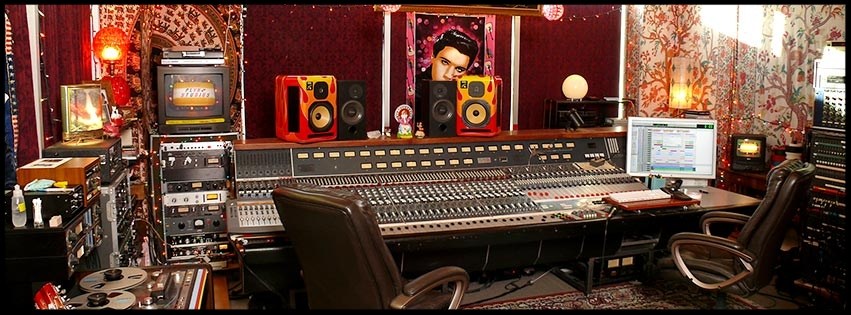
Jim Scott began his career in record production nearly 40 years ago; starting as a go-fer, and steadily climbing each rung of the ladder, eventually becoming a Grammy-winning engineer in 1995 for Tom Petty’s Wildflowers. His vast experience working with some of the industry’s heavyweights- from the Rolling Stones and Red Hot Chili Peppers to Sting and Santana- eventually motivated Scott to open his own PLYRZ recording studio, away from the crowded concrete of Los Angeles, in the quieter, mountainside city of Santa Clarita, California. There, as a producer, Scott has worked on several Grammy-winning efforts, including the debut album for Tedeschi Trucks Band, as well as acclaimed releases by Wilco and Robert Randolph. The seven-time Grammy winner also had a longtime professional and personal connection with the late Neal Casal. This past summer, Casal and his band, Circles Around the Sun, were recording at PLYRZ, working on their third LP. In late August, Casal committed suicide. Just a few weeks following the tragic event, Scott spoke from his studio about Casal, his creative relationships with artists, and getting the best performances on the record.
Tell me about yourrelationship with Neal Casal.
I love Neal Casal. I’d known him for a really, really long time. I met him in the early ‘90s; maybe ’91 or’92. I did some of his very first demoswith him. Those demos led to him gettinga publishing deal and then a record deal. Then, I made his first record, and made his third record, parts of otherrecords, and I was with him a couple of days before he died, at the studiomaking what’s going to be his last record with Circles Around the Sun.
It must have been ashock.
It’s shocking and it’s crushing and it’s sad. It’s bewildering. I feel guilty of not seeing something in Nealthat I could’ve talked to him about. Every picture of us together he’s smiling, and laughing, and playingguitar. Through the years it all justseemed so good. He was a travelingman. He got in a lot of amazing bands,did a lot of hard work, wrote a lot of amazing songs. He became everybody’s go-to guy; everybody’sright-hand man. It seemed like thingswere golden. I’m really depressed andsad about him giving up the fight.
As a producer do youwelcome a personal relationship with an artist, guard against it, or do youjust act according to whatever develops naturally?
There’s certainly no plan for that. Artists are traveling people. Most of the time artists come in and youspend an intense amount of time working on something that is very personal tothem. And, you get in and do a lot ofwork, and spend way more time with them in a short period of time than you dowith your family and your other close friends. It’s intense: you have to have eye contact; tell the truth. It’s pretty real. Some of those relationships becomefriendships. Some stay professional witha certain dose of friendship involved. That’s if you are lucky enough to have them come back again and againand do more work. There’s not a bowling leaguewhere we can all get together and hang out. (Once) they finish the record they start their (tour) cycle.
Is it safe to sayyour relationship with Neal was an exception?
Neal was an exception. Neal was a friend. He stayed atmy house. I lent him my car for awhile. I hired him to play on dozens ofrecords. He was definitely in my lifemore than just a guy who played guitar and sang.
When you are working,is the closeness an asset or do you have to detach from that?
Closeness is more about trust. When people reach out to me wanting to worktogether, or send me songs, or even in a conversation before I hear the music,they may have 15 or so songs to ultimately choose the nine or ten to make analbum. The quickest way for me to get tothe bottom of the whole dance is to carefully listen to those songs, makenotes, and get ideas. And when I getthem I on the phone I say, “I’ll go first. Here are the songs I want to work on because I think these are thebest.” I give them my A-list. Take it for what’s it’s worth.
Typically, howaccepting is the artist when you give them that initial feedback?
Most of the time they take it really well. But, also, they want to ask about a song thatwasn’t picked. That’s when you have tostart having conversations. You can’tfake it. You have to something(thoughtful) to say about something that is important to them, and to me,too. You have to get right in there withthe truth. I do try to give affirmationof the good part without criticizing the bad part too much. Not everything everyone sings and plays isgood. You have to be encouraging whileyou are delivering the bad.
You talk about nineor ten songs being an album. That seemsto recall the era of vinyl LPs, rather than the CD or download era when thereis the potential for much more.
For those artists fortunate enough to make vinyl, it’s afantastic medium that can only take about ten songs, depending, obviously, onthe length of each song. So, four orfive a side. Anything more than that andyou risk sacrificing quality for length; or you sacrifice the money it costs toput out a double-disc- with three songs per side, and really wide grooves, andit sounds amazing. I know on the lastTedeschi Trucks Band album (Signs),we had three sides of music and a fourth side with a fantastic etching- apicture- you can look at, which is cool.
The effect of analbum being , basically, ten songs still means something to you, then?
Albums are still important to me and I feel like ten songsis an album. You can sequence like analbum: there’s a rise and a fall. Youstart with one and end with one. Somewhere in the middle you build it up, then let it back down, thenbuild it up again. There’s still thatflow.
Does the destinationmatter to you- whether it’s for vinyl, CD, digital?
Not at all. Iconcentrate on making things sound like a record, as fast as I possiblycan. The record will reveal itselfpretty quickly if you allow it. It’shard enough getting things to sound generally good if not great. I don’t have the knowledge to do something(differently) if an artist says it’s only for an iTunes release or something.
Lately, I see a lotof reissues on digital making an effort to revert back to the mix and/ormastering of the original vinyl release. It seems like the medium is looking backwards instead of forward.
Before we had CDs, mastering an album was a really bigdeal. See, the digital medium will takejust about anything you throw at it. That’s sort of the good news and really bad news. With vinyl, there’s a limitation. So, the mastering engineers who cut vinyl-these guys were geniuses. They reallylistened. They really did amazing things.
How do you know whenyou’ve got a “done” take?
It’s just my experience for all the years of doing it. I have a better handle on why someone wouldwant to listen to this song right now. Iwork until I’m satisfied. I go throughall the stuff that listeners don’t care about but as a record producer, arecord maker, an engineer, I am responsible for. It should sound good. It should be right. I have to believe that when I think it’sright, everyone will think it’s right. Ifeel I try to act boldly; record boldly. I’ve always loved loud things popping out. It’s exciting to have loud tom-toms everyonce in a while. Just listen to an EltonJohn record. The Beatles’ records areawesome; stuff comes in so loud. No onewould ever remix Beatles’ records to make them calmer.
Saying “it should beright,” you are talking about the feel of the performance rather than whetheror not it’s perfect in a technical sense, yes?
Around here, it’s 100% performance-based. I don’t spend any time looking at music on ascreen. I spend all my timelistening. For me, it’s by the seat ofmy pants. If it isn’t in my groove, it’snot going to be in anybody’s groove. Mygroove might be wider than others who are more precise. Music shouldn’t be precise. It’s emotional. Things don’t have to be perfect. They just have to groove. I call it “the rocking chair.” If I can get in the rocking chair and staythere for the whole song- that is a take.
What about when youare working with a large ensemble like the 12-piece Tedeschi Trucks Band?
Tedeschi Trucks Band is a leviathan; a giant. They’re so much fun, and not even hard torecord because they are so good. Thehard part is resisting taking the first take or two and saying that it can’t bebetter. You have to dig a littledeeper. Honestly, with them, it’sgetting better and better. I wish therewas a way for them to play all their new songs out on the road before we go into record them, but you can’t do that these days because everyone has a cellphone. The record would (end up) outthere online – the live versions- before you recorded the album.
You talked aboutworking with Neal and Circles Around the Sun- another band known for stronglive performances. I would imagine youprefer recording live in the studio if you can.
Mike Campbell (TomPetty) once said to me, ‘I’ve never heard five guys playing good soundbad.’ I think about that all thetime. It shouldn’t be thatmysterious. It shouldn’t be that hard. If people have to struggle to get through afour-minute song, they are not ready to record it.
Because a performanceis subjective- whether or not it was a “great take”- I can imagine you hearingsomething and thinking it can be better, and an artist hearing the same takeand thinking it’s “the one.” Orvice-versa. Who wins that debate?
I never win. It’s notmy job to be that guy. I’m not amusician. I have one man’s humbleopinion. Their fans love them; theydon’t love me. I always defer to theartist. It’s never going to say “vocalsby Jim Scott” anywhere on the record.





