

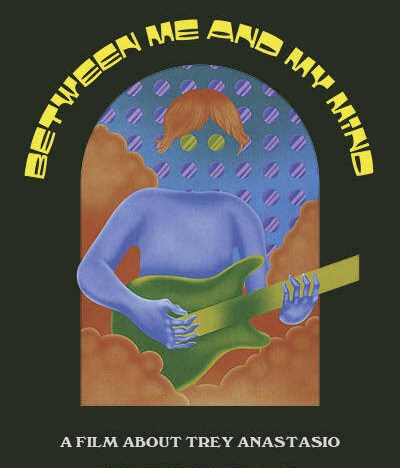
When BetweenMe and My Mind director Steven Cantor and producer Jamie Schutz first met with Phishguitarist Trey Anastasio to pitch him on a documentary about his life, theyfigured it would be a brief chat. However, as Cantor and Schutz would soondiscover, when Anastasio gets his creative juices going, he’s utterly unstoppable.Three hours later, the filmmakers were in business, and according toSchutz, “that conversation basically never ended for two and a half years.”
Between Me and My Mind, which debuted at the Beacon Theatre on April 26, as part of the Tribeca Film Festival and screened nationwide on July 17, follows Anastasio as he simultaneously prepares for Phish’s Baker’s Dozen residency, New Year’s Eve 2017-2018 and his recent Ghosts of the Forest LP. Between these events, Anastasio also sits down with those closest to him—his mother, his father, his daughters and all three of his Phish bandmates—to discuss his life and his music.
“He respects the hell out of Fishman, hethinks Jon Fishman is the best drummer that he’s ever seen,” Schutz says ofAnastasio. “He thinks Gordon is just an unbelievable bass player, and Page isjust amazing on the keyboards. He really respects these guys, like, he feelsvery lucky to be in a band with three other outstanding musicians.”
Below, Cantor and Schutz discuss theirexperience creating Between Me and MyMind and their years-long journey alongside Anastasio.
Beforeworking on this project, what was your exposure and experience with Trey andthe band?
Jamie Schutz: I started listening to Phish in‘92 and was introduced to them by a friend in college. Like most of us backthen we just started trading tapes and getting excited about what we werehearing. I think the first tape that really knocked my socks off was theTelluride ‘88 show. The band was creating music that was just so different fromeverything else that was out there at the time so I just had to sort of dive inand see what this was all about. I didn’t end up seeing my first show until twoyears later, that was in ‘94 in Tennessee, but as soon as I saw a live show Iwas just hooked. I think I’ve seen over 120 shows at this point and I think I’ma noob compared to some of those people out there.
Steven,what about you?
Steven Cantor: I was in Telluride in ‘88 andafter the shows the guys asked to take a hike and we climbed a mountaintogether and took mushrooms and there was no going back after that. [Laughs].
Actually I knew about them in college and sawthem a few times through the years. I got majorly introduced to them before thefilm, when I started being partners with Jamie, who’s a huge fan. We both lovemusic and going to concerts with an open mind, which I did. The live Phishexperience is unlike anything else out there so clearly I was hooked by justthe sheer energy of the audience. And from making a film about Trey you get tolove him and see a lot of Phish shows so it’s hard not to get swept up in thecraziness.
Howlong were you filming and how much unreleased footage is there? There must behundreds of hours, right?
JS: We started filming when he had his firstsolo tour which was March of ‘17 and we wrapped officially in November of ‘18,and then we would do little pick up days here and there. But Trey was reallyinvolved in the creative processes from the very beginning of it. The first meetingin our office was October of ‘16 and then, of course, all the way through therelease Trey had seen the edit going on. That was April of ‘19.
SC: He kept us very much in the loop of whatwas going on in his life and was always coming up with potential ideas for usto film and wondering if this potential thing made sense. I’d say he washesitant about making a documentary at first, but once he decided to go for itthere was no holding back. No question was too hard, he wanted us to digdeeper. He never said turn off the cameras. I was like, “This is crazy tryingto cut things down to make an 80 minute movie or 90 minute movie. This shouldbe a 6 hour movie.” There was so much good footage that did not make the movie.Every single scene.
Werethere any shots or clips in particular that didn’t make it in the movie thatyou think were particularly special?
SC: So many musical moments and so manymoments in the barn and so many conversations in between him and his bandmates.All those Phish guys when they came to the barn to rehearse, there’s tons ofKasvot Växt rehearsal footage.
Withthe creation Kasvot Växt, were you able to be flies on the fall through thatentire process? Did you see it through all the way to the end?
SC: We were flies on the wall but we’re alsoin the middle of nowhere in a barn and we’re hanging out with them and havinglunch with them. They’d bounce ideas off of us. It’s not like we’re hunkereddown in the corner, we’re all 6’ 5’’ [Laughs].
Our cinematographer Johnny Saint Ours has this severe face with a big pointy beard and he was a musician in his prior life. He was actually in Old Crow Medicine Show in the early days, and the original idea for Kasvot Växt was that Johnny was going to be the front person for the fake band. We were going to take pictures of Johnny and create this fake whole back life for Johnny and we were trying to come up with a gag in like June/July of ‘18.
So it was amazing. We were very immersed intheir life and watched everything unfold.
Jamie,you’re such a hardcore fan, to be involved in planning a Halloween gag musthave been unreal.
JS: I mean the whole thing was just great,obviously. I grew up adoring this guy and this band and thinking how cool itwould be to make a film on them one day, never realizing that it would bepossible. And then, of course, meeting Trey and working alongside him for threeyears on and off… It was a thrill being a fan but also as a filmmaker it was athrill, because our films are always best when the subject is willing and Treywas very willing. As Steve mentioned, he was always coming up with ideas and itwas really a collaboration in many ways. Of course, we would make finaldecisions on things, but it was just a really fun, creative process all the waythrough and it was exciting to be a part of it all.
Anotherinteresting thing is that in the last few years Trey has been more willing tospeak with journalists or do something like this. Getting to know him, can youattribute anything in his life to him being a little more open?
SC: The process of making the film with us wasprobably therapeutic for him in a way. We talked about a lot of stuff thatprobed very deeply, and not just with us, with his kids and his parents, hisbandmates, and the nature of making a documentary that dealt with more seriousstuff. I also think he’s at a reflection point now being 54 and being on thePhish train for 35 years and watching his kids grow up and kind of wonderingwhat’s next both for Phish and for himself personally. And probably also hisbest friend dying put him in a reflective state of mind. He’s just in a placeof loving life right now and wanting to share love and joy.
JS: I would probably add to that just the factthat Phish is very stable right now and he is sober and he is so overflowingwith creativity right now. I don’t want to speak for him, but I think he feelsas though he’s in one of the most creative moments of his entire career. Whatdid he say this morning about Ghosts of the Forest?
SC: He said he thinks Ghosts of the Forestreally informed the tour that he’s been on. The tour got an amazing responseand he thinks the show he played at Alpine the other night was one of the bestshows he’s ever played and a huge part of the reason was Ghosts of the Forestworking up to the shows he’s playing now. Particularly “Ruby Waves,” he playeda 38 minute version of “Ruby Waves” and going back to his roots and justjamming out songs together.
JS: And also you can see by the songs he’swriting. He’s writing much more mature lyrics.
Theonly other official Phish doc is BittersweetMotel and, obviously, Between Me andMy Mind is a very different film…
SC: We’ve both seen it and it’s not the kindof film we make. It’s got its merits and it’s a slice of life from that time ina very different era for Phish. We definitely did not watch it going into thefilm and did not reference it. Yeah, it just wasn’t a part of the process toomuch and we didn’t talk about it too much.
JS: We definitely agreed that what we did notwant to do was a concert doc. This had to be a journey of exploration, creativeexploration for this character, and Trey said that at the Beacon premiere.Because, obviously, they’ve been pitched many, many times but we were really interestedin the creative process and so I think that was our take. It shows the audiencethe inside of it all and that goes to his conversations with his family andfriends and then of course some of the loss he endured.
SC: Trey said this morning that the film was avery small approach. We just followed these small, little details and we didn’ttry to encapsulate any huge things about Trey. We told the story about Phishjust coming through really small lenses, like Trey and his personalinteractions with the guys. And it kind of took the pressure off of the guys inthe band and it took the pressure off of the movie. It’s just the small lensand not trying to be the ultimate Phish doc.
And Ithink the intimacy of the film is really great, especially in those shots whereyou have the four guys in the band all just casually coexisting. For you guys,what were some of the insights that you learned about the relationship betweenTrey and the rest of Phish?
JS: It’s interesting. As a Phish fan, youobviously realize how incredible all of these musicians are individually, andyou also realize that Trey is the bandleader, and the lead guitarist, and thelead vocalist, but we never quite understand exactly what he’s bringing beyondthat.You have a sense of it, we don’t truly know. I think one of the thingsthat was cool for me to see was how much Trey thinks about not only the lyrics,but the music. And not just the guitar lines. We’re talking about the drumlines, the bass lines, the keyboard lines. And he’s really composing all ofthese things and he does an immense amount of research and work. He plays allof the parts, and puts it into a demo, and then he plays it for the guys, andthe guys learn their parts, and then they add on top of it. It eventuallybecomes this masterpiece that everyone has contributed to, but a lot of theprocess begins with Trey and his thoughts for a song. As a guy who thought hewas gonna be a composer, it makes a lot of sense, because everything is charteddown to every final note. And then of course, once they learn everything, thenthey have the flexibility of going off and jamming and improvising.
Eventslike the passing of Trey’s friend Chris Cottrell and the creation of the Ghostof the Forest stuff, really steer the direction of the film. Did any of thatredirect your personal vision for the greater themes of the documentary?
SC: I think we knew right from the beginningthat we were going to follow Trey making this album. At the very first meeting,he knew he was doing an album. He knew it was going to be a departure, that hewanted to try something different and he didn’t know what it was gonna be. Andhe said to us very early on that, 35 years ago, he thought he was going to be aclassical composer, and the Phish train sort of left the station very early,and he never got to make that choice. It felt like he was going back in thatdirection.
I think I especially was encouraging him to dothat because I thought that would be amazing for a movie to see this guy take ahuge departure, a major risk, that could completely blow up and backfire andfans could hate it. So, I think I was probably a cheerleader for that, but hedidn’t really care what I thought. The film was always going to be a Phishstory line following the creation of the New Year’s gag and then Trey’spersonal album and how it came together.
You’vementioned Trey’s parents and his kids and his friends… Was he ever hesitant totalk to those people on the record? Or did he believe those relationships wereimportant to document?
SC: I think because Chris was dying, it puthim in a really reflective frame of mind and he wanted the film to be verypersonal and to really tell a true story of life and fatherhood and friendshipand parenthood. I think he was talking to people in ways he probably hasn’tspoken to them before. And allowing us into those conversations as a way offorming the album. I certainly never said, “Go talk to your mom.”
One ofthe most emotional parts of the film is when Trey is stopped on the street by afan who is newly sober. I had heard that that guy was at the Beacon Theatrepremiere.
JS: The real story is that we were filming oneday with Trey and his daughter Eliza on the street, in the East Village, and ofcourse, all of a sudden a fan stopped and catches Trey’s attention. This guy,Kevin, tells Trey about the fact that he’s recently sober, and Trey has thisreally genuine conversation with him. Had we not been filming with hisdaughter, Trey probably would have just stopped and talked with him for aboutan hour. But the conversation itself was brief—it probably lasted about two orthree minutes, and then we all sort of walked away. We realized what happened,but unfortunately, none of us had bothered to find out who this guy is, whathis name was or anything about him. He just disappeared.
Then as Steve was cutting the film, we reallythought that that scene was fantastic and it showed a lot of things—Trey’sencouragement for being sober, and of course his interaction with casual fanson the street. Well we didn’t want to include it unless we could get this guyto agree because it was just too personal, so we went out on a huge goose-huntto find this guy.
Eventually, through some Phish message boards,we posted his picture, saying, “Hey, ran into this guy the other day, doesanyone know who he is?” And somebody’s like “Oh that’s my friend Kevin.” Then Igot in touch with Kevin, told him about what we were thinking about doing, andhe had remembered the interaction, of course. I invited him to come into theoffice, to see the film, to see the clip and afterwards he was just blown away,like “Yeah man, you gotta include this in the film. I’d be honored if you guysincluded it.” And so, as a thank you to Kevin we invited him to the premierewith his girlfriend and he was just really stoked to have been invited, andhe’s still sober, which is fantastic.
Did youguys keep Trey in the loop on that search for Kevin?
JS: Oh yeah. The morning we found him, I thinkwe sent a group text message saying, “We got him! We got the guy!”
Whatwas one of the most surprising things you learned about the day to day life ofTrey?
SC: Jamie and I, we both wake up sort offeeling like our lives are pretend. We just get to go make movies aboutanything we want, and hang out with our idols. It’s such a fun career andeveryday we’re pinching ourselves thinking it can’t possibly be real.
Trey has that times ten. He loves his career,he does not like vacations, he doesn’t like weekends, he does not want to stop.He wakes up every day loving the work. He cannot believe he gets paid to createmusic, and he’s doing what he dreamed about since he was 15, he gets to do itevery single day, and he just wants to do it as much as he possibly can. He’sjust exploding with happiness and creativity and kindness.
JS: Yeah, that’s what I was going to say. He’sjust such a warm, nurturing, creative, wonderful guy. He doesn’t come acrosslike a rockstar. He wears, like, jeans and a flannel, you know? He’s veryapproachable, very nice, and exploding with creativity. Yeah, he was a lot offun to be around for a couple of years.
I heardthe initial pitch meeting for Between Meand My Mind was supposed to be a 10-minute chat, but it turned intosomething like a three hour meeting, right?
SC: There’s a Woody Allen movie called Crimes and Misdemeanors. In that film, Alan Alda is being interviewed by Woody Allen on a park bench, and Alan Alda just goes on and on and on and on and speaks and speaks and speaks, and at the end of Alan Alda speaking, he’s like “Did you get all of that?” And Woody Allen’s like “We ran out of film!” [Laughs.] Trey loves referencing that scene from Crimes and Misdemeanors, because he’s aware that he talks a lot.





